Team Games or Solo Practice Games for Middle School Math?
Middle schoolers care a lot about what their classmates think. That can shut them down in class, or it can be the reason they work harder. The game format decides which one you get.
Short answer: use team games when you want students talking about math, explaining mistakes and staying engaged as a class; use solo practice games when each student needs repetition on a specific skill at their own pace. In grades 6–8, a good mix is team games for warm-ups and review, and solo practice for targeted skill work.
Side by side
| Team games | Solo practice games | |
|---|---|---|
| Best for | Review, discussion, whole-class energy | Fluency and repetition on one skill |
| Who talks | Everyone on the team | No one, which some students prefer |
| Struggling students | Supported by teammates | Can work at their own pace without being watched |
| Strong students | Explain their thinking | Move ahead faster |
| What you learn as the teacher | Which ideas the class is still unsure about | Which student needs which skill |
| Setup | One screen | One device per student |
Why team games work in middle school
- Everyone has a stake. When a team's points ride on an answer, every member wants it right.
- Explaining is learning. A teammate explaining a missed question often lands better than one more explanation from the teacher.
- Strategy keeps it close. Games where teams choose harder problems for more points, or steal a missed question, let a team that's behind catch up.
Where solo practice fits
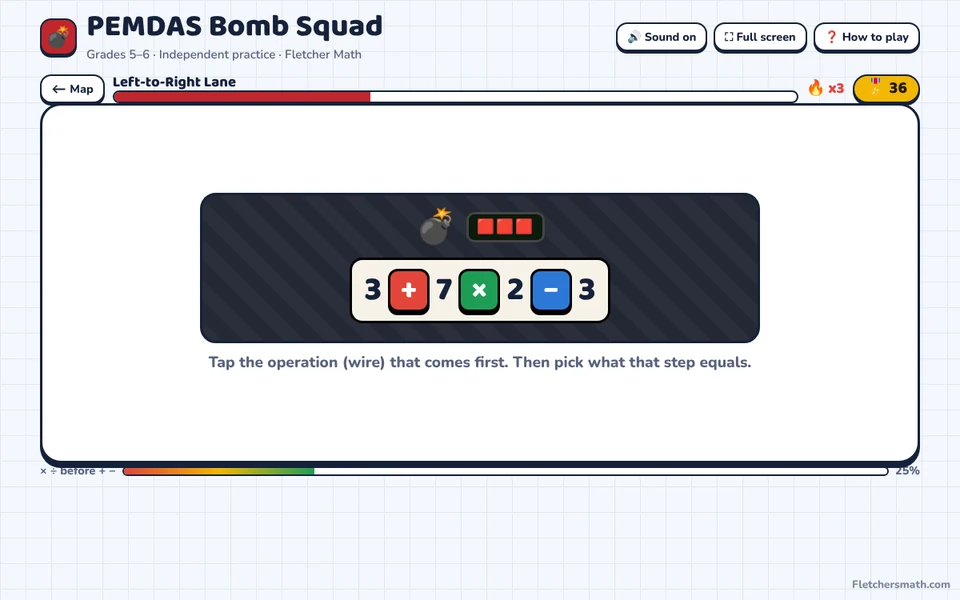
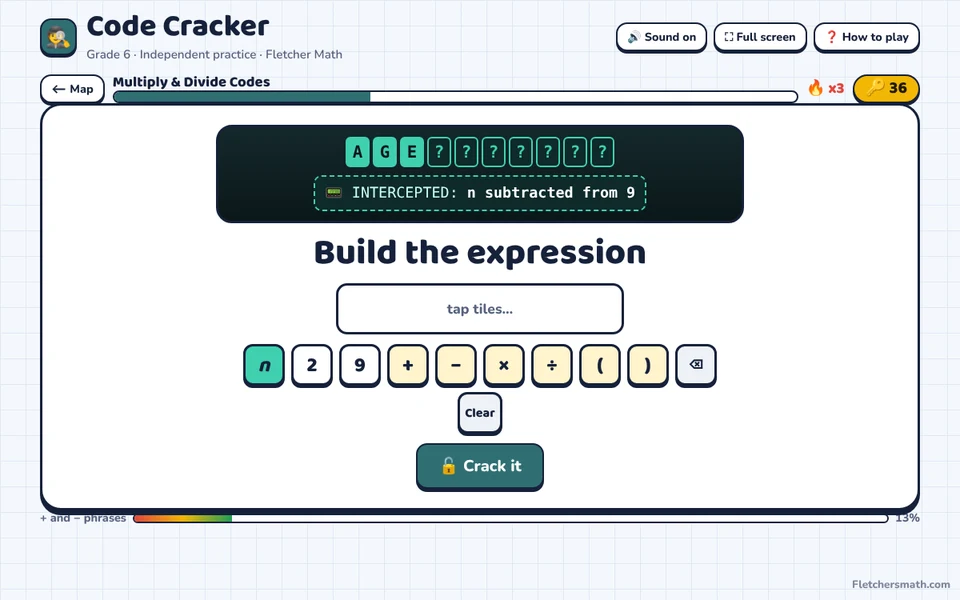
Solo games are the right call when one student needs twenty more reps on integer operations and another is ready for equations. Fletcher Math's practice games, like PEMDAS Bomb Squad and Code Cracker, are built for one student per device and end with a report you can check.
Team games to start with
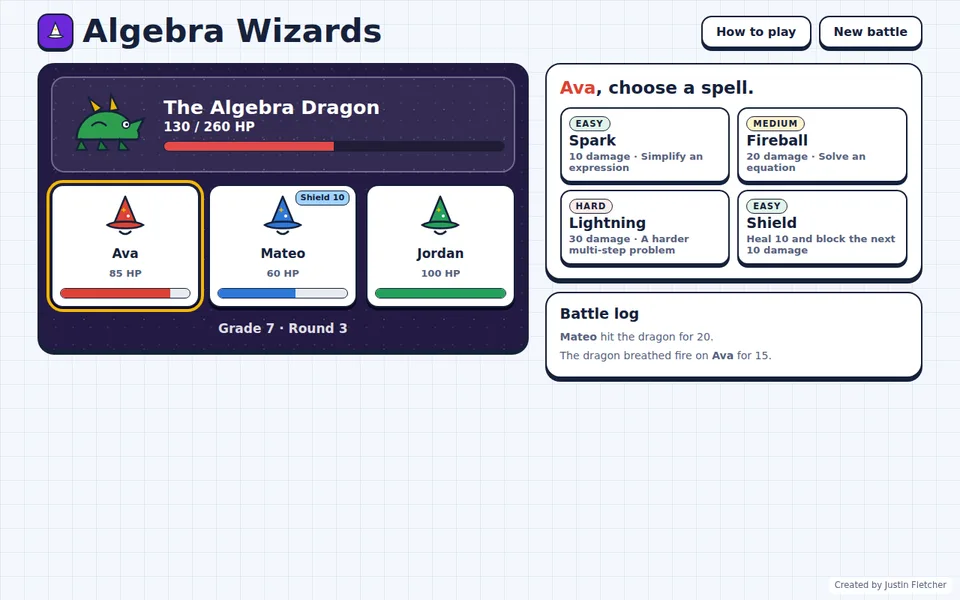
- Algebra Wizards (grades 6–8): Duel by simplifying expressions and solving equations.
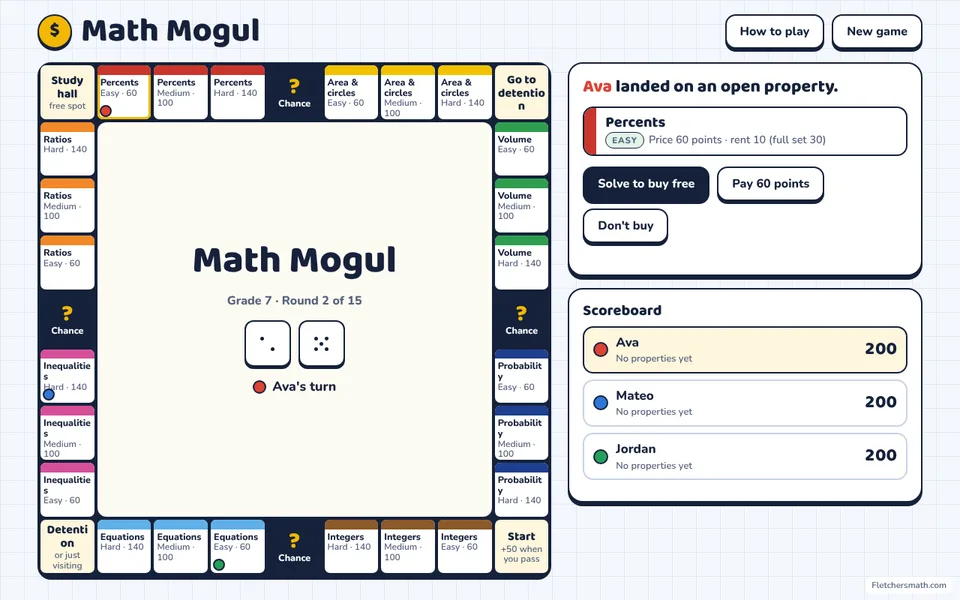
- Math Mogul (grades 3–8): Buy properties and collect rent by answering correctly.
- Krypto (grades 3–8): Combine number cards to hit a target, with lots of right answers.
Every Fletcher Math classroom game is for 1 to 6 players or teams on one shared screen. Browse 6th, 7th and 8th grade math games.
Common questions
How many students can play a team game?
Fletcher Math games support up to 6 players or teams on one screen, so a whole class can play in 4 to 6 teams.
Should I use team games every day?
Short and frequent works well: about 15 minutes, a few days a week, plus a longer review game before a test.