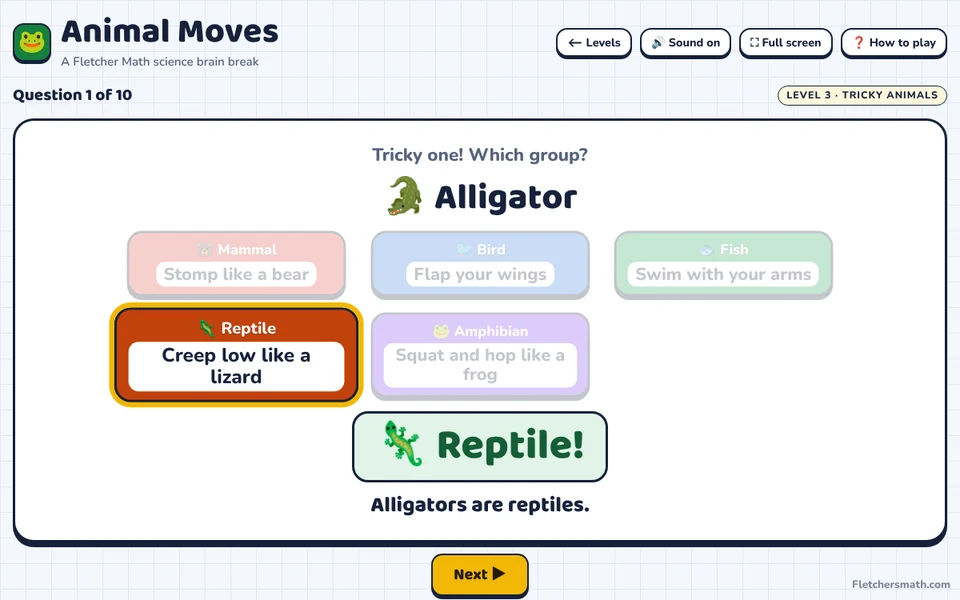
Grades K–8 · Brain break
Animal Moves
An animal or a clue appears. Students move like its animal group: stomp, flap, swim, creep or hop.
30 multiplayer classroom games and 14 virtual labs for 8th grade science. The games play on one shared screen and the labs run on each student's device. No student logins, works offline, and every one has a free demo you can try right now.
An animal or a clue appears. Students move like its animal group: stomp, flap, swim, creep or hop.
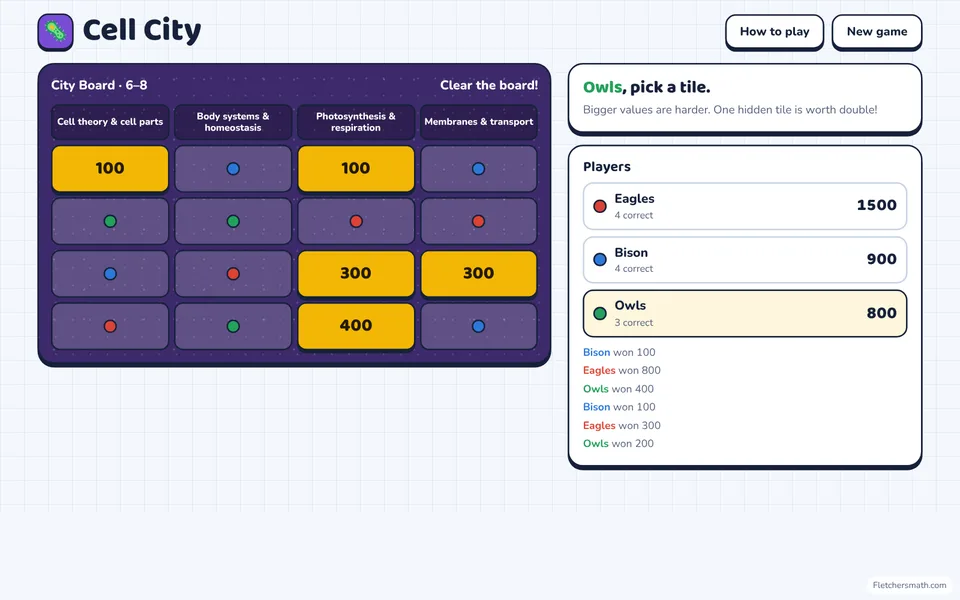
Organelles, body systems, photosynthesis, respiration, DNA and transport in a game-show city tour.
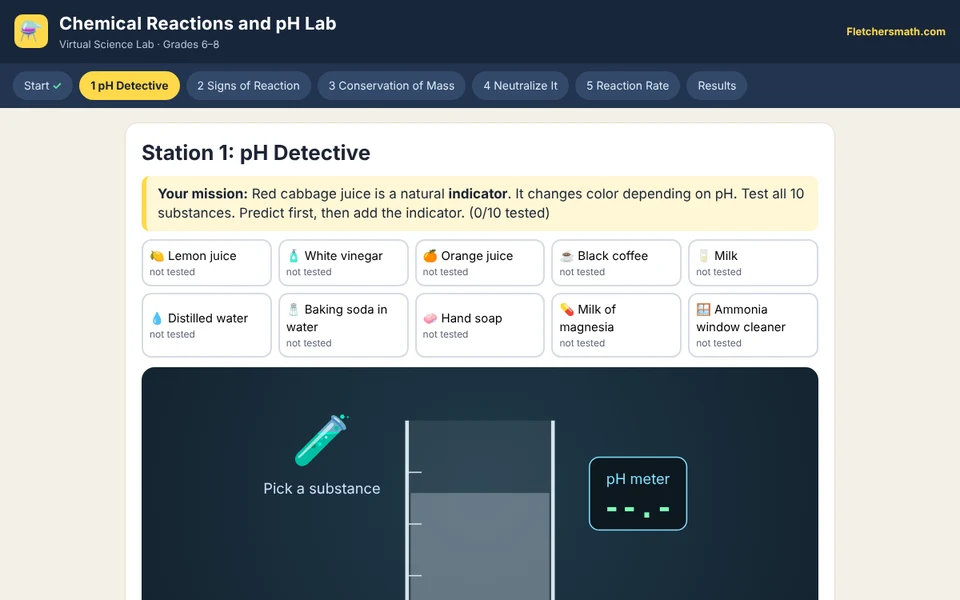
Students test pH with cabbage indicator, classify changes, weigh a reaction, neutralize an acid and time reaction rates.
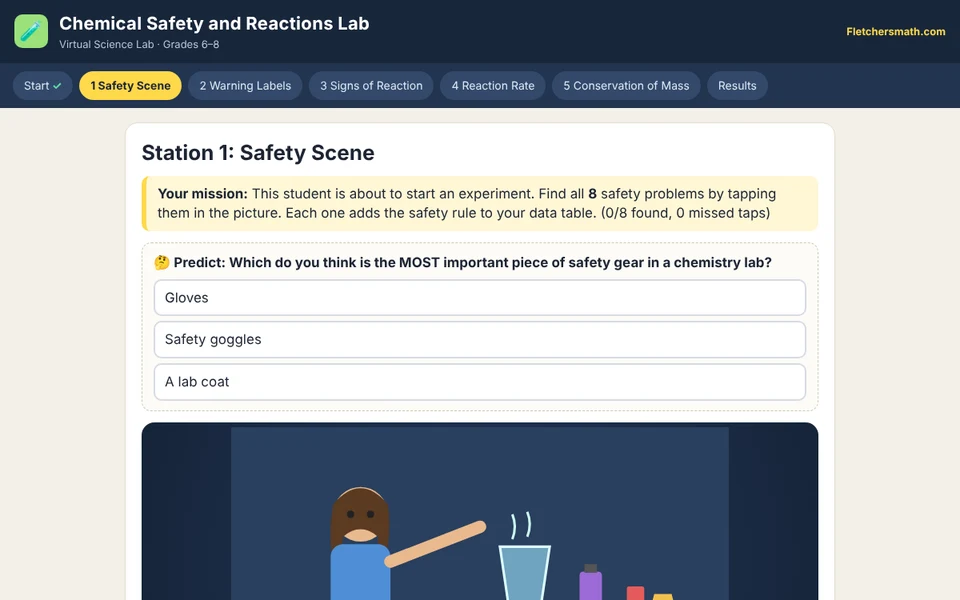
Students find lab hazards, build warning labels, spot signs of reactions, time reactions and test mass.
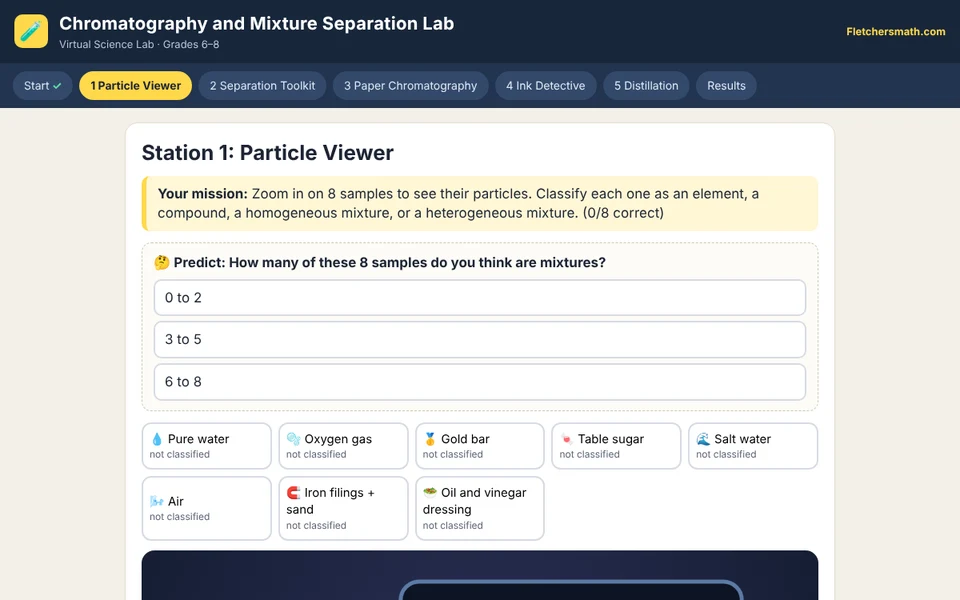
Students classify matter, separate mixtures, run ink chromatography, solve an ink mystery and distill alcohol.
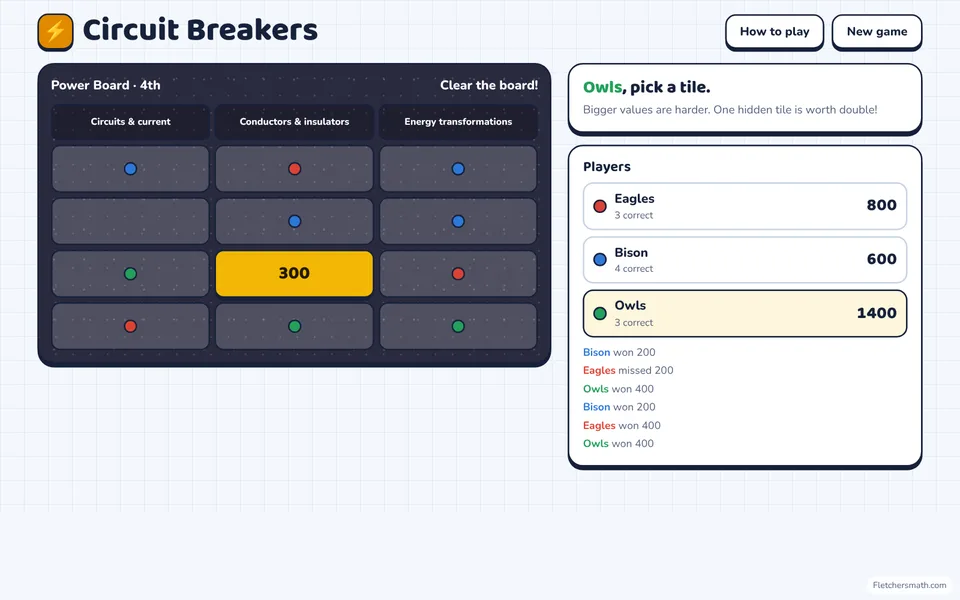
Circuits, conductors, electromagnets, Ohm’s law and energy conversions in a high-voltage game show.
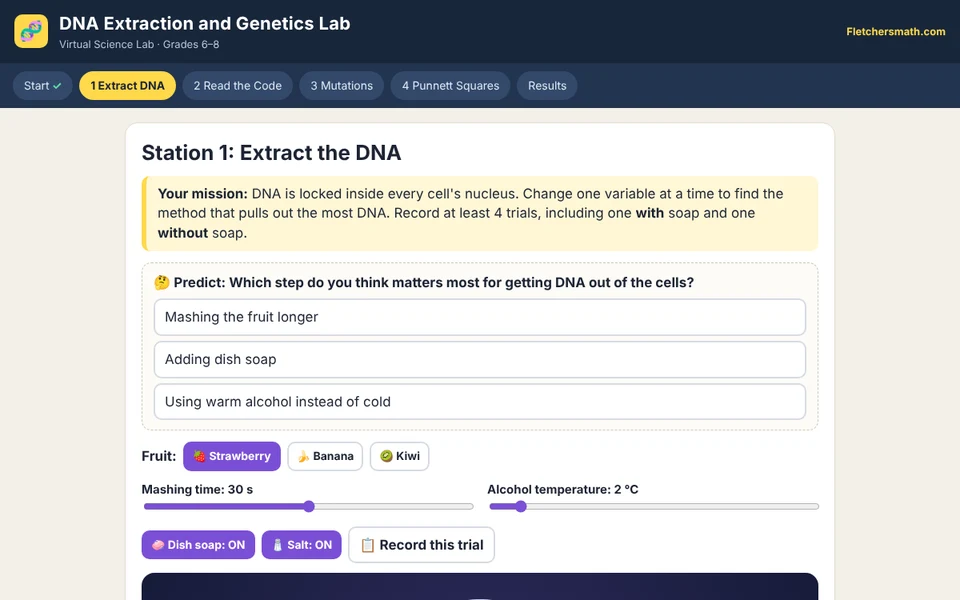
Students extract DNA from fruit, build and translate a DNA strand, mutate a human gene and grow pea plant crosses.
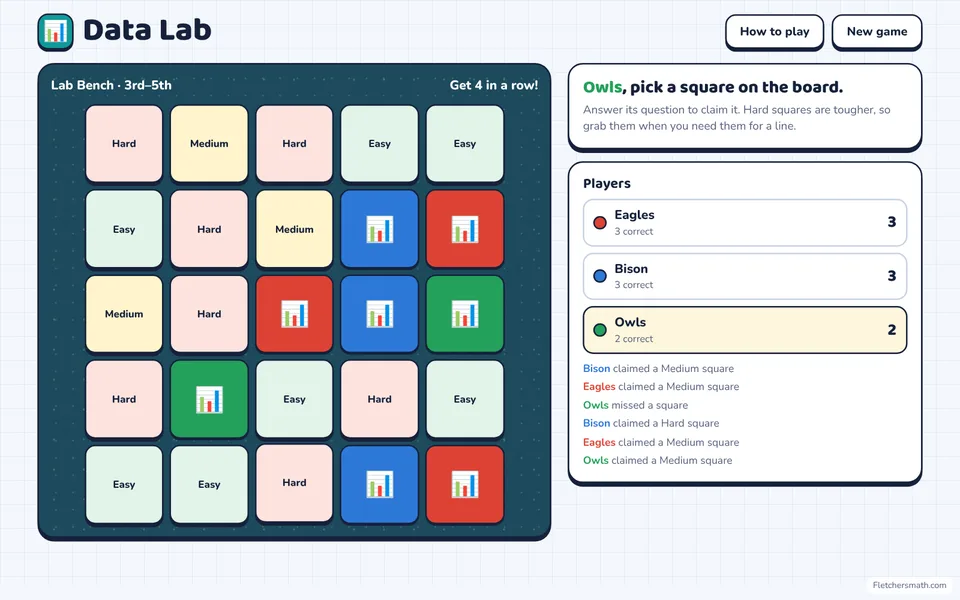
Variables, fair tests, tables, graphs, mean and median, and claims backed by data.
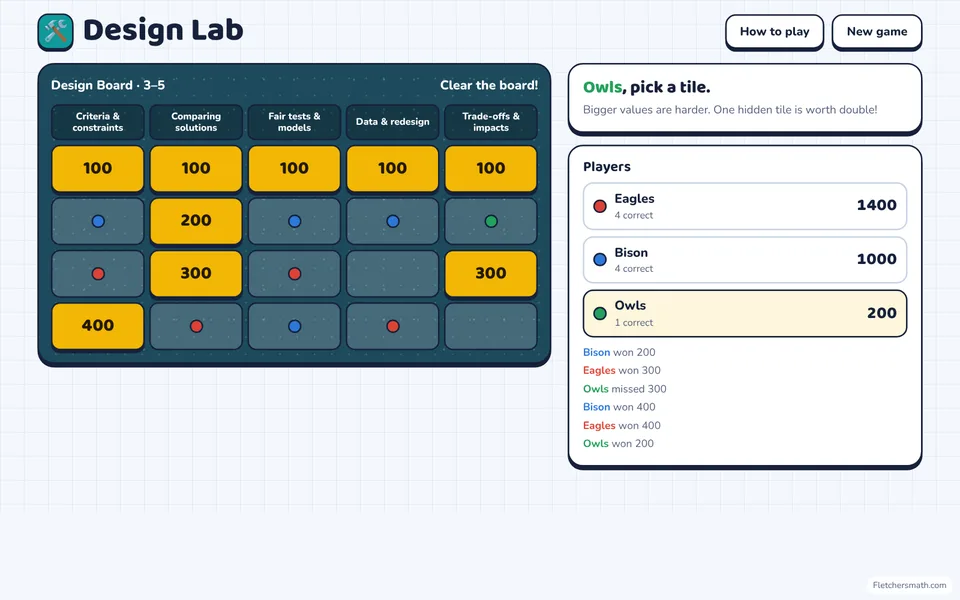
The engineering design process: criteria and constraints, fair tests, using data to improve designs and trade-offs.
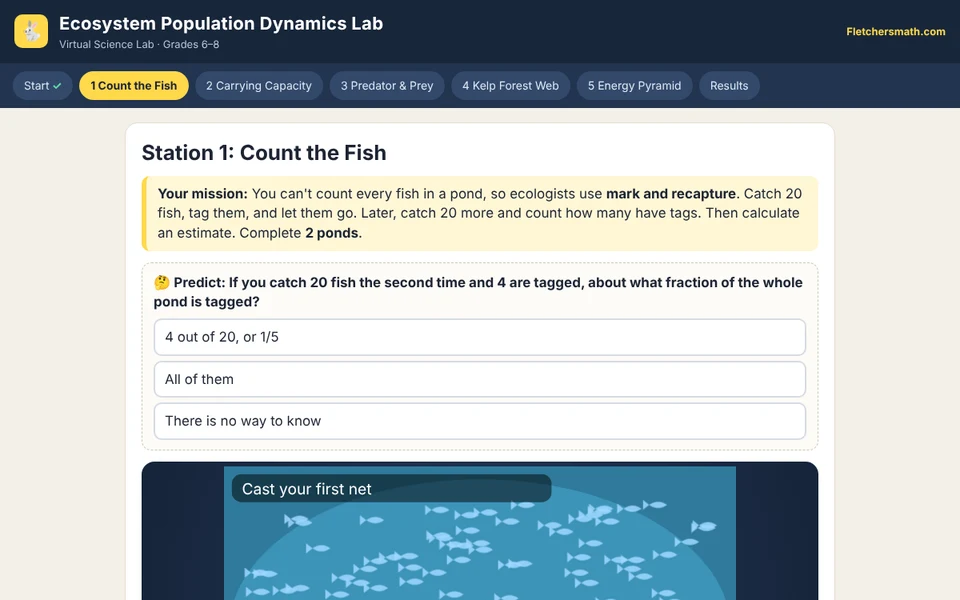
Students estimate fish by mark-recapture, model deer and lynx–hare cycles, test a kelp web and build energy pyramids.
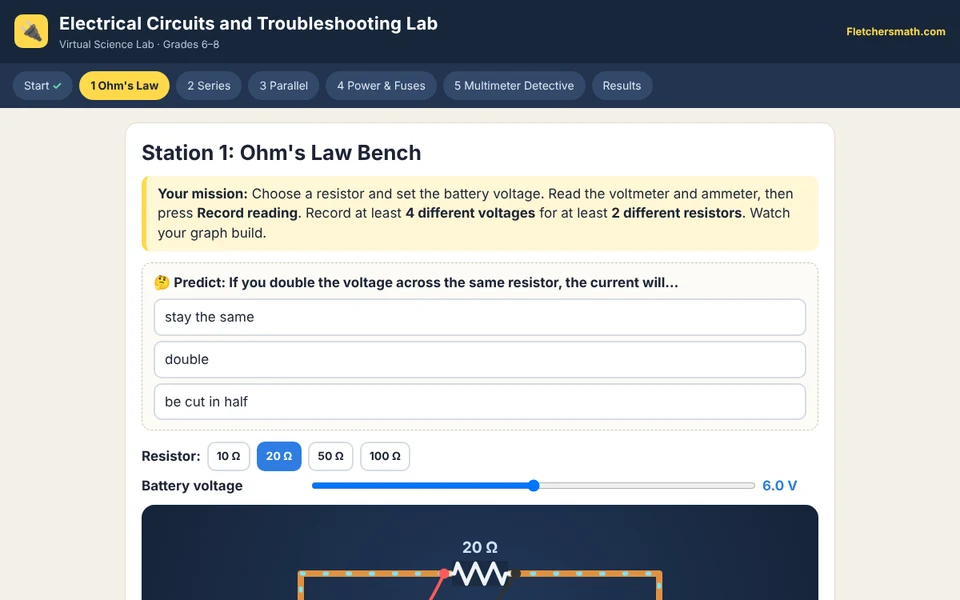
Students measure Ohm's law, compare series and parallel circuits, blow a car fuse and use a multimeter to find faults.
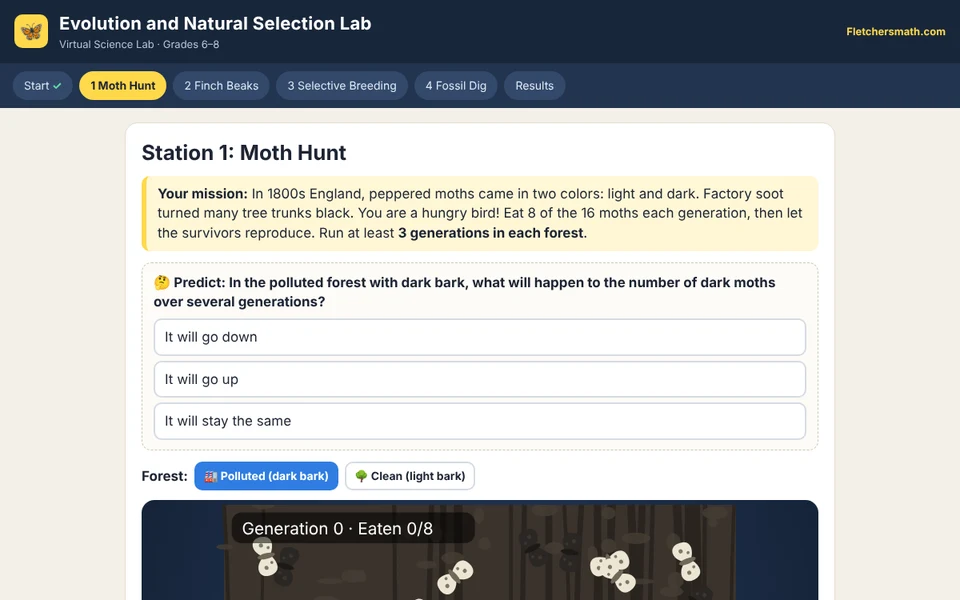
Students hunt peppered moths, track finch beaks through droughts, breed corn from teosinte and dig up whale fossils.
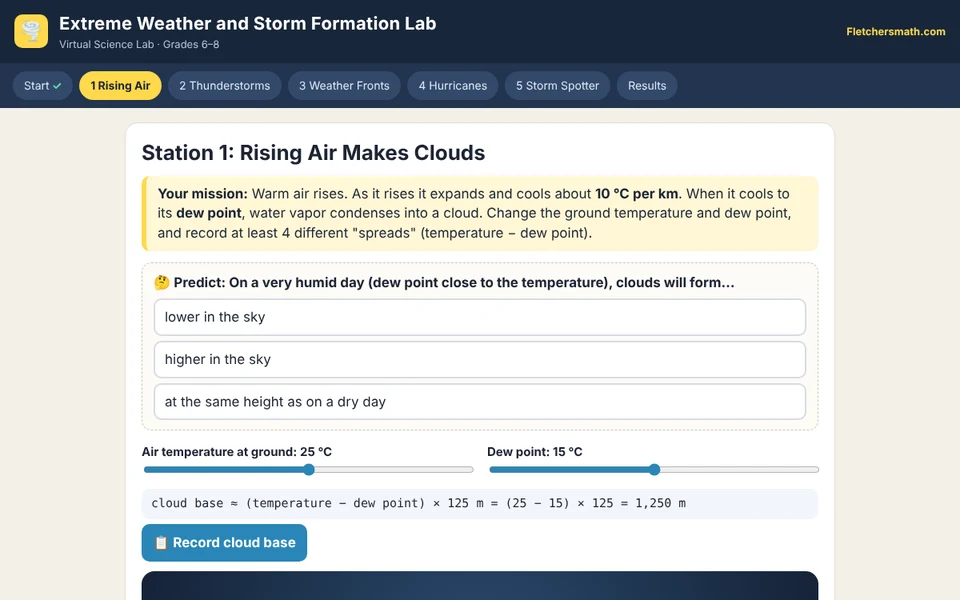
Students lift air to make clouds, build thunderstorms, move fronts, fuel hurricanes and time lightning.
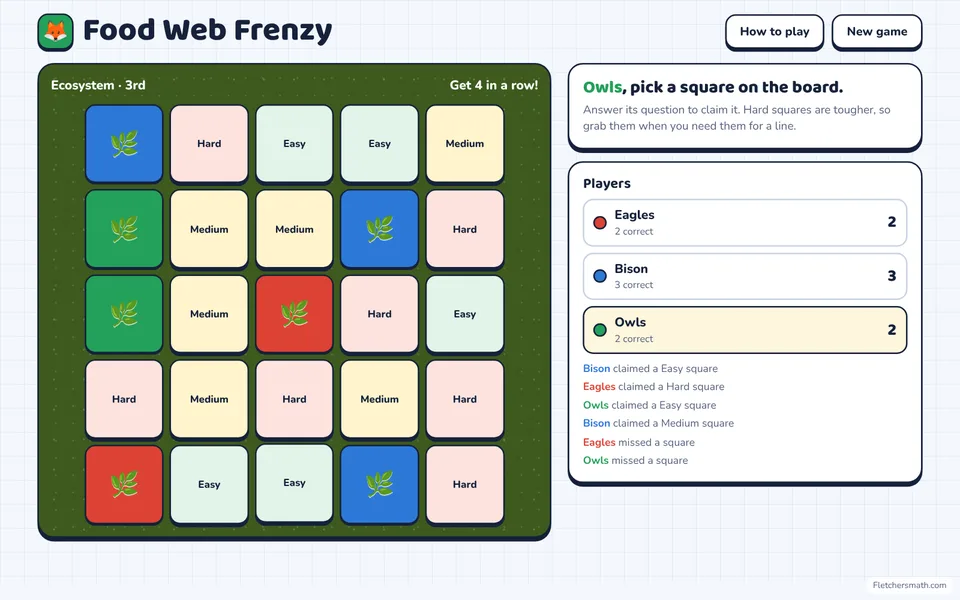
Producers, consumers, decomposers, food webs and adaptations. Claim the ecosystem four in a row.
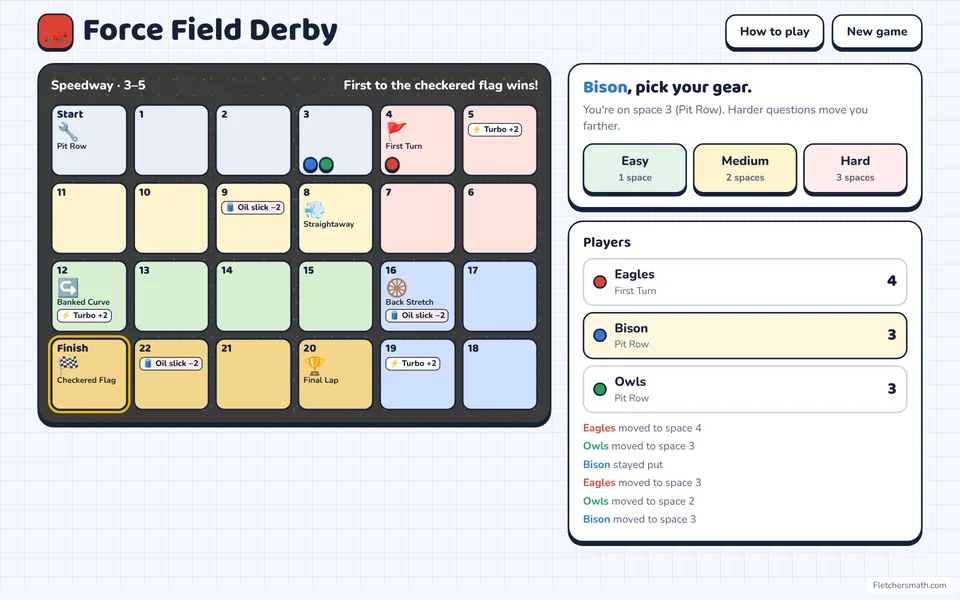
Forces and motion, Newton’s laws, gravity, energy, momentum and waves on a speedway.
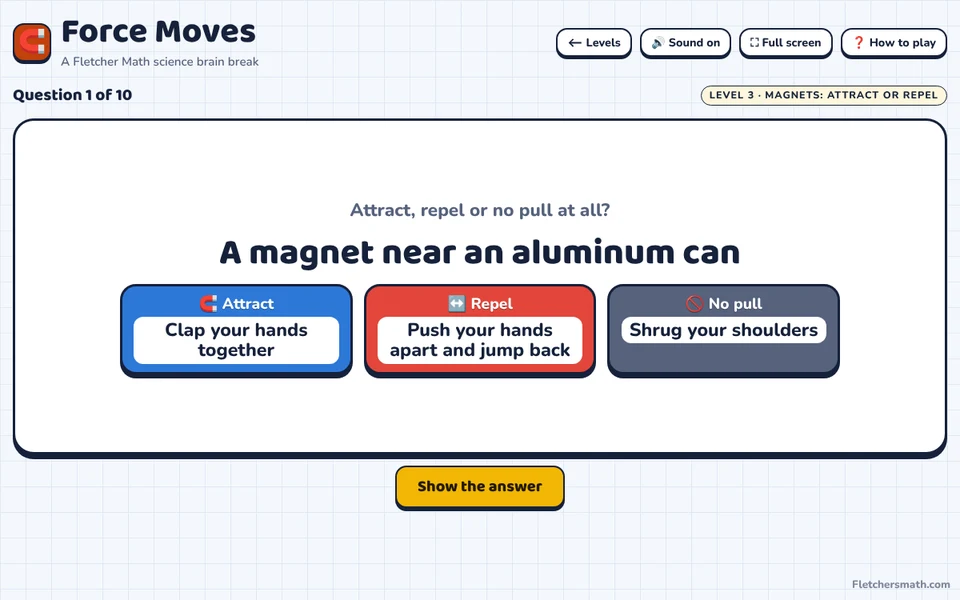
A force or energy card appears. Students act out push or pull, attract or repel, forms of energy or Newton's laws.
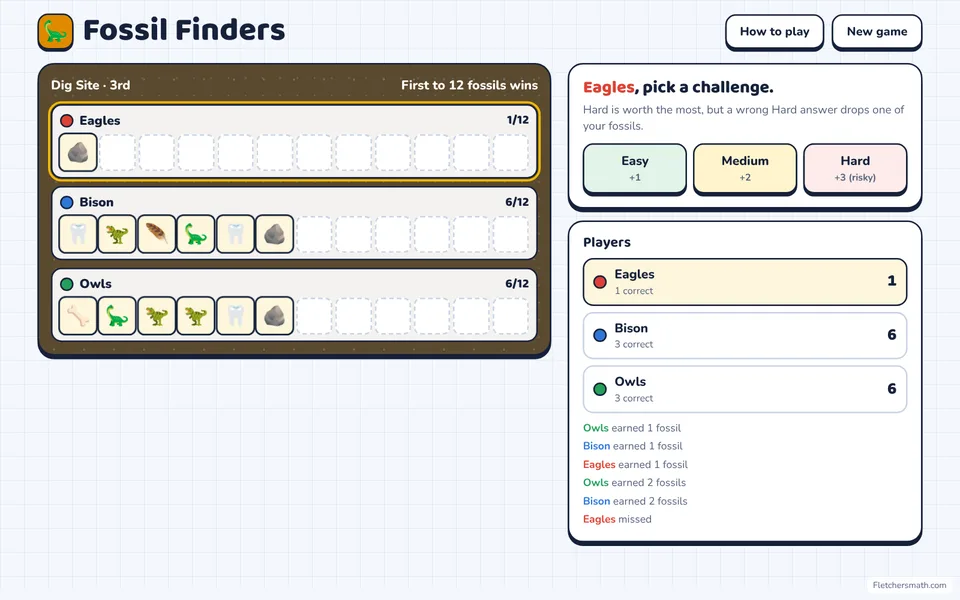
Life cycles, fossils, rock layers and evidence of evolution. Dig up the most fossils.
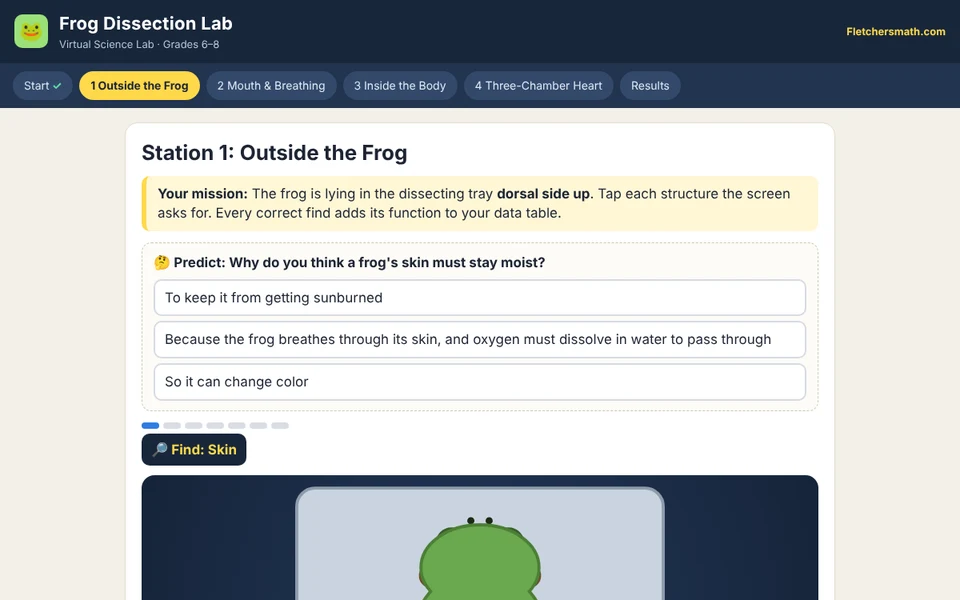
Students find frog structures in a virtual, diagram-based dissection, then model breathing and a 3-chamber heart.
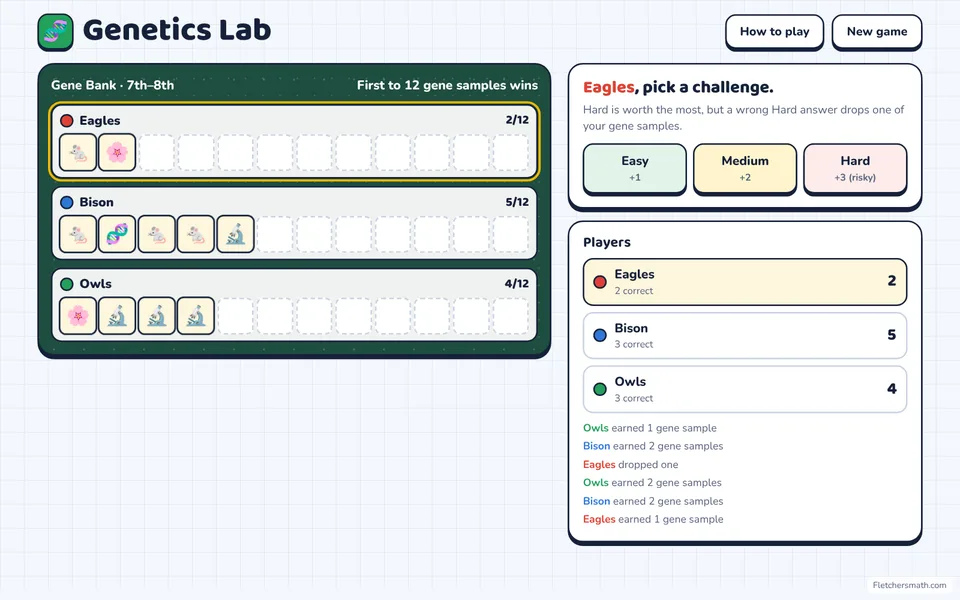
DNA, genes, Punnett squares, inheritance patterns, mutations and natural selection.
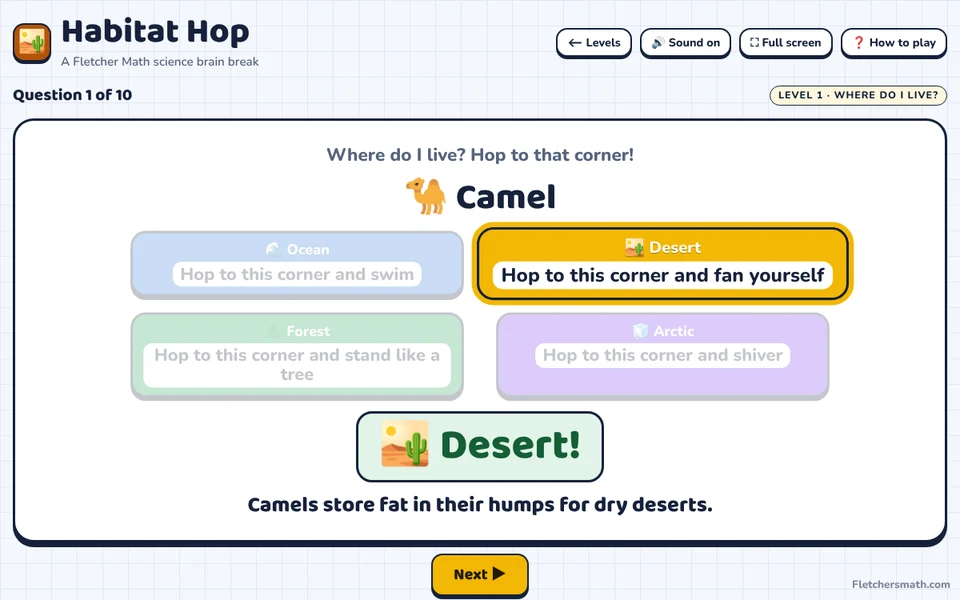
An animal, plant or clue appears. Students hop to the corner of the room for the habitat where it lives.
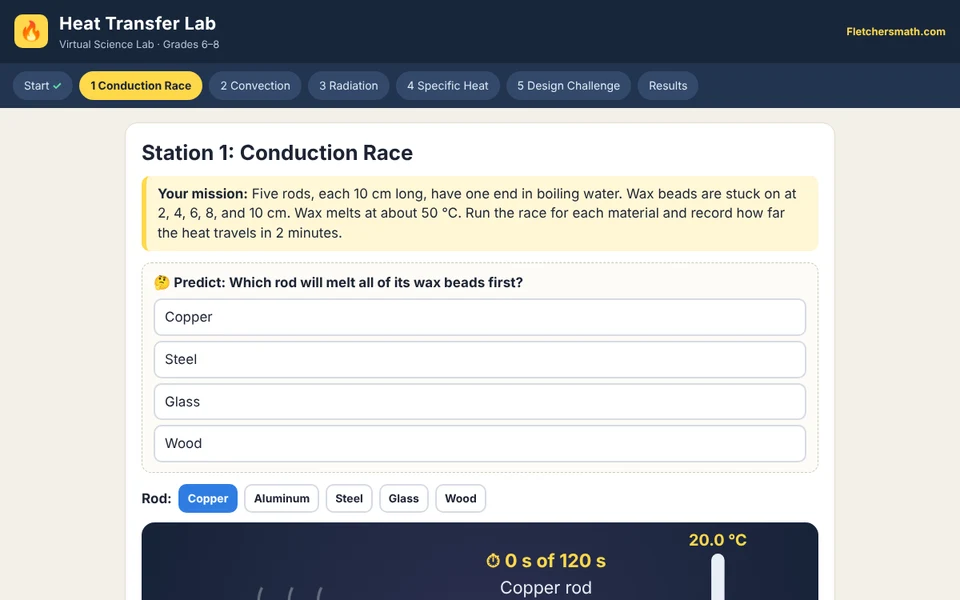
Students race heat through rods, watch convection, test colors under a lamp, use specific heat and design a hot cup.
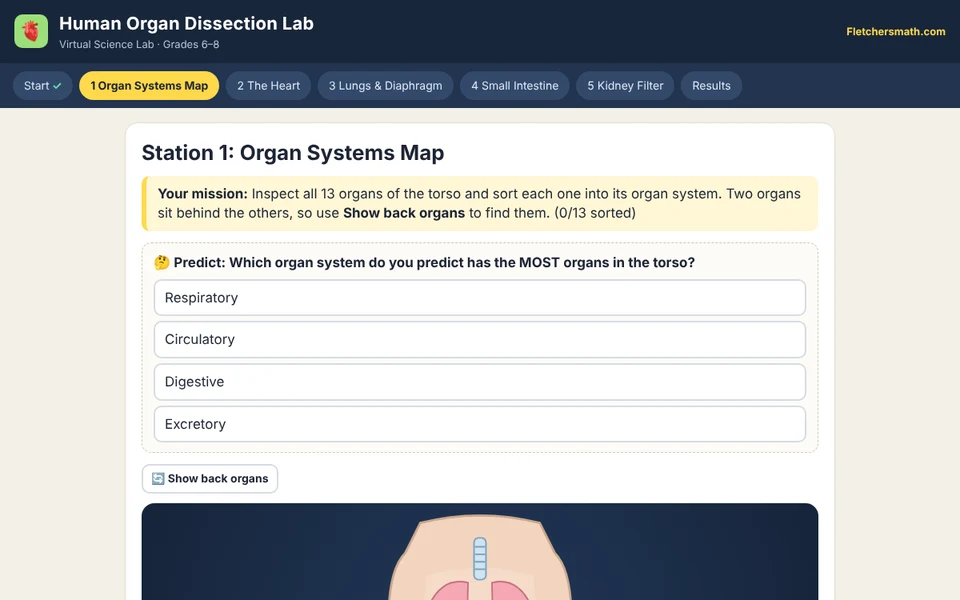
Students sort torso organs by system, trace blood through the heart and model breathing, digestion and kidneys.
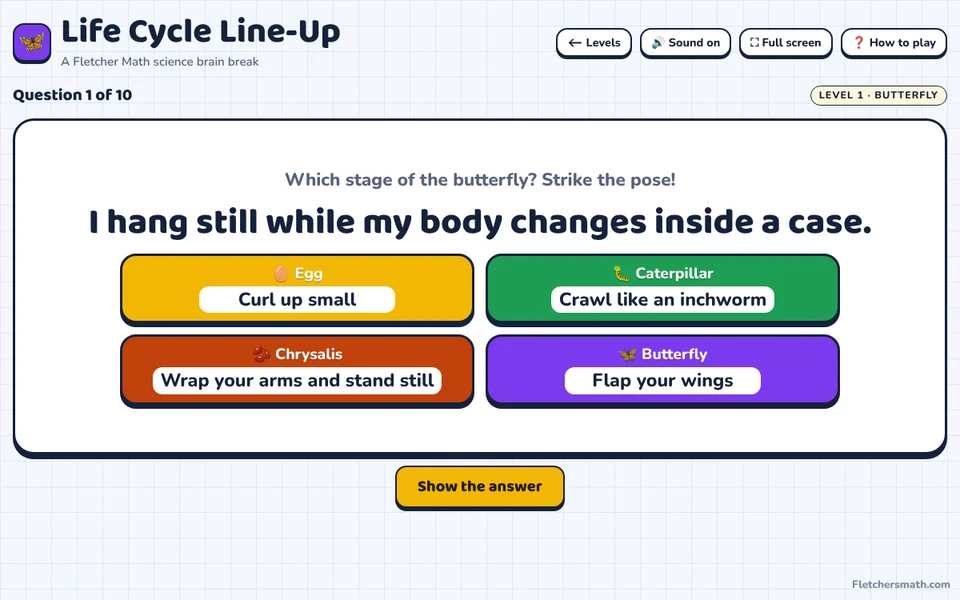
A life cycle clue appears. Students strike the pose for that stage of a butterfly, frog, plant or grasshopper.
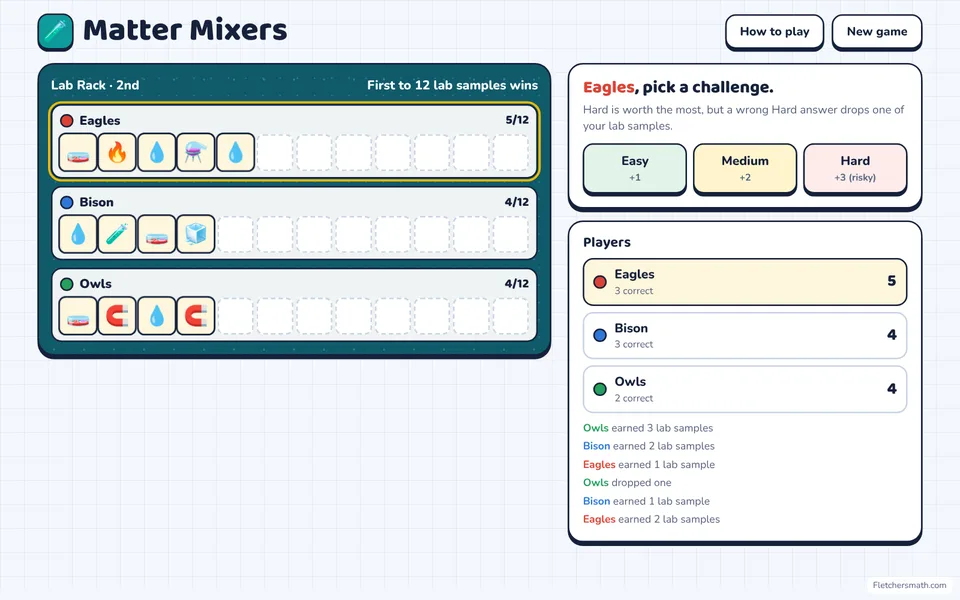
Properties of matter, physical and chemical changes, particles and conservation of mass.
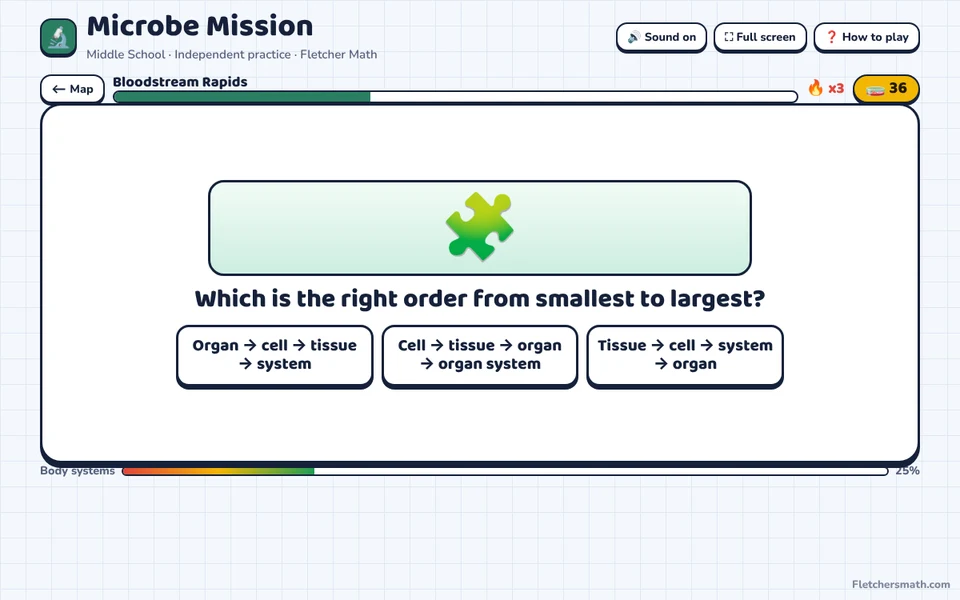
A single-player life science game for grades 6–8. Shrink down to explore cell parts, body systems, photosynthesis, ecosystem interactions, Punnett squares and natural selection, then finish with a skills report for six middle school NGSS life science standards.
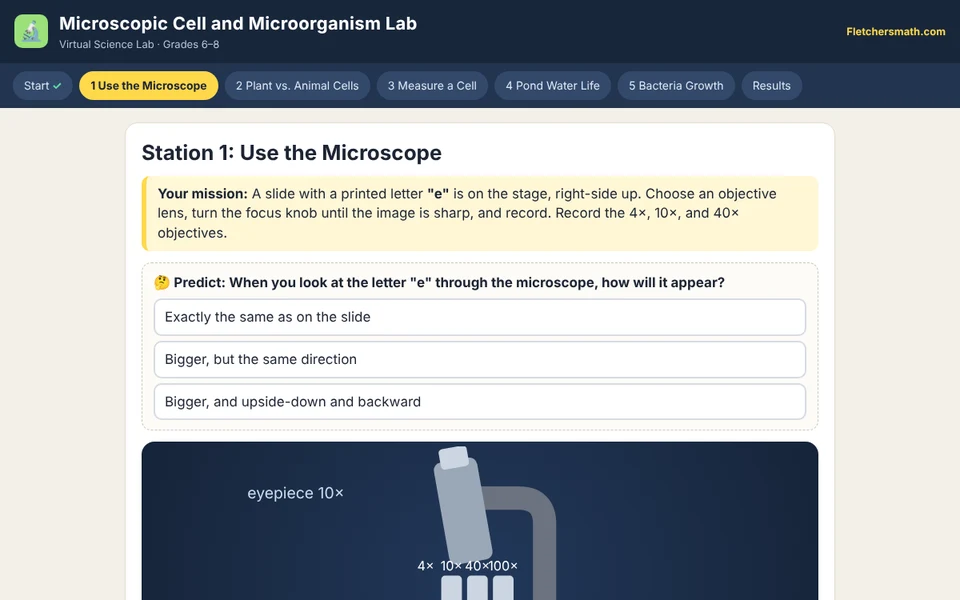
Students focus a virtual microscope, compare plant and animal cells, measure cells, key pond life and model bacteria.
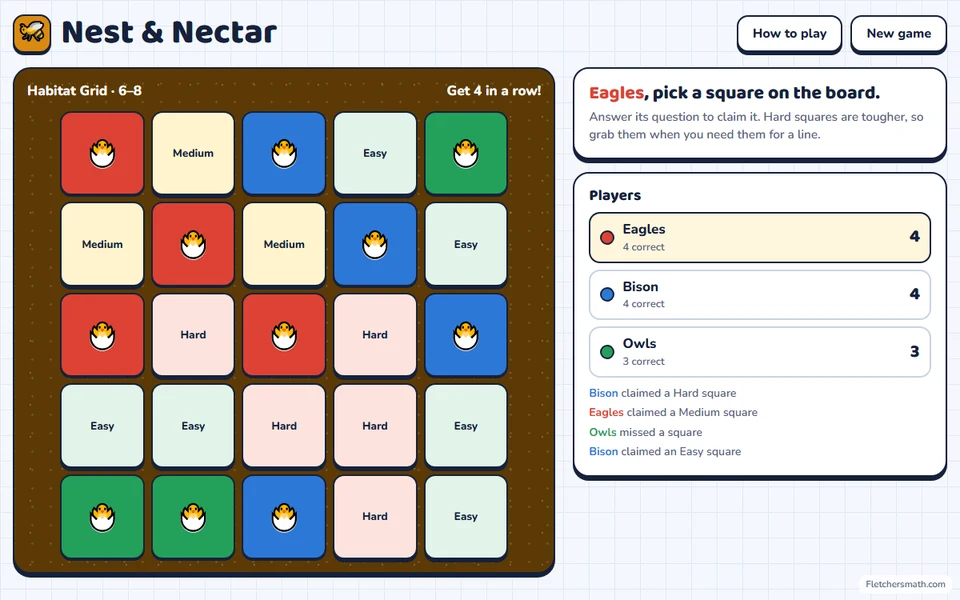
Claim squares by explaining how animal behaviors and plant structures increase the odds of reproduction, how animals help plants and how environment and genes affect growth. Get 4 in a row to win.
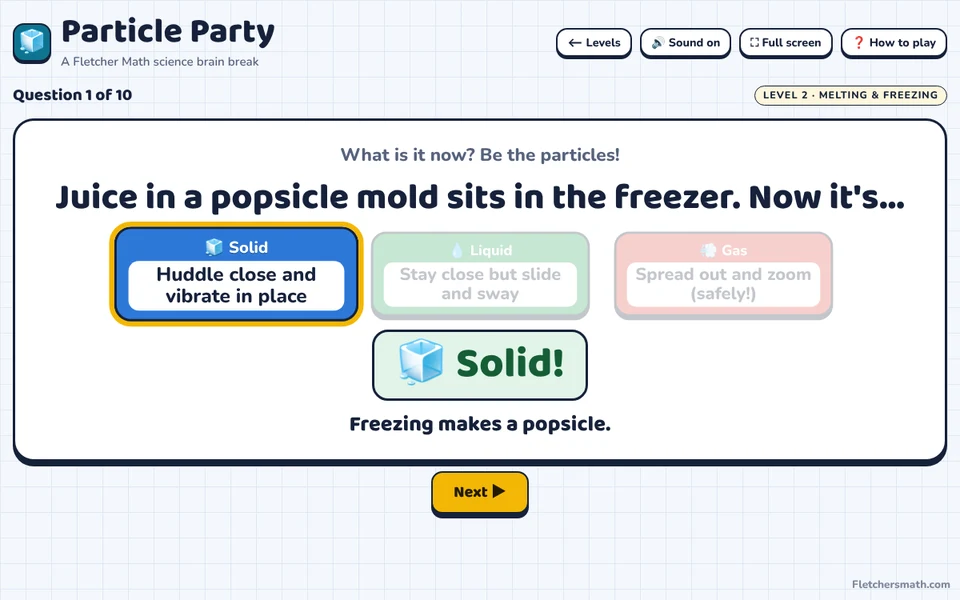
Students act out the particles. Huddle and vibrate for a solid, slide and sway for a liquid, spread out and zoom for a gas.
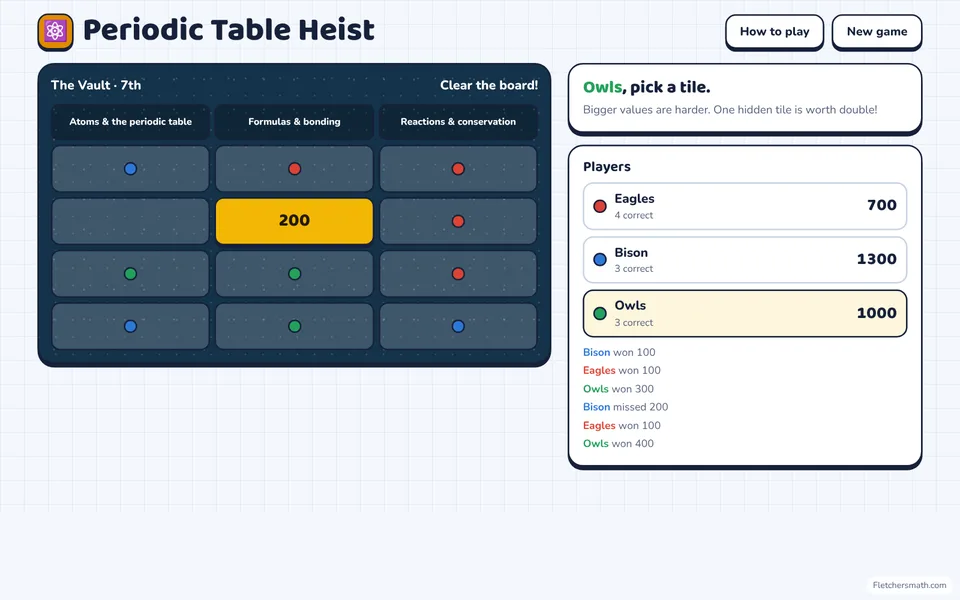
Atoms, the periodic table, bonding, balancing equations and reactions. Pull off the heist!
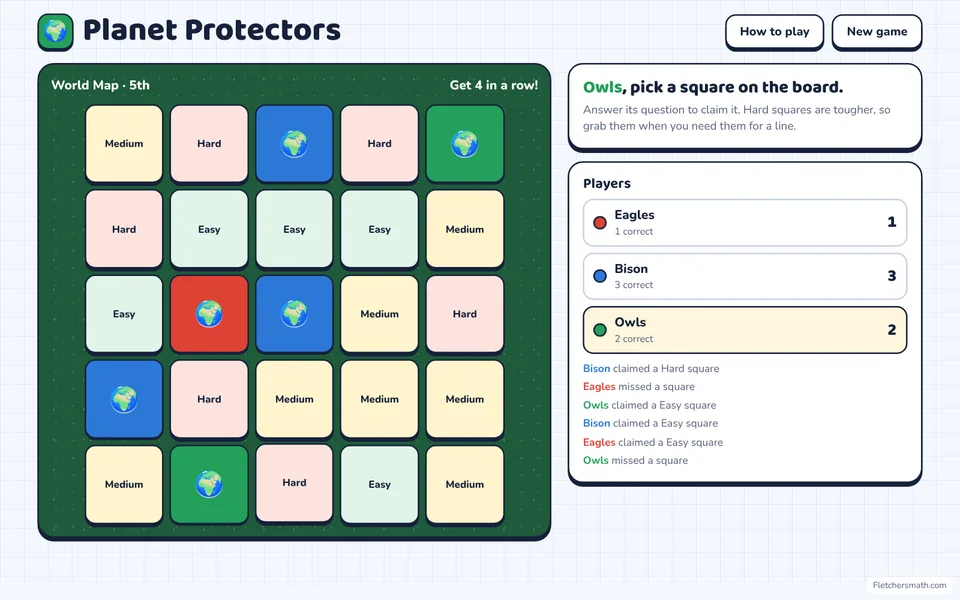
Natural resources, hazards, human impact and climate. Protect four regions in a row.
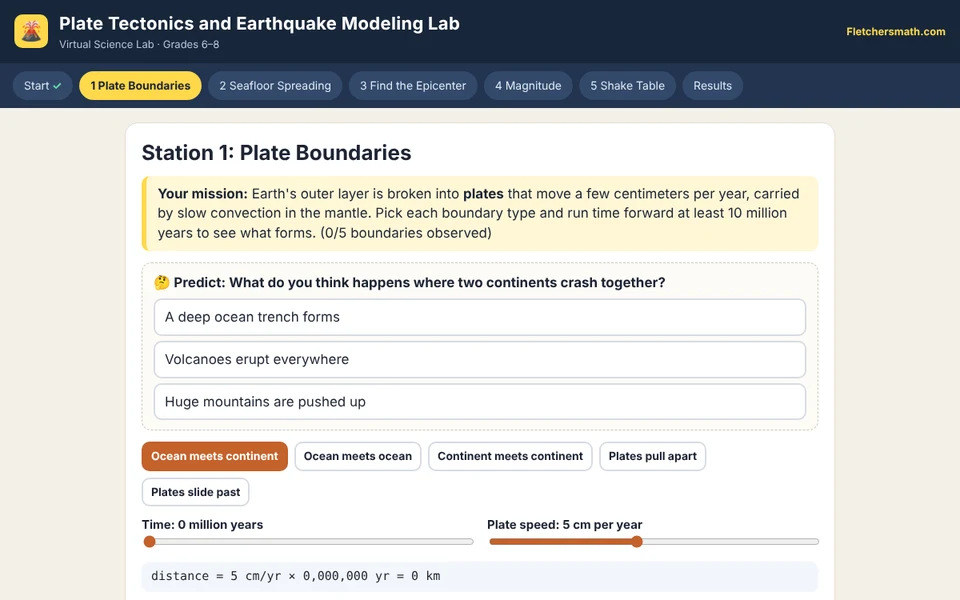
Students model plate boundaries, date the seafloor, locate an epicenter, compare magnitudes and test buildings.
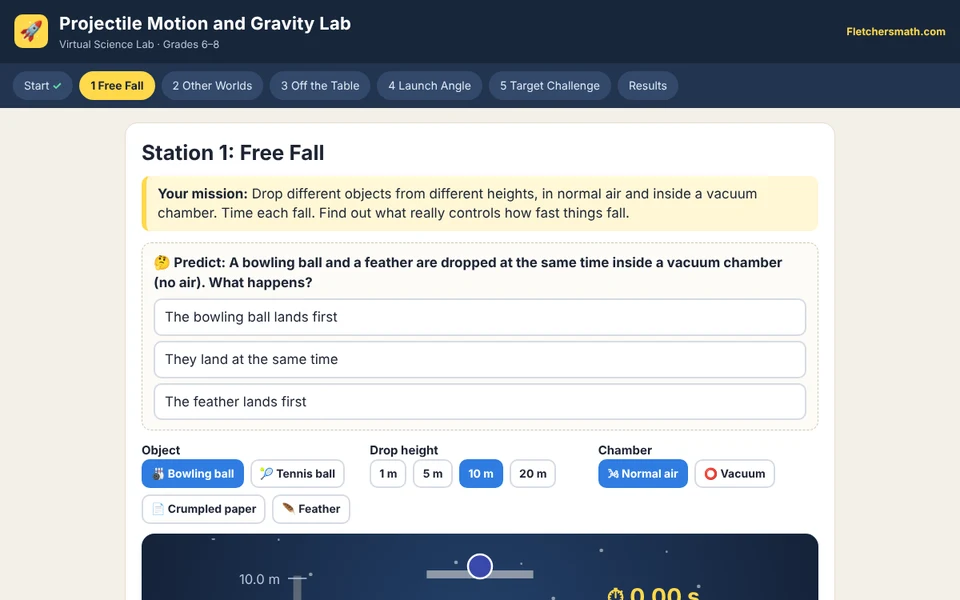
Students drop objects in air and vacuum, test gravity on other worlds, launch at angles and hit targets.
A single-player chemistry game for grades 6–8. Race through the lab with atoms and molecules, states of matter, density calculations, chemical reactions, conservation of mass, and exothermic and endothermic reactions, then finish with a skills report for five middle school NGSS matter standards.
A single-player physics game for grades 6–8. Race rockets with Newton's third law, forces and speed, magnetic and electric fields, kinetic and potential energy, heat transfer and waves, then finish with a skills report for six middle school NGSS physical science standards.
The class shouts the letter of the right answer to build a streak before the buzzer. Every right answer makes the clock a little faster.
A science question appears with four answers, one for each corner of the room. Students walk to the corner they think is right, then the answer lights up.
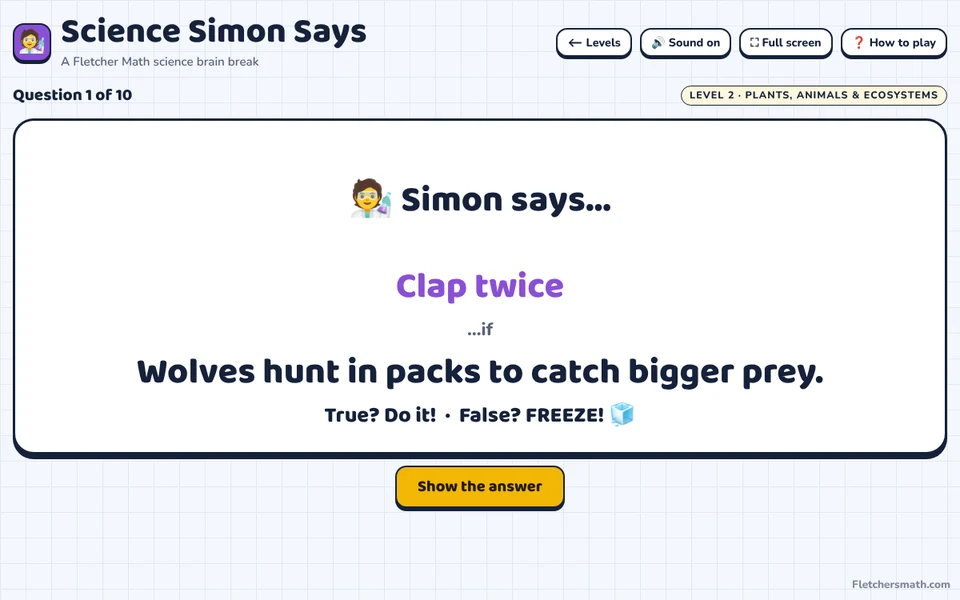
Simon says buzz like a bee if plants need sunlight to grow! Students do the move only when Simon says it and the science is true.
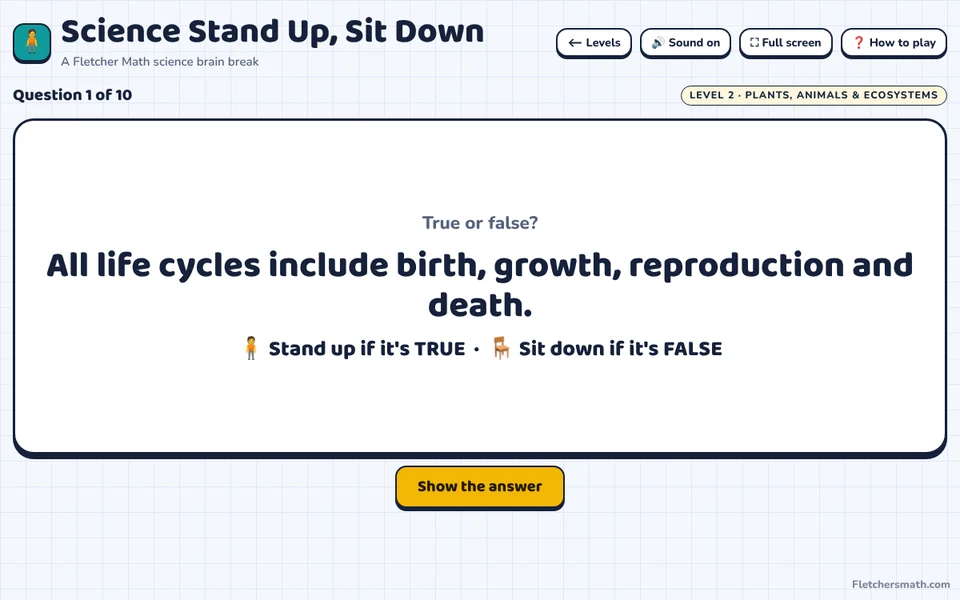
A science statement appears on the screen. Students stand up if it's true and sit down if it's false, then the answer and the real science pop up.
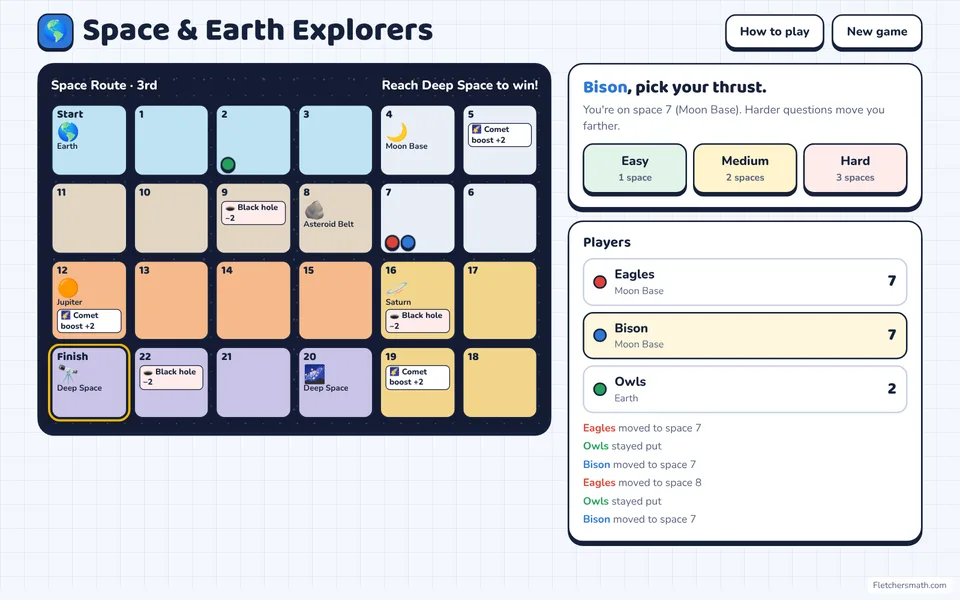
Weather and climate, rocks and fossils, erosion, the sun, moon and stars on a trip across the solar system.
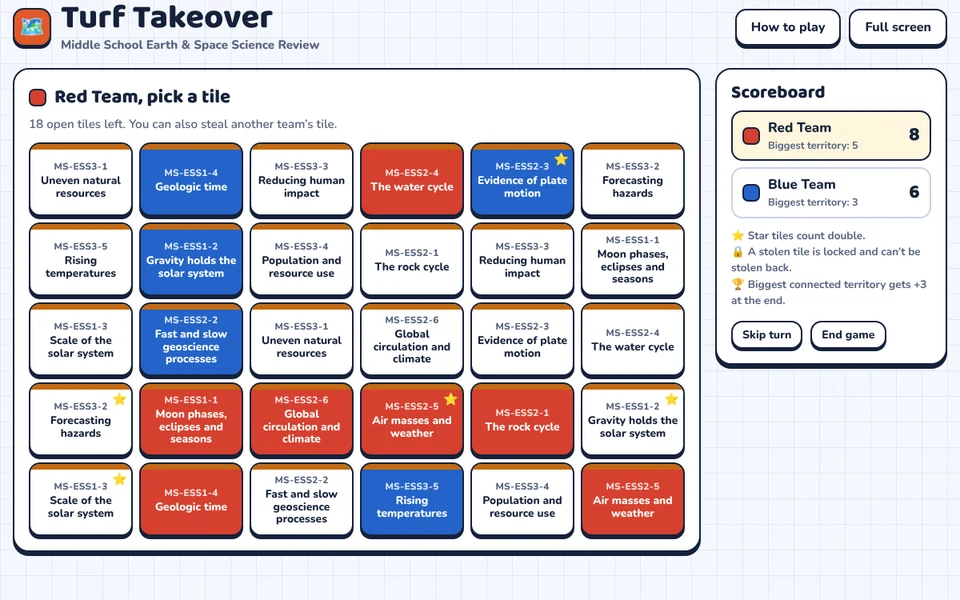
A team review game for every NGSS middle school earth & space science standard. Teams claim tiles on a map by answering questions, and can steal each other's tiles. Play a full review or pick the standards you want. The results show % correct for each standard.
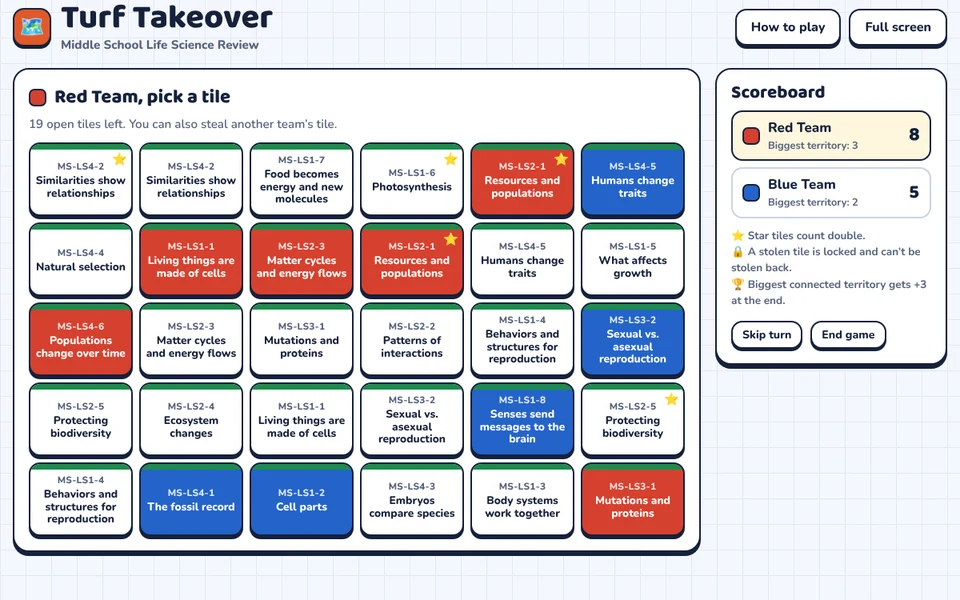
A team review game for every NGSS middle school life science standard. Teams claim tiles on a map by answering questions, and can steal each other's tiles. Play a full review or pick the standards you want. The results show % correct for each standard.
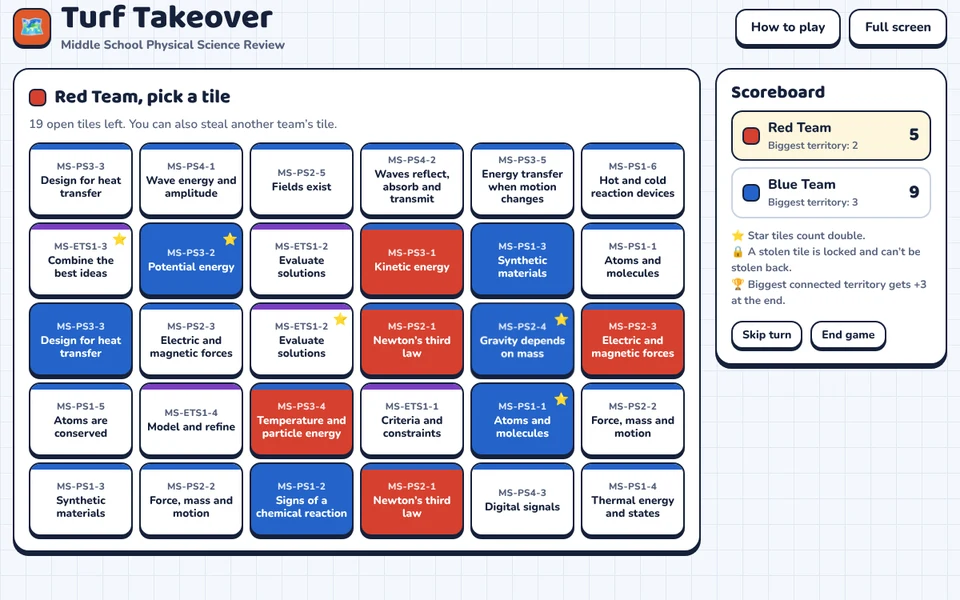
A team review game for every NGSS middle school physical science standard. Teams claim tiles on a map by answering questions, and can steal each other's tiles. Play a full review or pick the standards you want. The results show % correct for each standard.
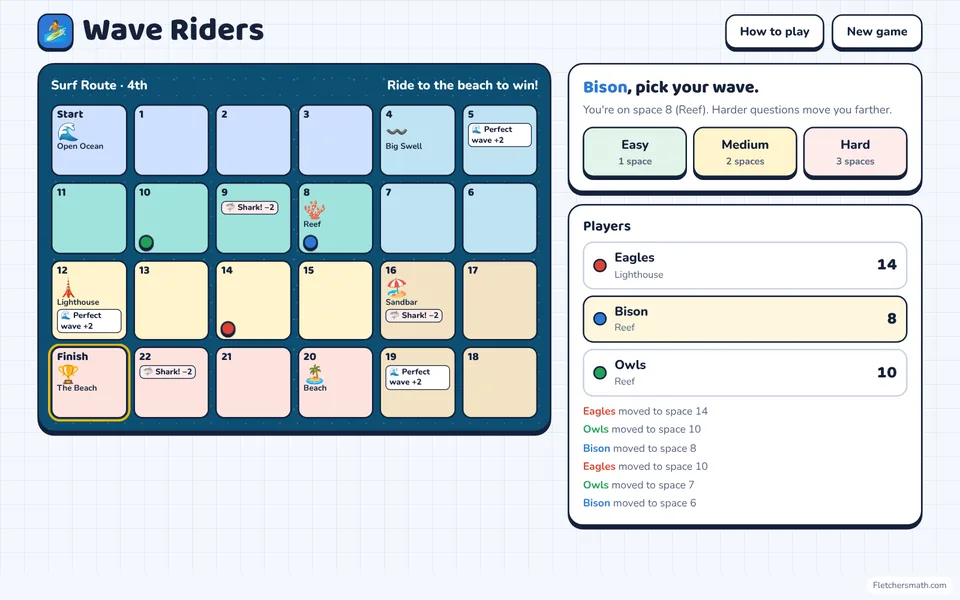
Sound, light, wave parts and how information travels. Surf the waves to the beach.
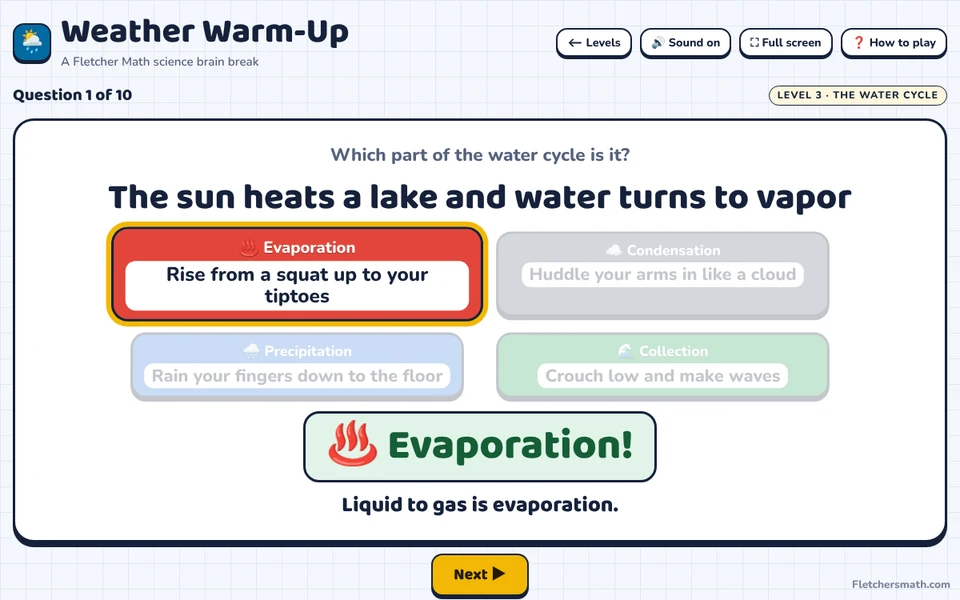
A weather card appears. Students act out sunny, rainy, windy or snowy, the water cycle, weather tools or weather fronts.
The 8th Grade Classroom Bundle has 10 games, 3 brain breaks and 2 labs picked for this grade. The Grades 6–8 Classroom Kit has every product for Grades 6–8: 110 games, 20 brain breaks and 43 labs.
The All-Access Teacher License includes every game, every grade and all future games.