Why Strategy Team Games Help in STEM Classes
A quiz with a scoreboard rewards the fastest student. A strategy game rewards the one who thinks ahead, and in a team, that thinking happens out loud where everyone can hear it.
Short answer: strategy team games ask students to make choices, plan a move ahead, weigh risk and explain their reasoning to teammates, which are the same habits math and science ask for. Because the best move isn't always the fastest answer, more students get a real role, and because teams talk it through, you can hear their thinking.
What strategy adds to a math or science game
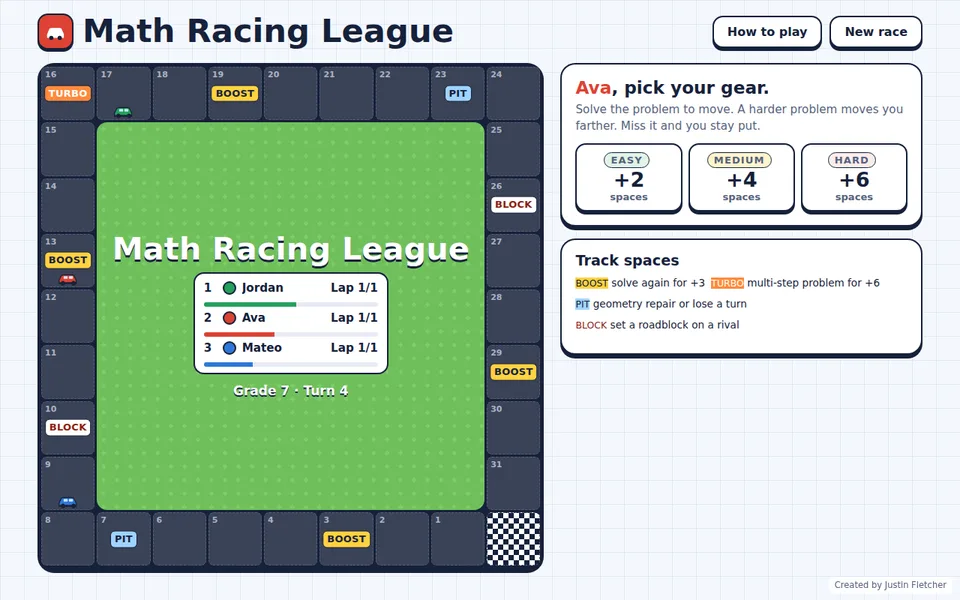
- Choices with trade-offs. Picking an Easy, Medium or Hard problem for 2, 4 or 6 spaces is a small risk decision every turn.
- Planning ahead. Placing a piece to block a rival, or saving a bonus for later, means thinking past the current question.
- Reasoning out loud. Teams have to agree on an answer, so the reasoning gets said, and a wrong idea gets caught.
- Room to come back. When a team that's behind can catch up with a good decision, everyone keeps trying until the end.
What to look for
- The math or science is how you move, not a quiz between turns.
- There's more than one good choice on a turn.
- Teams, not individuals, so everyone contributes.
- Short rounds, so a new round is a fresh start.
Strategy team games by grade band
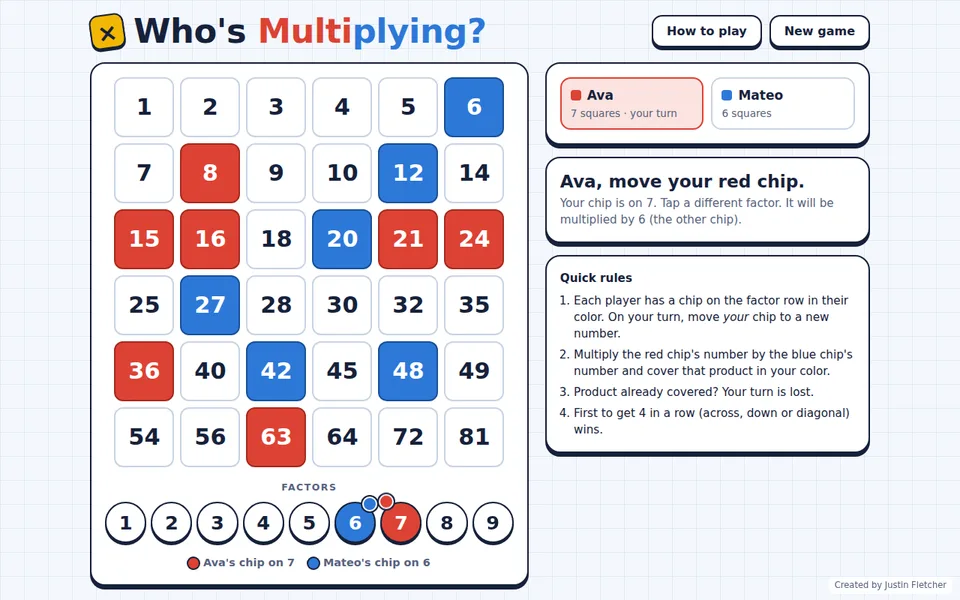
- Grades 3–5: Who's Multiplying?, a four-in-a-row duel where you choose factors to block your opponent.
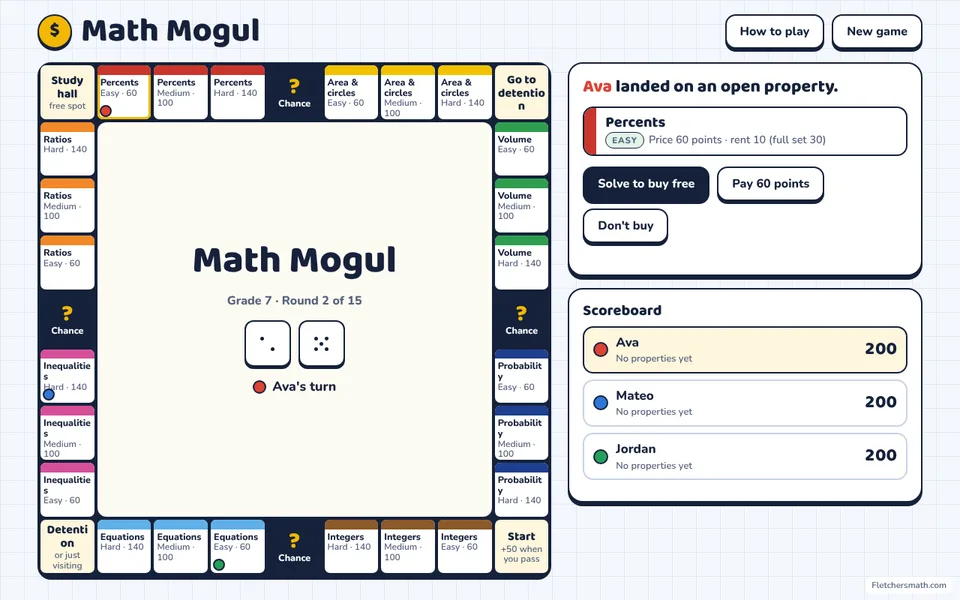
- Grades 3–8: Math Racing League (choose your difficulty for more spaces) and Math Mogul (buy, trade and collect rent).
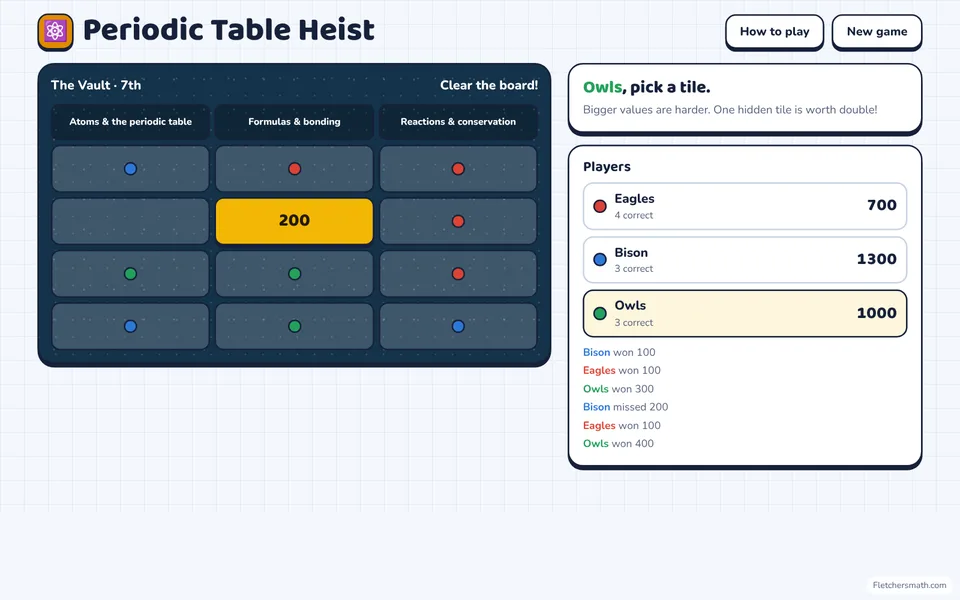
- Grades 6–8 science: Periodic Table Heist and Food Web Frenzy.
- High school: If-Then Courtroom (Geometry logic, with steals) and Solve-It Showdown (Algebra 1 bounties that grow when missed).
Every Fletcher Math game is for 1 to 6 players or teams on one shared screen, runs offline, and needs no student logins. See all 266 games.
Common questions
Are strategy games only for advanced students?
No. Strategy lets students who aren't the fastest calculators still make winning moves, which keeps more of the class in the game.
Do these games work for science as well as math?
Yes. Fletcher Math has 59 science games and 166 math games, and many use the same team and strategy formats.