Why Arcade-Style Math Games Work for Independent Practice
Independent practice is where a lot of elementary students drift off task. Arcade-style games keep them going, but only some of them keep the focus on the math.
Short answer: arcade-style math games are popular for independent practice in elementary math because they give students many quick problems, instant feedback and a clear goal, like beating a level or a boss, so students keep going on their own. The best ones put the math at the center of every action and let the student or teacher pick the difficulty, so the speed builds fluency instead of frustration.
What makes arcade games good for practice
- Lots of reps. Short rounds mean many more problems than a worksheet in the same time.
- Instant feedback. Students know right away if an answer was right, so mistakes don't get practiced.
- Small goals. Levels, streaks and boss rounds give students a reason to try one more.
- Independence. Students don't need you to explain the next step, which frees you up for a small group.
What to watch out for
- Speed over thinking. If the timer is too tight, students guess. Look for difficulty settings so you can slow it down.
- Math on the side. Some games ask a problem, then reward it with an unrelated game. Students learn to rush the math to get to the fun part.
- No skill focus. A game should practice a specific skill, like multiplication facts or place value, so it fits what you're teaching.
Where they fit in an elementary block
- Math centers while you work with a small group.
- Fact fluency for addition, subtraction and multiplication facts.
- Early finishers, as practice that isn't busywork.
Arcade games are for one student at a time. For whole-class practice, a team game on the smartboard gets everyone talking about the math. See team games or solo practice for how to choose.
Fletcher Math options
Premium arcade games. Fletcher Math Premium has 144 arcade games for K–12 that students play in the browser with a class code, with no student accounts. Each question has a burning fuse, and you pick Easy, Medium or Hard. There are hearts, combo streaks and boss rounds, and most games have skill levels labeled with Oklahoma and Common Core standards. Try a free demo of Bunny Hop Count, Place Value Pirates or Meteor Multiply.
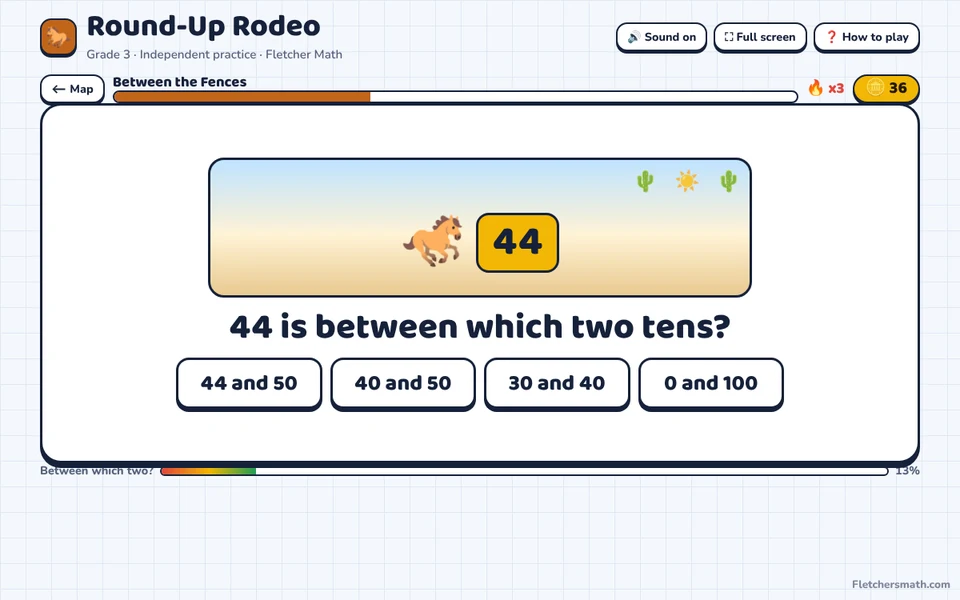
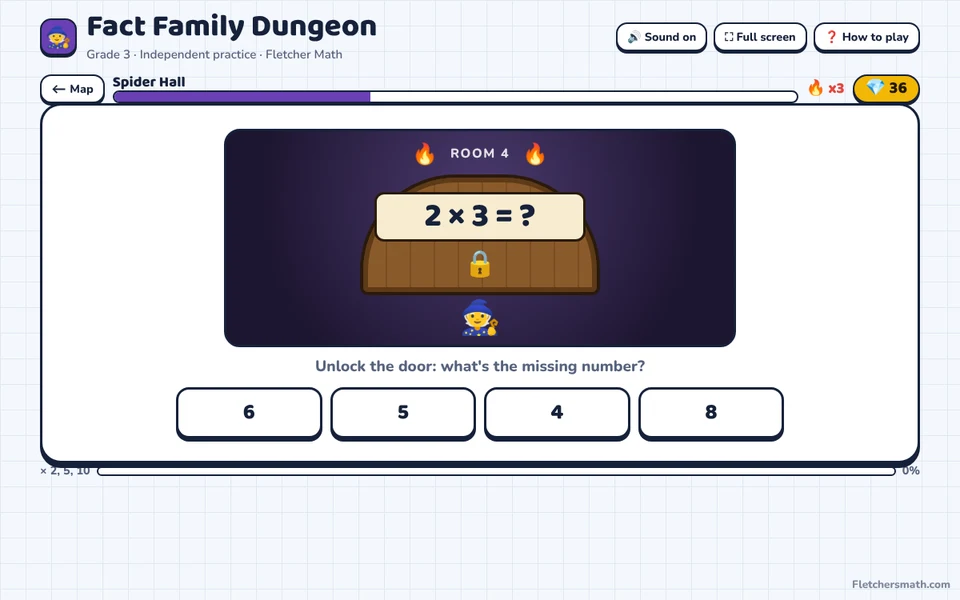
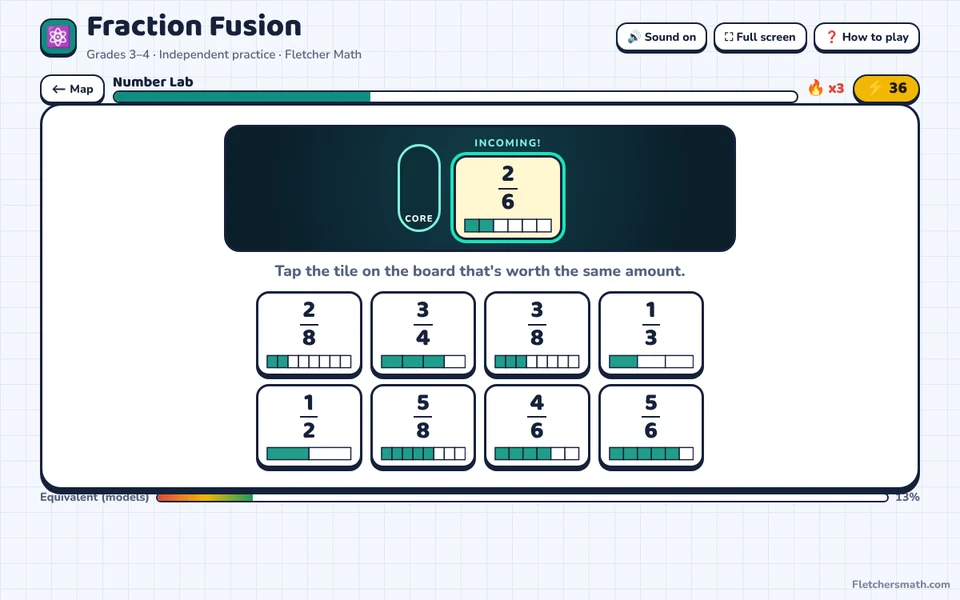
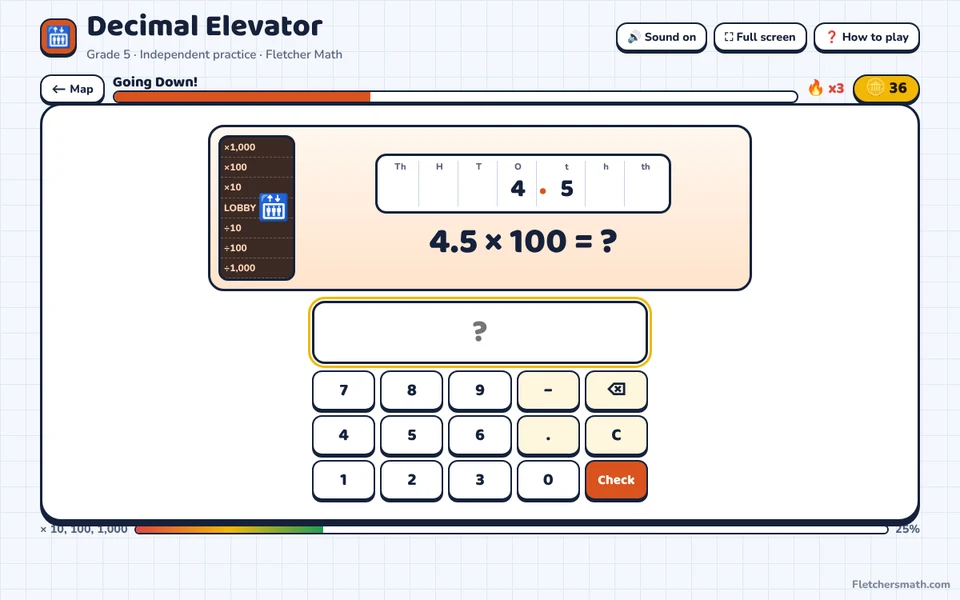
Downloadable practice games. These single-player games run offline and end with a skills report: Round-Up Rodeo (rounding, grade 3), Fact Family Dungeon (multiplication and division facts, grade 3), Fraction Fusion (equivalent fractions, grades 3–4) and Decimal Elevator (powers of ten, grade 5).
Common questions
Are arcade math games too fast for struggling students?
They can be if the timer can't be changed. Pick games with difficulty settings. In Fletcher Math Premium you choose Easy, Medium or Hard for each question.
Do students need accounts for Premium?
No. The teacher signs in and puts a class code on the board, and students play without accounts of their own.