Grades 6–12 · Argument & Informational Text
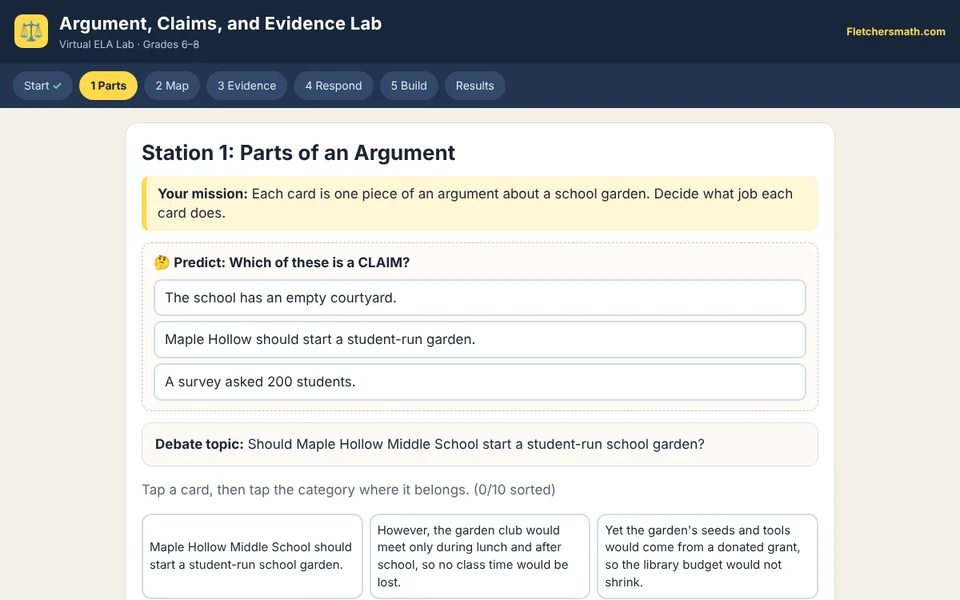
Argument, Claims, and Evidence Lab
Students sort the parts of an argument, map an editorial, test evidence, answer counterclaims and build arguments.
26 multiplayer classroom games and 29 virtual labs that practice writing skills, for Kindergarten, 1st Grade, 2nd Grade, 3rd Grade, 4th Grade, 5th Grade and more. The games play on one shared screen and the labs run on each student's device. No student logins, works offline, and every one has a free demo you can try right now.
Students sort the parts of an argument, map an editorial, test evidence, answer counterclaims and build arguments.
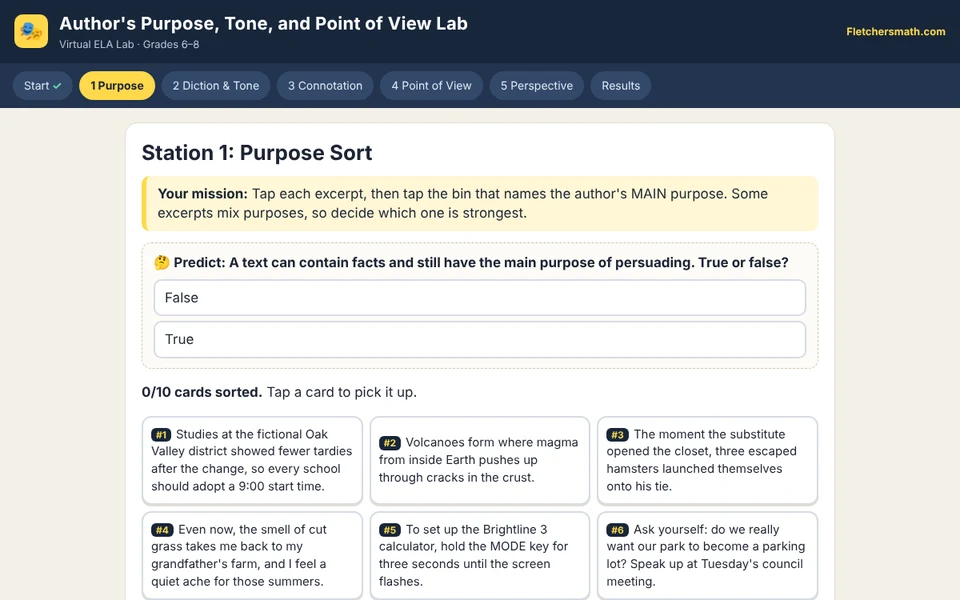
Students sort texts by purpose, highlight tone words, shift connotation, identify point of view and track perspective.
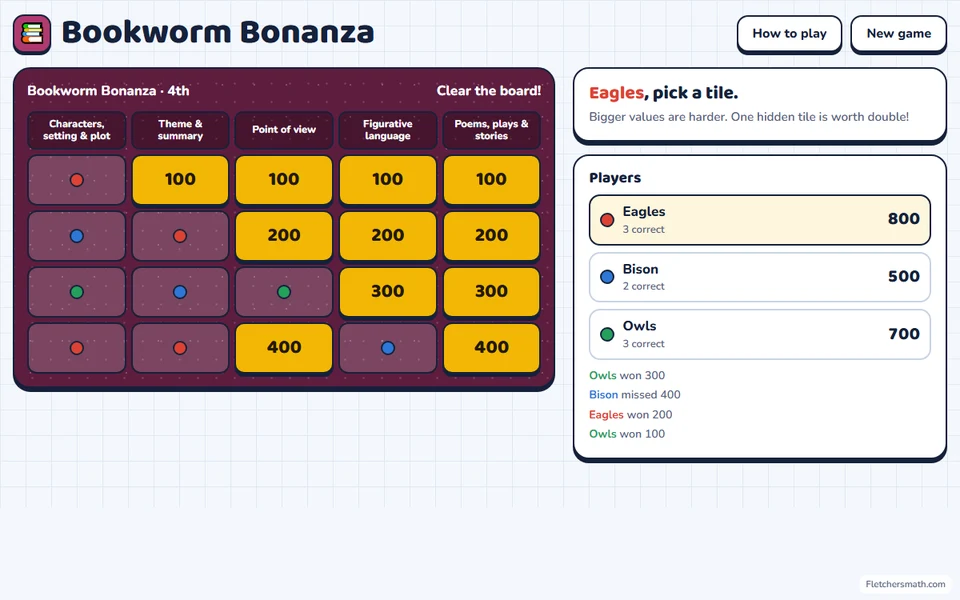
A literature game show for grades 3–5: characters, theme, point of view, figurative language, and poems, plays and stories.
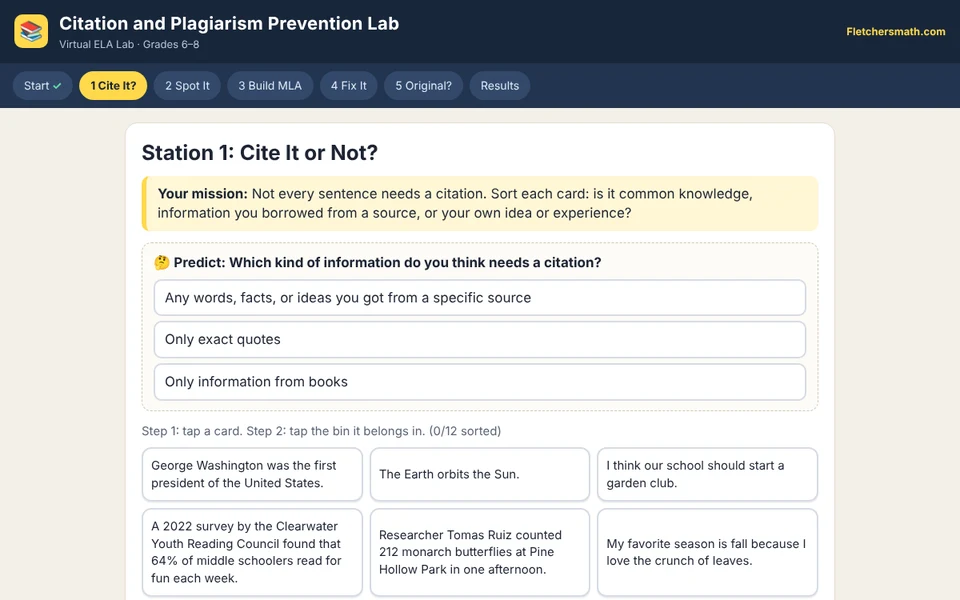
Students decide what needs a citation, catch plagiarism in a draft, build and fix citations and judge originality.
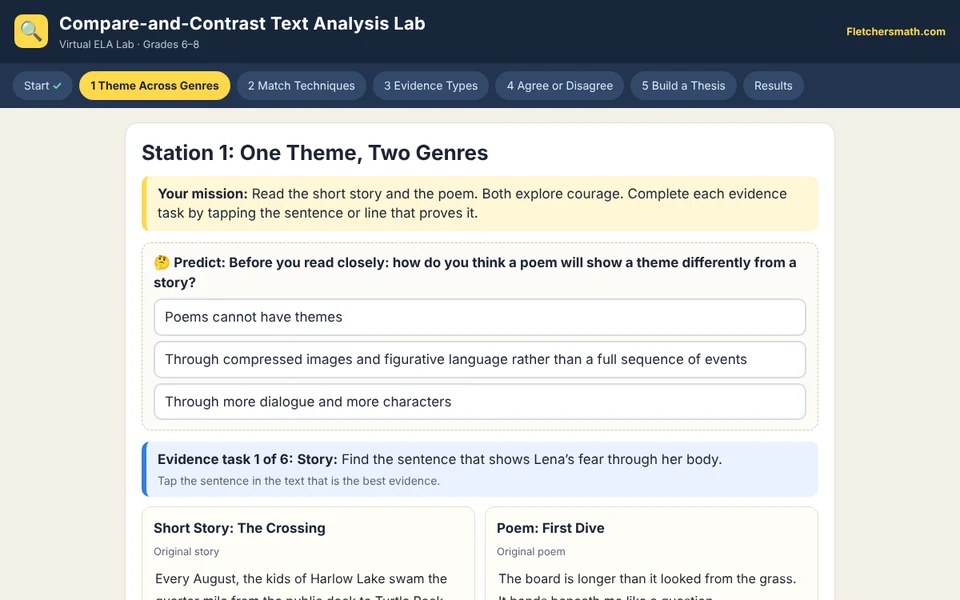
Students compare paired stories, poems and articles by finding evidence, sorting details and building comparisons.
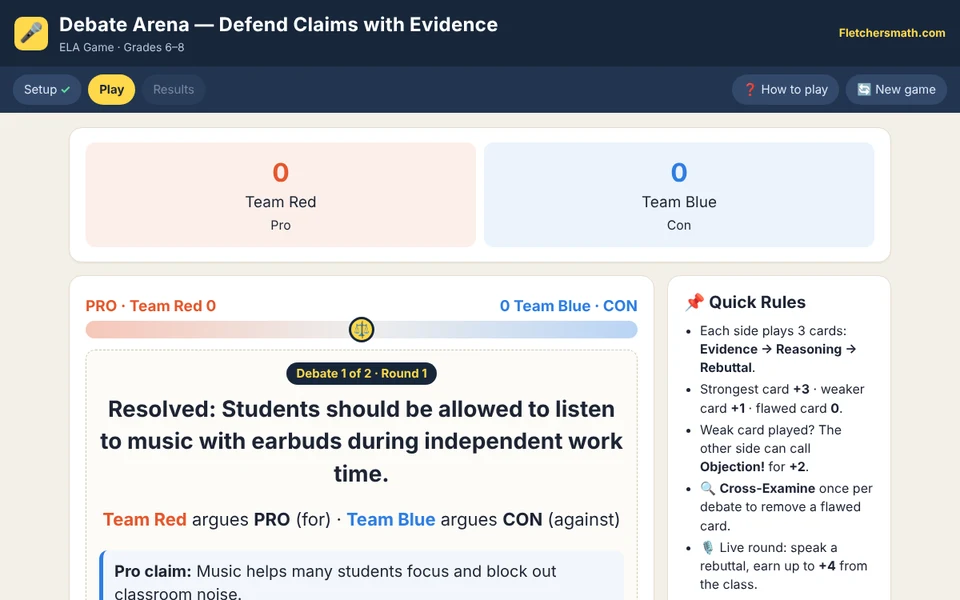
Teams argue Pro or Con by playing the strongest evidence, reasoning and rebuttal cards, then speak a rebuttal.
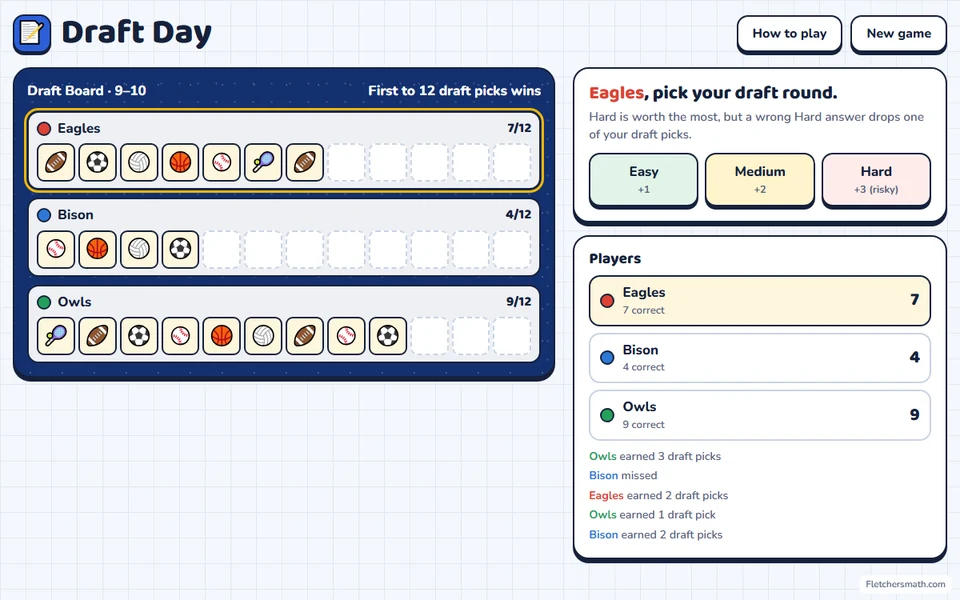
Build your team by drafting strong writing: sharp thesis statements, relevant evidence and commentary, logical organization, vivid narrative craft and revisions that fit the audience.
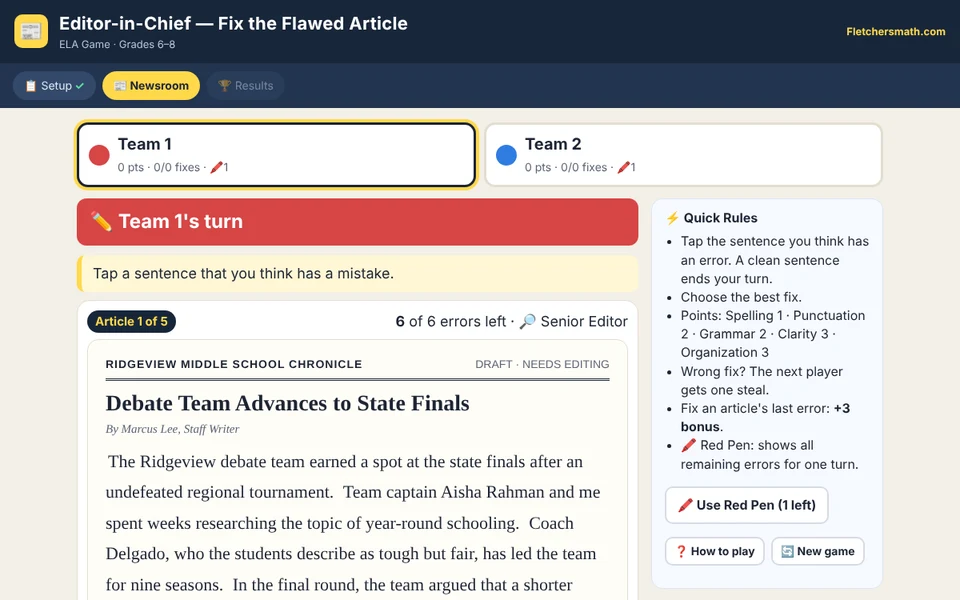
Players hunt for errors in newspaper articles and choose the best fix to earn points and the Front Page bonus.
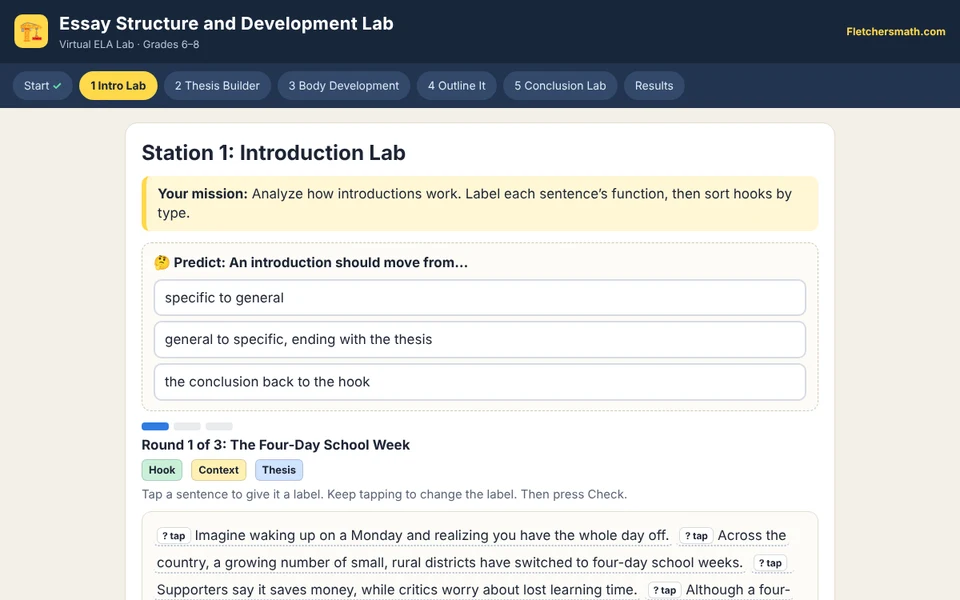
Students label introductions, build thesis statements, develop body paragraphs, order essays and revise conclusions.
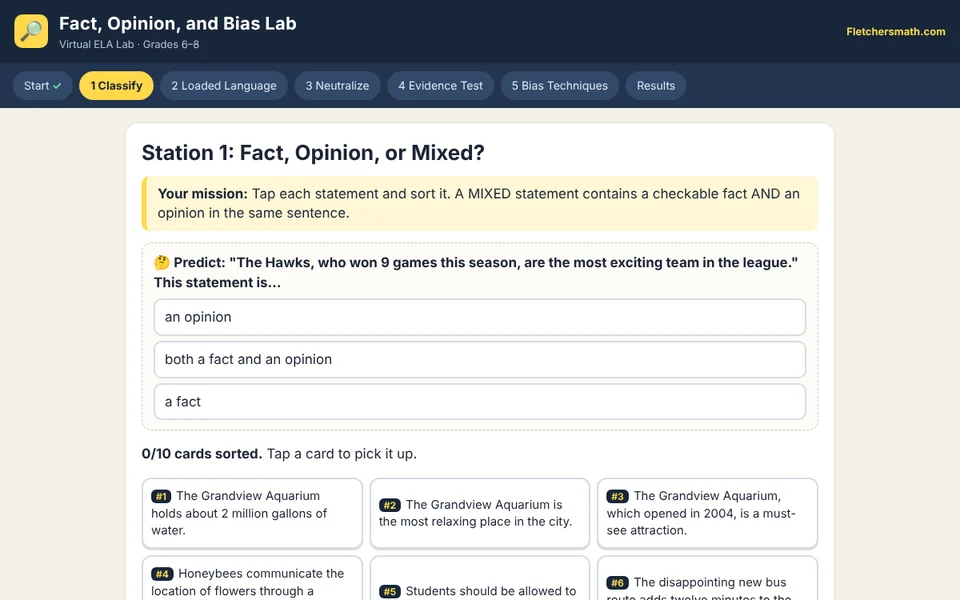
Students sort fact from opinion, flag loaded words, rewrite slanted sentences, test evidence and name bias techniques.
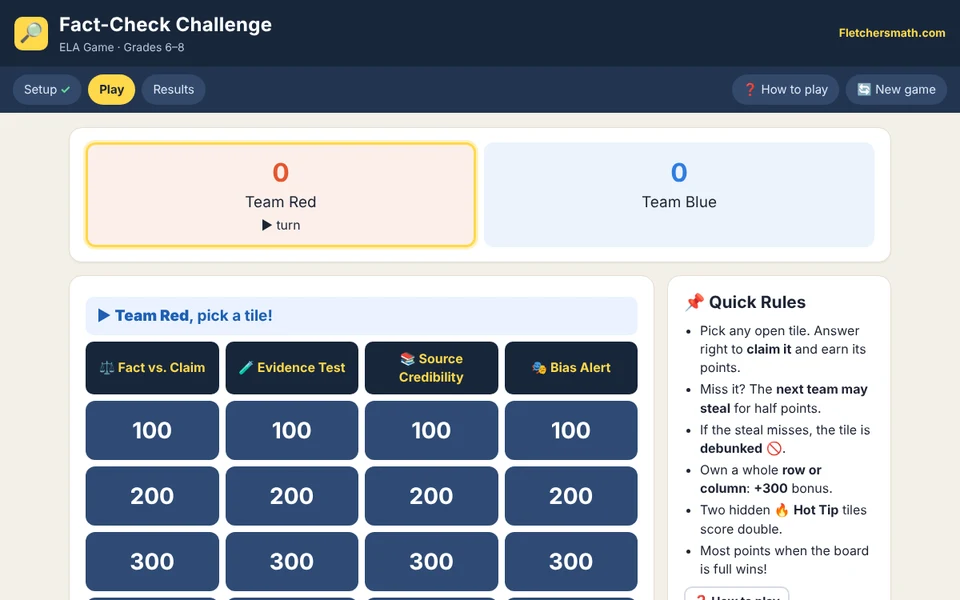
Teams claim tiles by sorting fact from opinion, judging evidence, checking sources and catching bias.
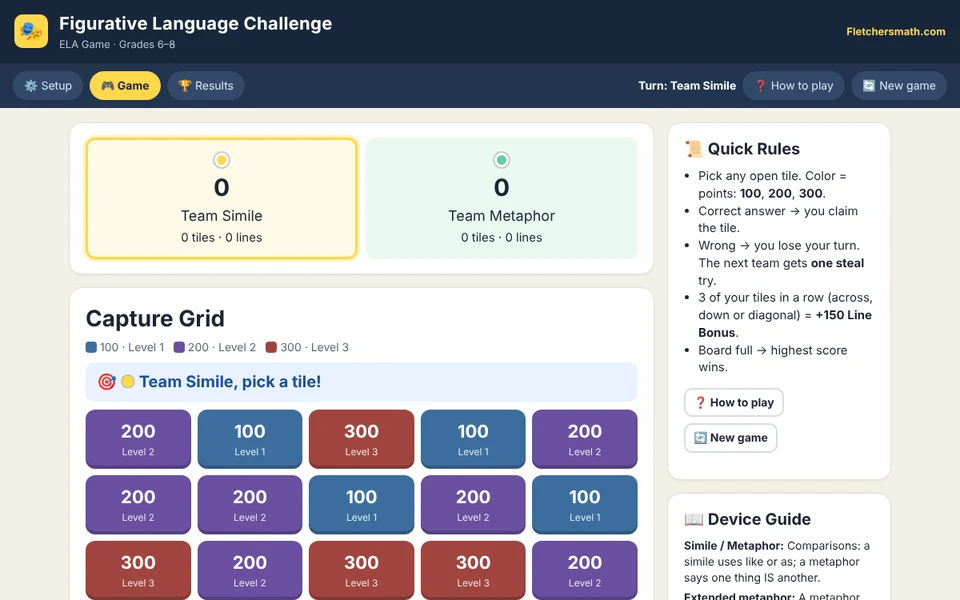
Teams claim tiles by naming figurative language and explaining what it means in context.
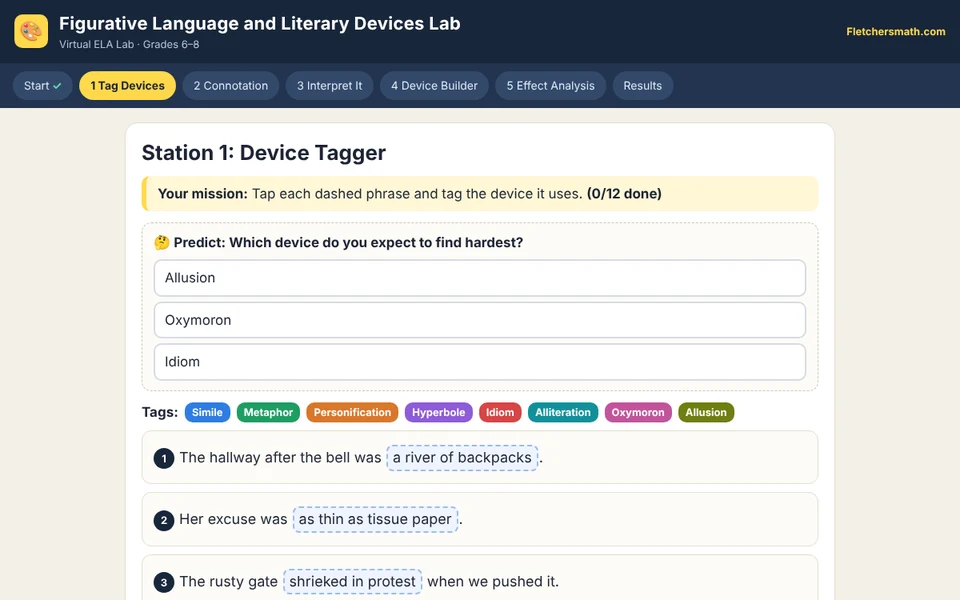
Students sort figurative lines, tag devices, decode idioms and phrases in context and analyze what each device does.
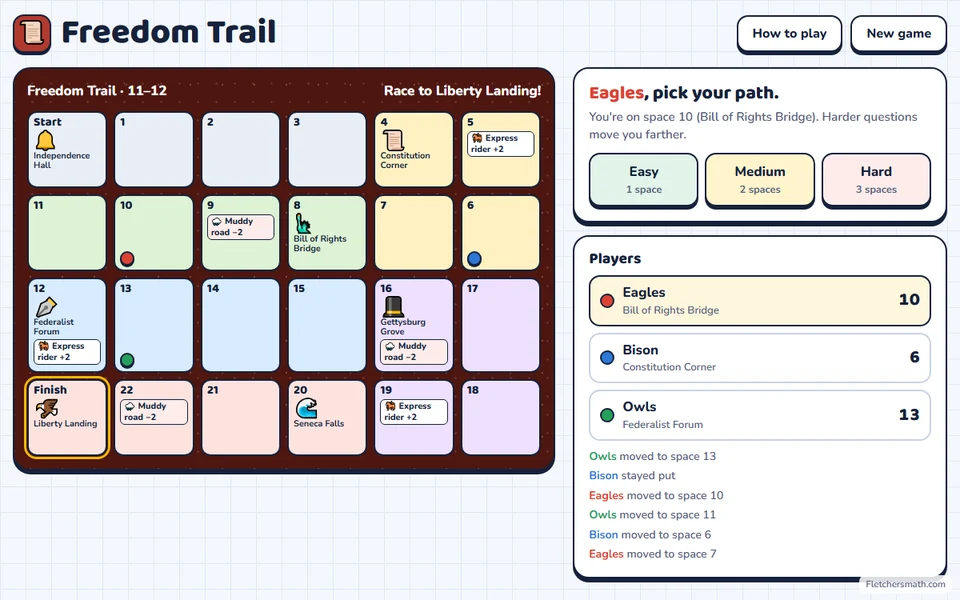
Race along the Freedom Trail by reading founding documents: find each author’s purpose, paraphrase key lines, analyze structure and rhetoric, and compare documents across history.
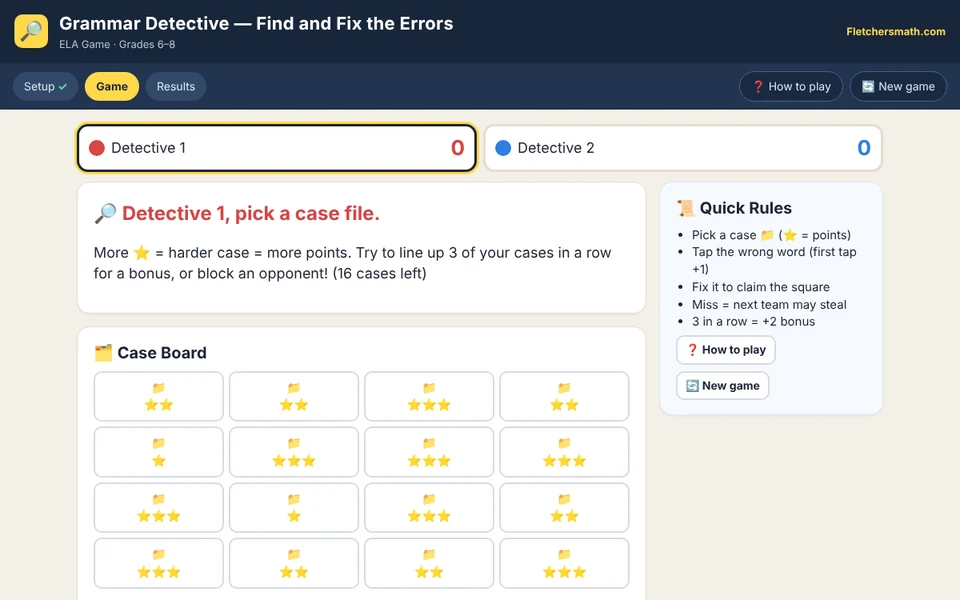
Teams tap the one wrong word in each sentence and fix it to claim cases on the board.
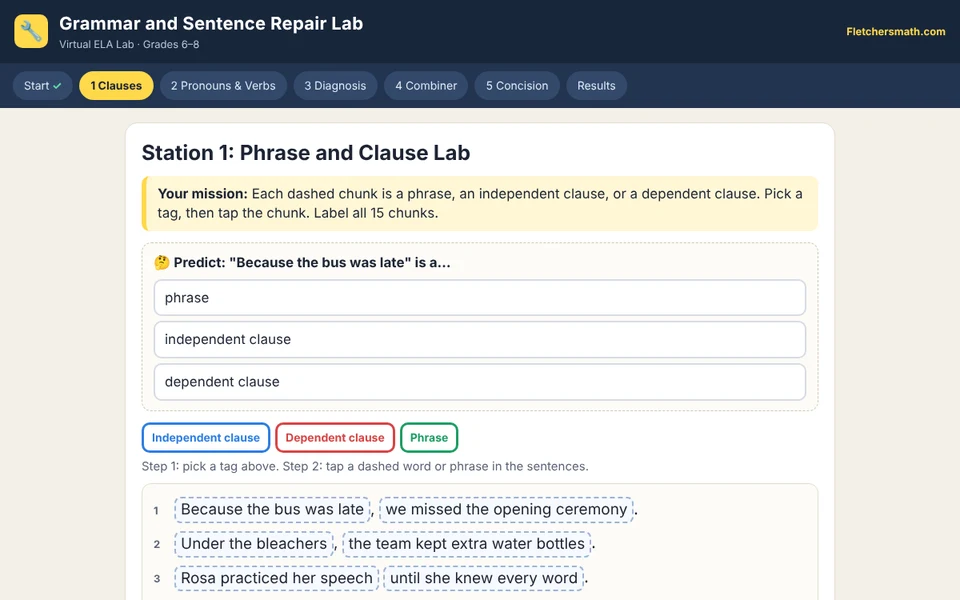
Students tag sentence parts, fix errors in a passage, diagnose broken sentences, combine ideas and revise for clarity.
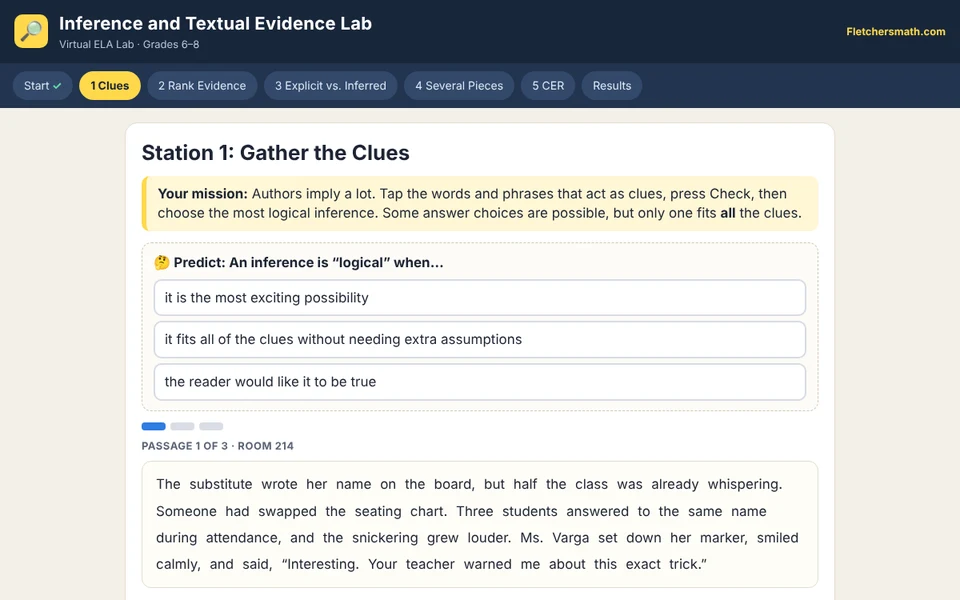
Students collect clues, pick the strongest evidence, separate stated from inferred ideas and build evidence answers.
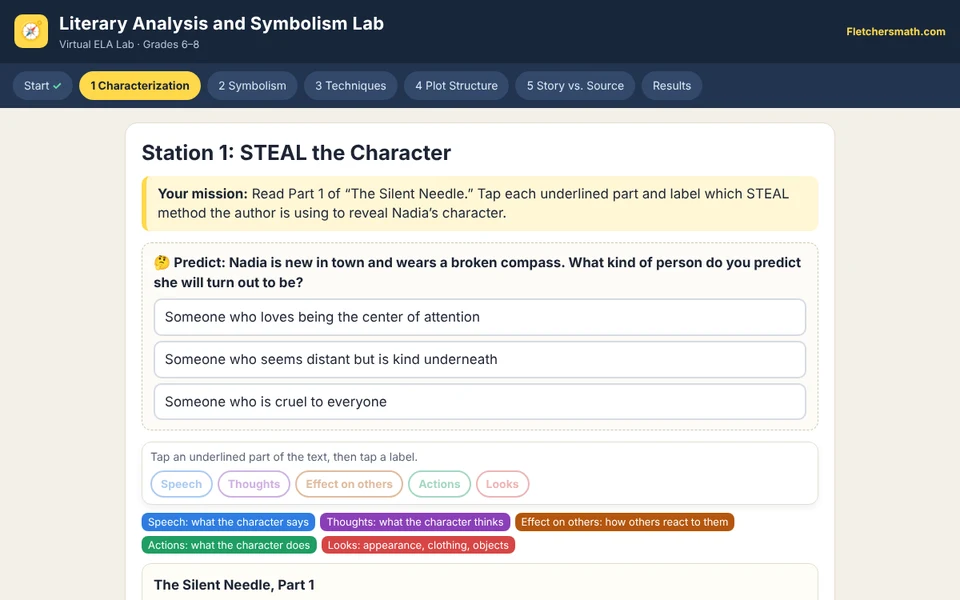
Students analyze characterization, decode symbols, label techniques, map plot structure and write about a story.
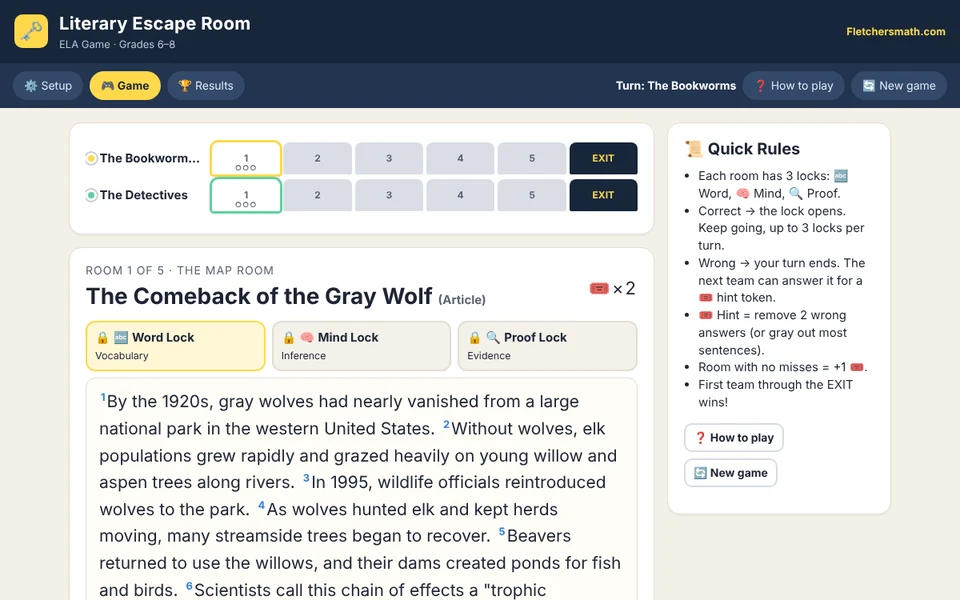
Teams read short passages and open three locks per room using vocabulary, inference and text evidence.
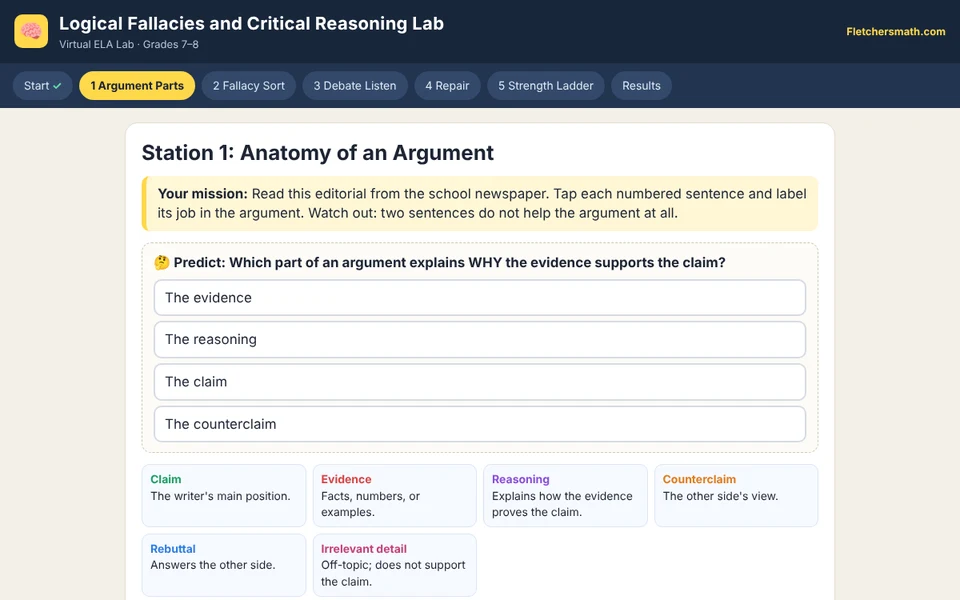
Students map arguments, sort fallacies, judge a debate, repair faulty reasoning and rank evidence by strength.
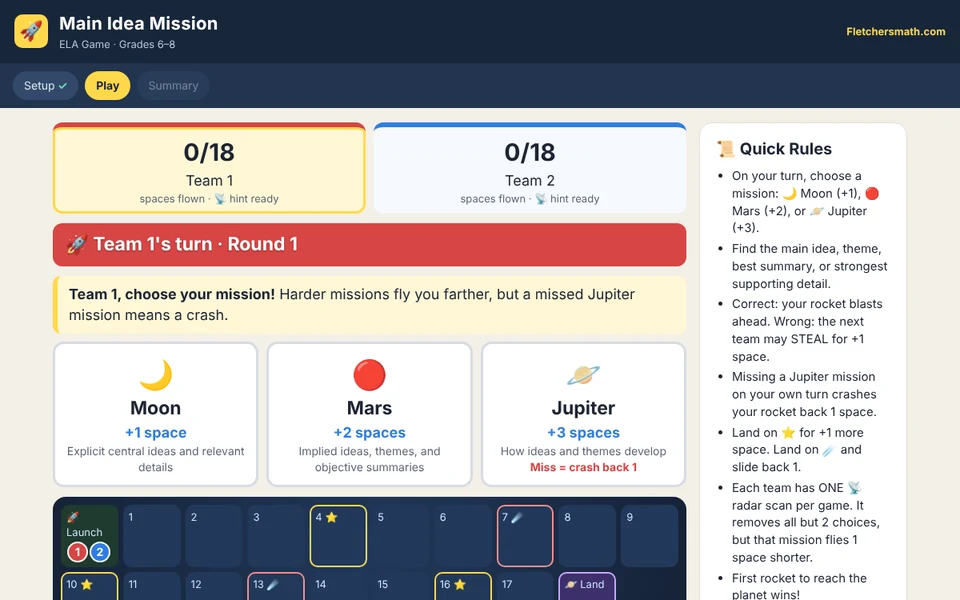
Teams race rockets by finding main ideas, themes, key details and the best summary of short passages.
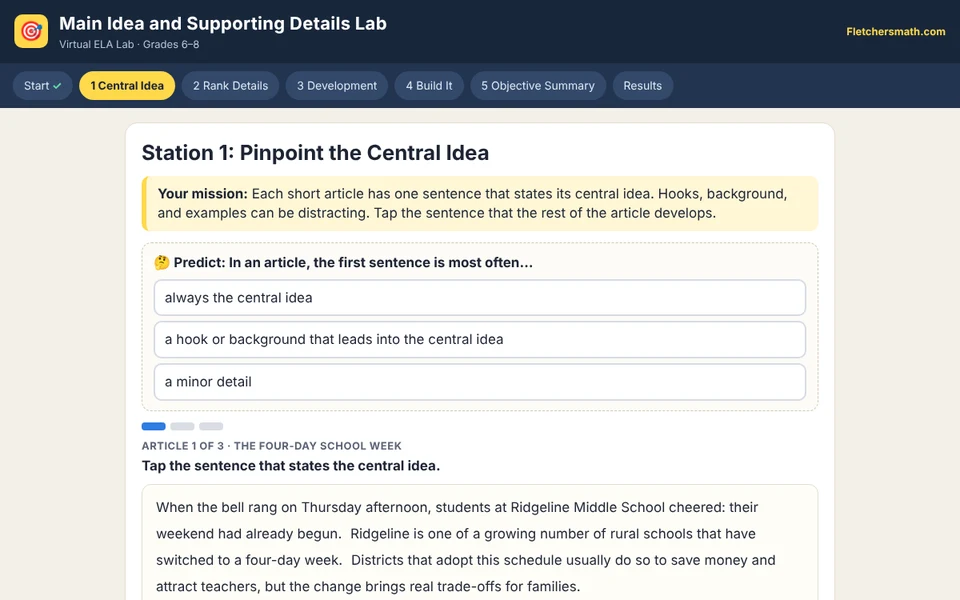
Students find main ideas, sort key and minor details, build unstated main ideas and write objective summaries.
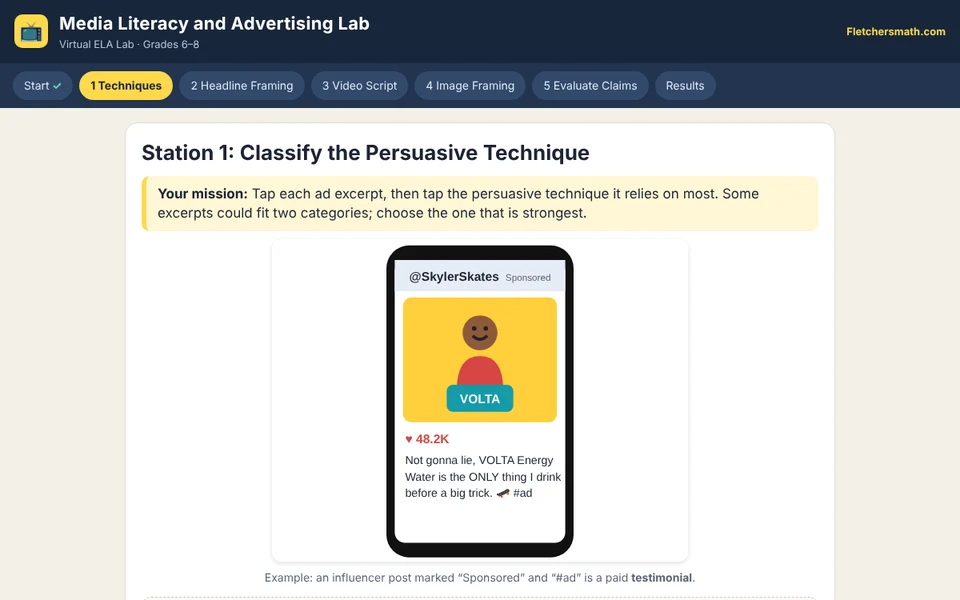
Students name ad techniques, sort ad claims, test how images and headlines frame a message and make or analyze an ad.
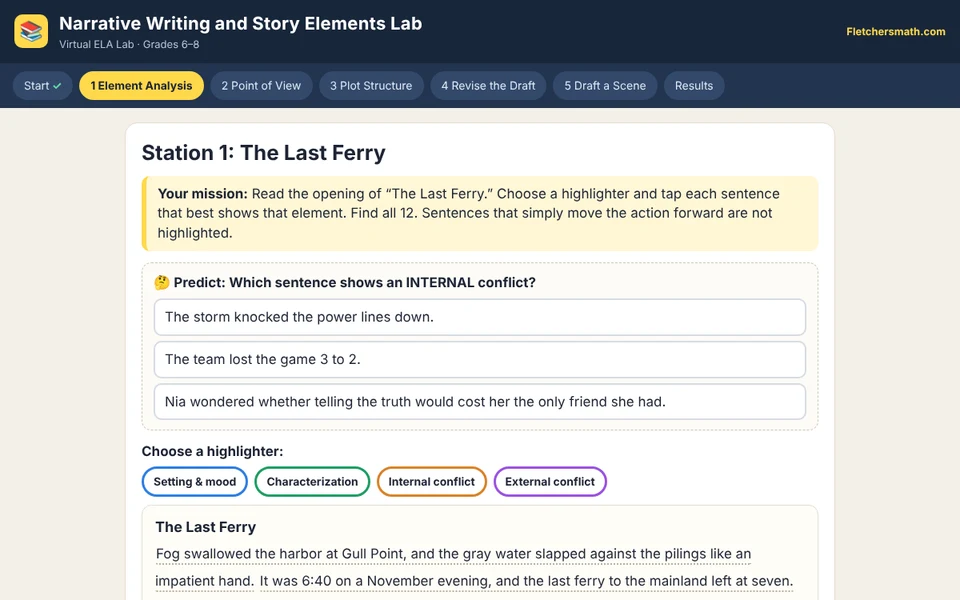
Students find story elements, order a plot, identify point of view, test pacing and dialogue and draft a scene.
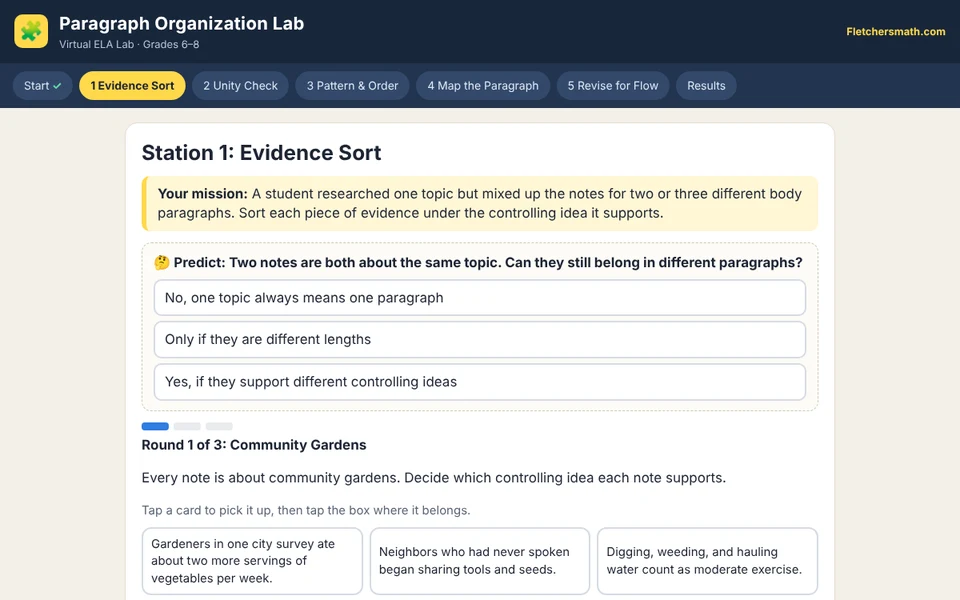
Students sort sentences by topic, cut off-topic lines, order sentences, label paragraph parts and add transitions.
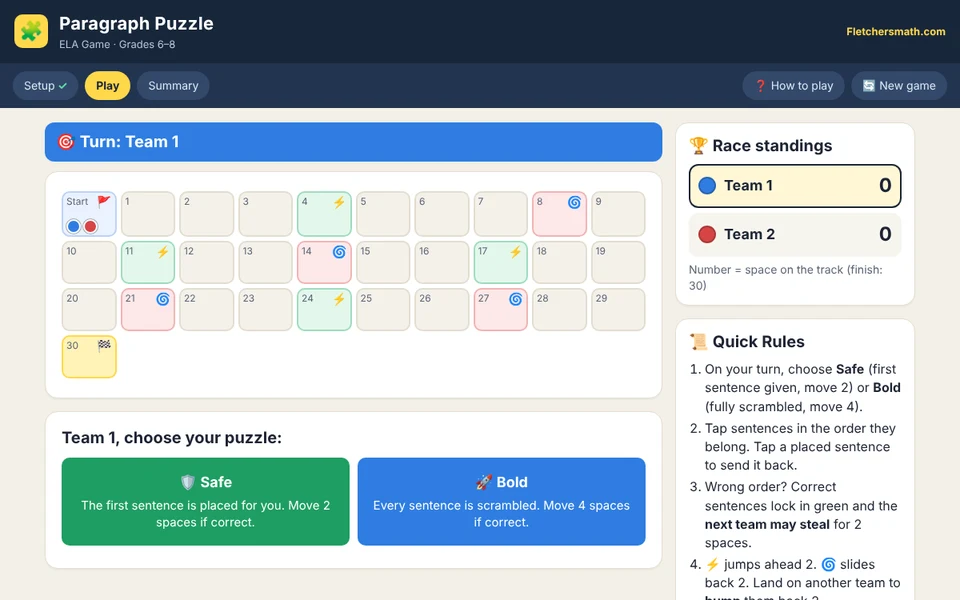
Teams rebuild scrambled paragraphs in a logical order to move their tokens around a race track.
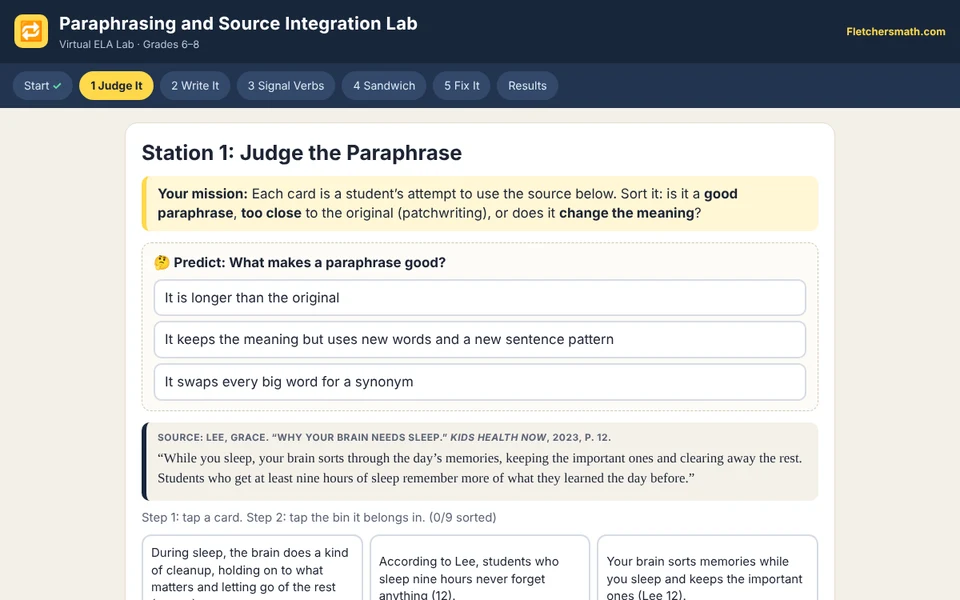
Students judge and write paraphrases, test signal verbs, build quote sandwiches and fix poorly integrated evidence.
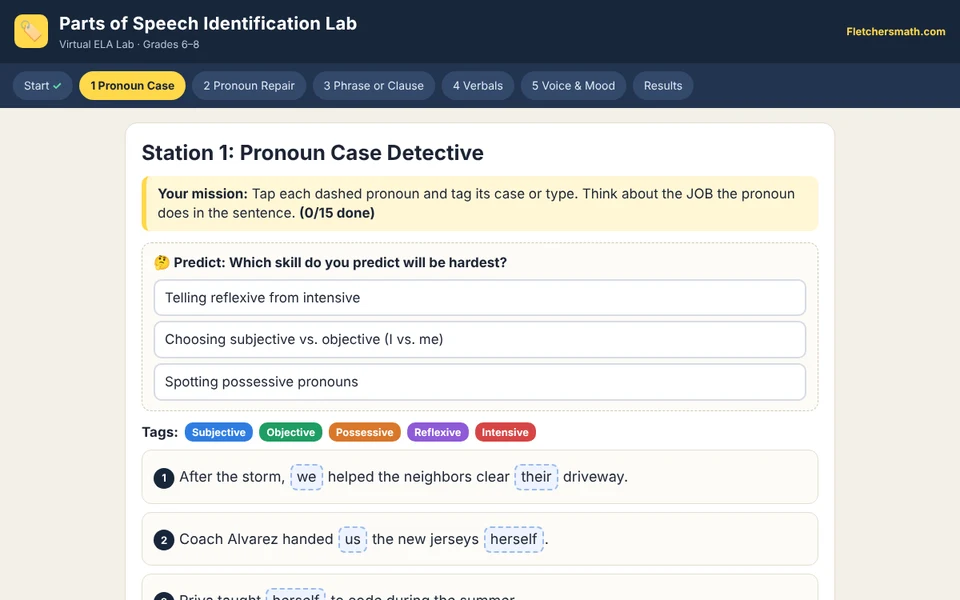
Students tag words in sentences, sort word cards by part of speech and fix words that are used the wrong way.
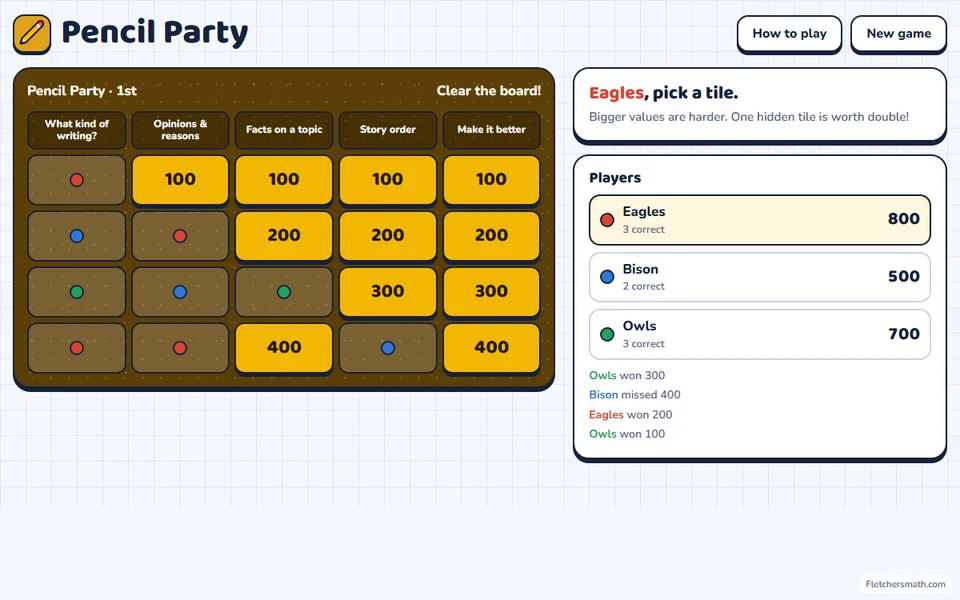
A K–2 writing game show: tell stories, facts and opinions apart, pick strong reasons, choose facts that fit a topic, put stories in order and make writing better.
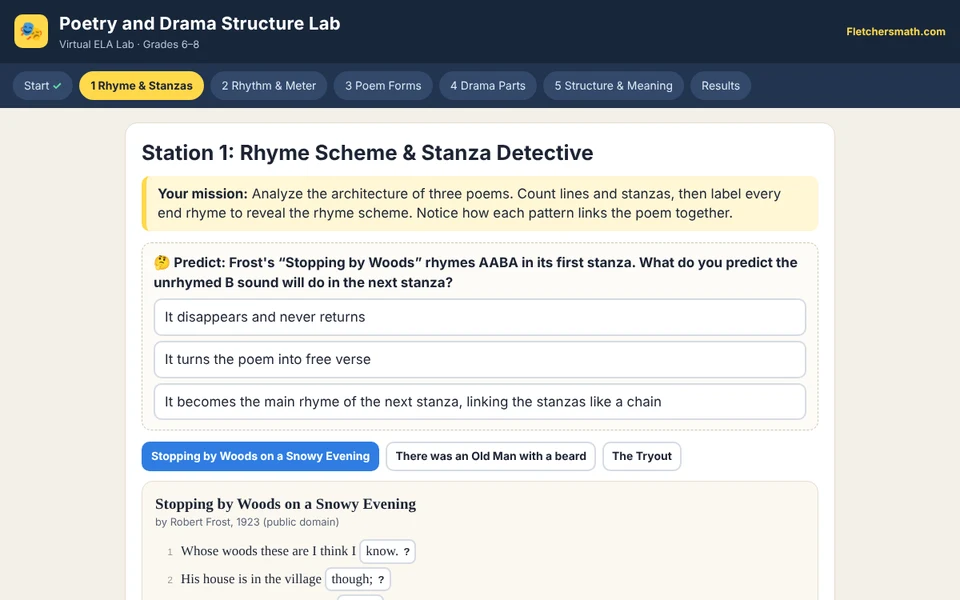
Students map rhyme schemes, mark stressed syllables, sort poem forms, color-code a play script and test structure.
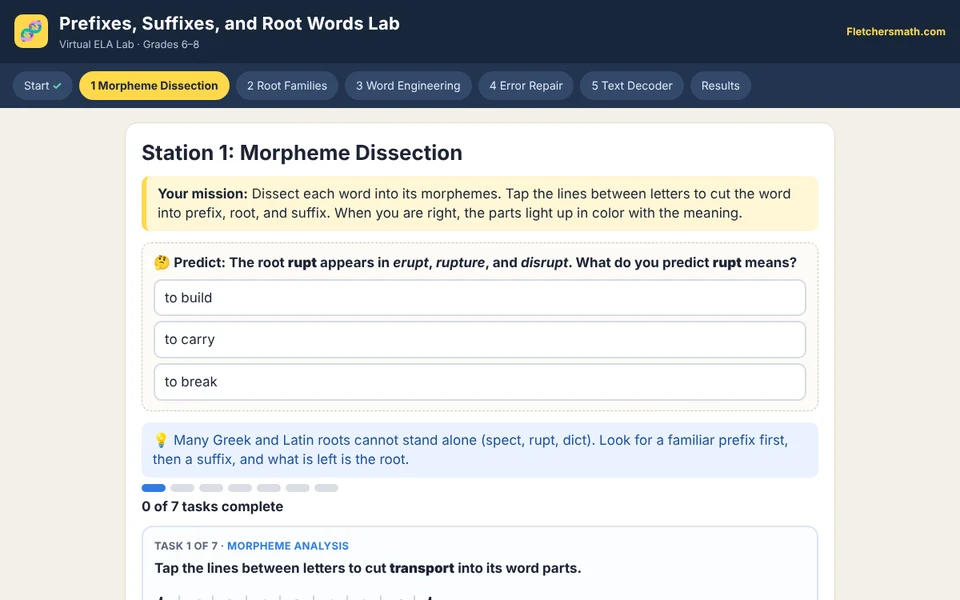
Students split words into parts, sort affixes and roots, build words from tiles and use word parts to read a text.
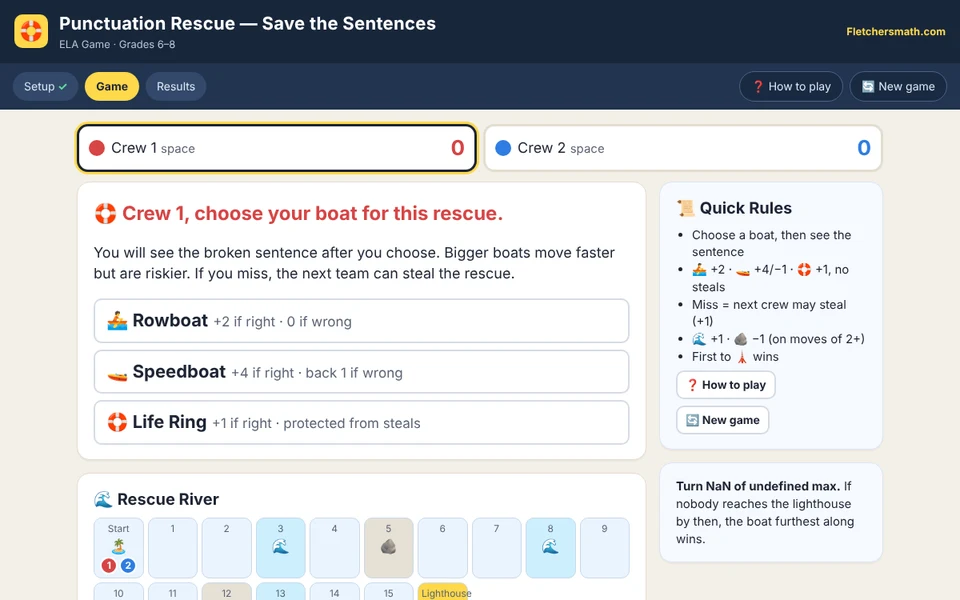
Crews fix capitalization and punctuation in broken sentences to race their boats to the lighthouse.
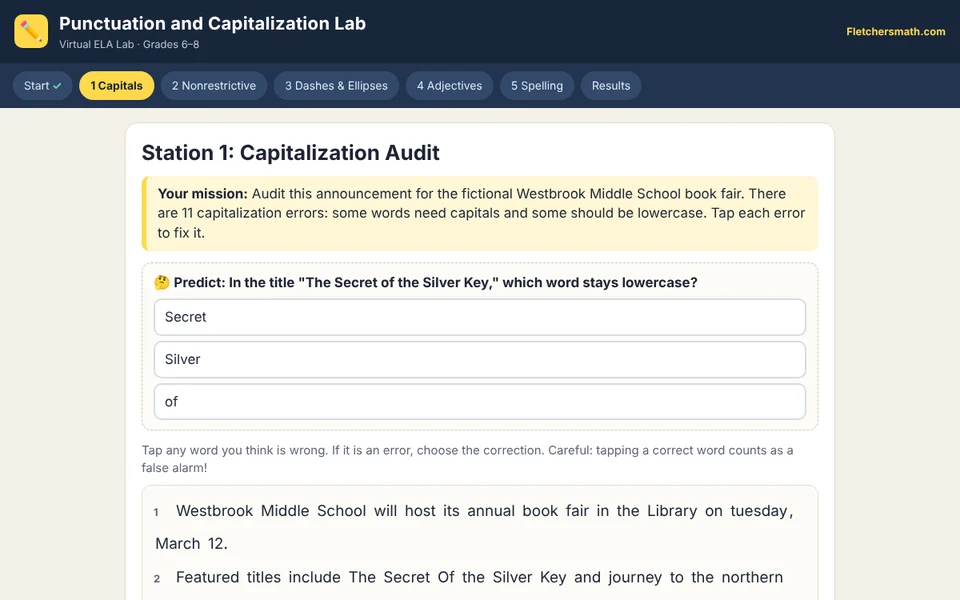
Students fix capitals, place punctuation marks between words, sort tricky cases and correct spelling in short texts.
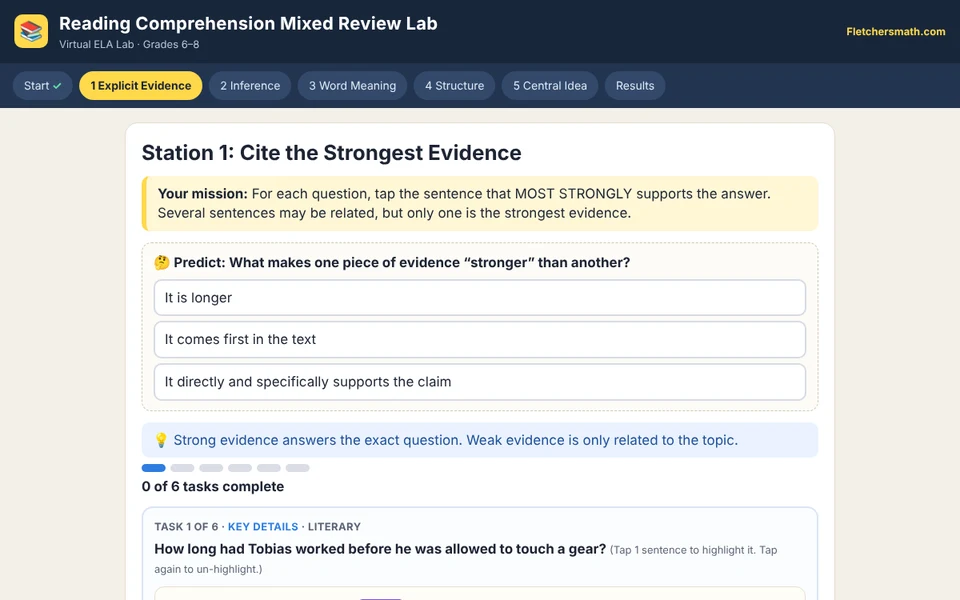
Students read a story and an article, then cite evidence, infer, work out word meanings, analyze structure and theme.
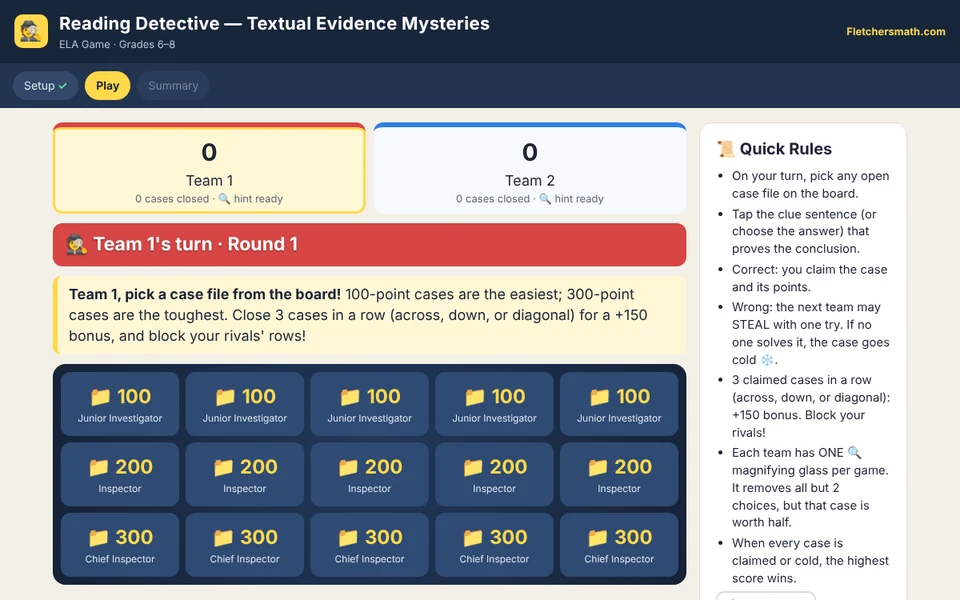
Teams solve short mysteries by finding the clue sentence that proves a conclusion and claiming cases.
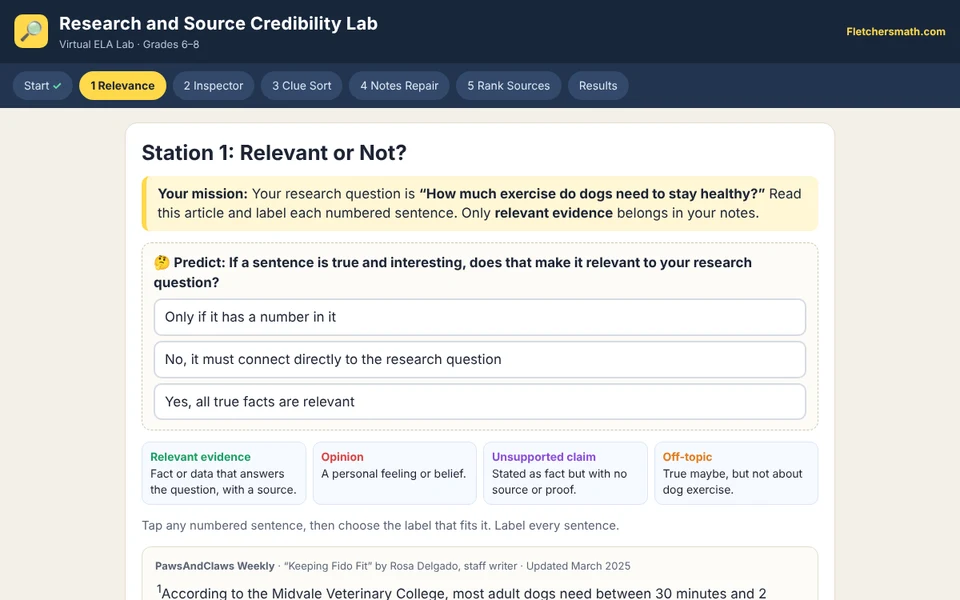
Students pick relevant evidence, inspect sources, sort credibility clues, repair research notes and rank sources.
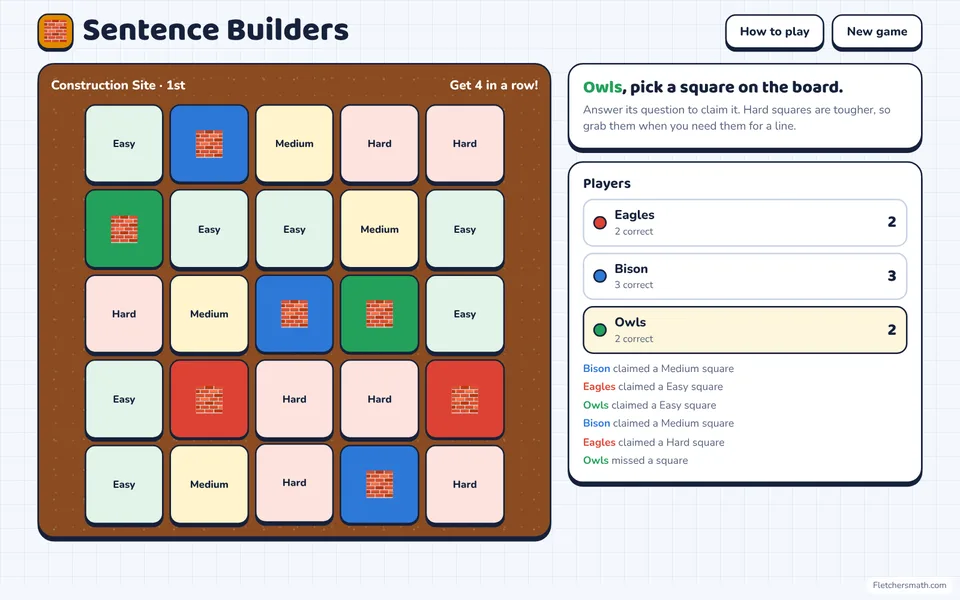
Fix capitals, punctuation, nouns and verbs to build a wall of perfect sentences.
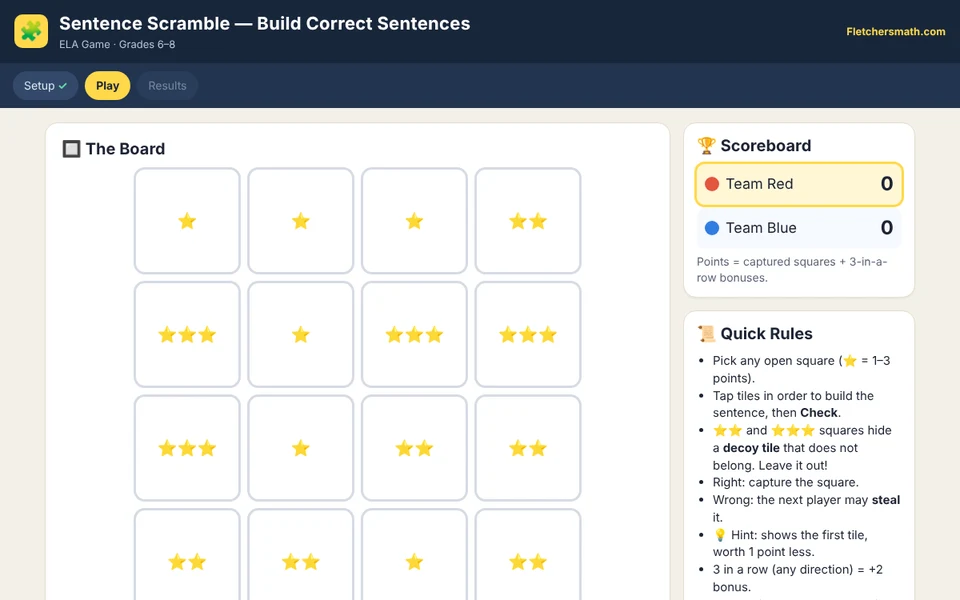
Players build correct sentences from scrambled word tiles, leaving out decoys, to capture squares.
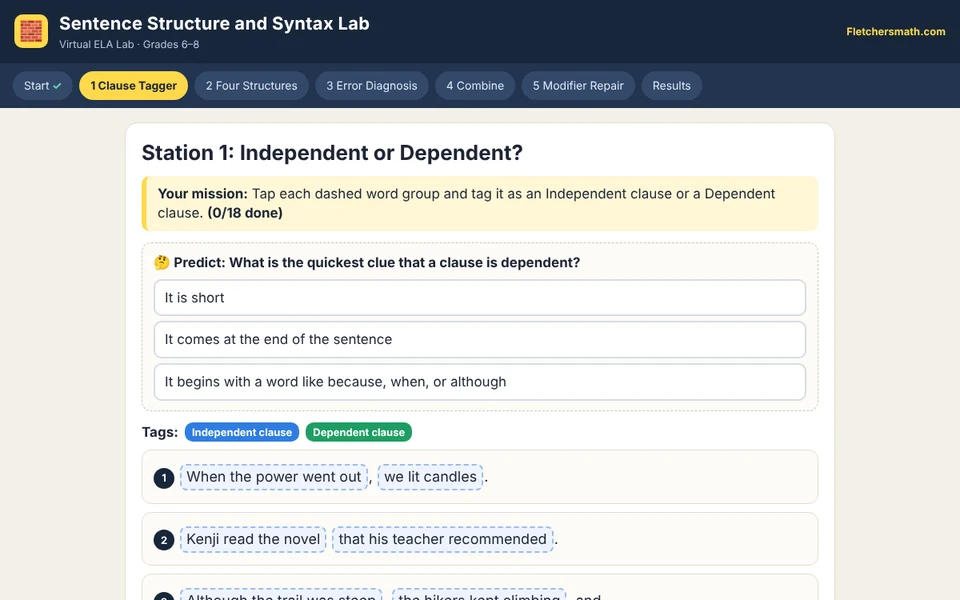
Students sort sentences, diagnose fragments and run-ons, combine sentences from tiles and repair sentence errors.
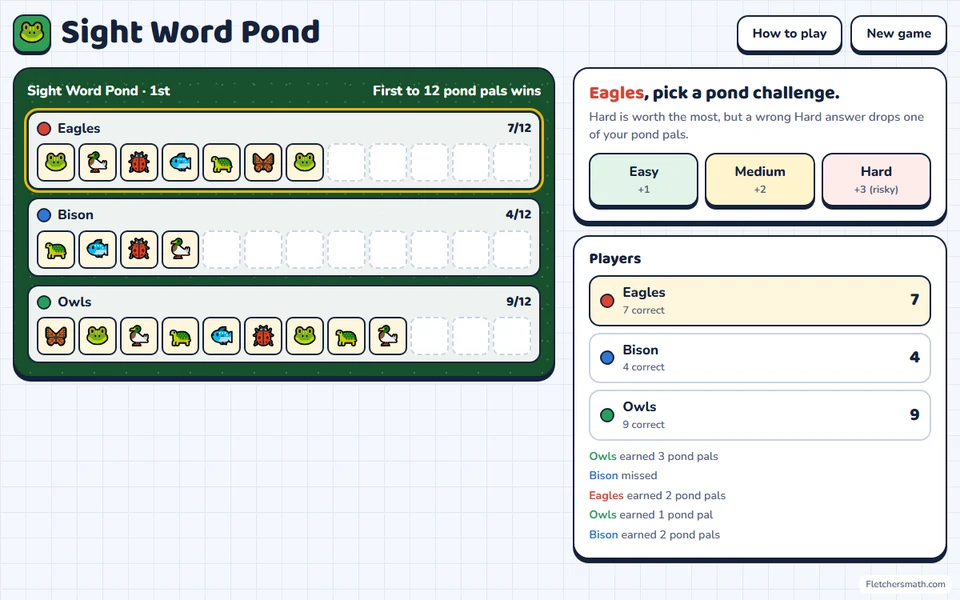
Collect pond pals by hearing, matching, spelling and reading sight words in sentences and short stories.
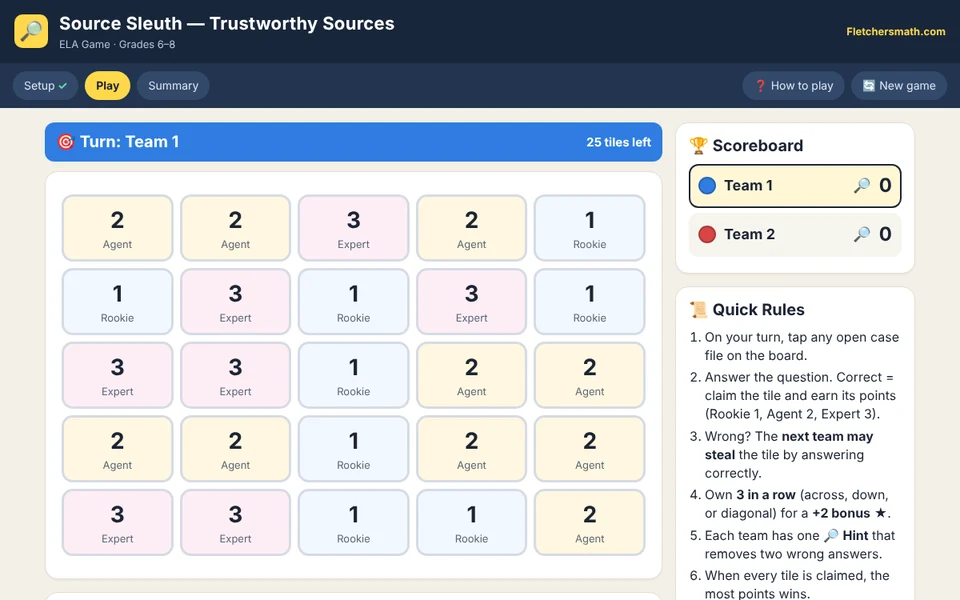
Teams judge websites, ads, posts and studies for trustworthiness to claim tiles on a case board.
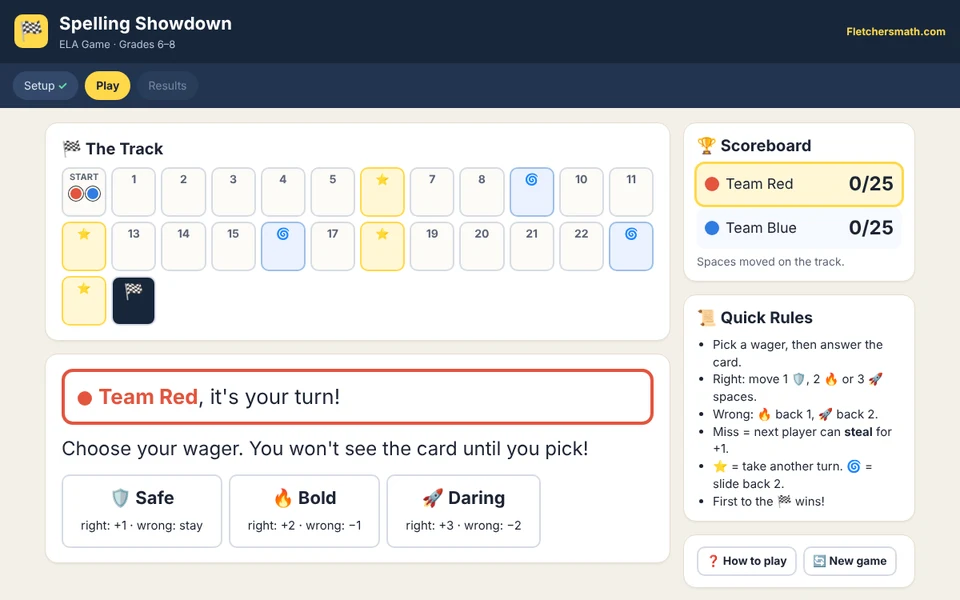
Players wager, then spot misspellings, choose confused words and pick correct spellings to race ahead.
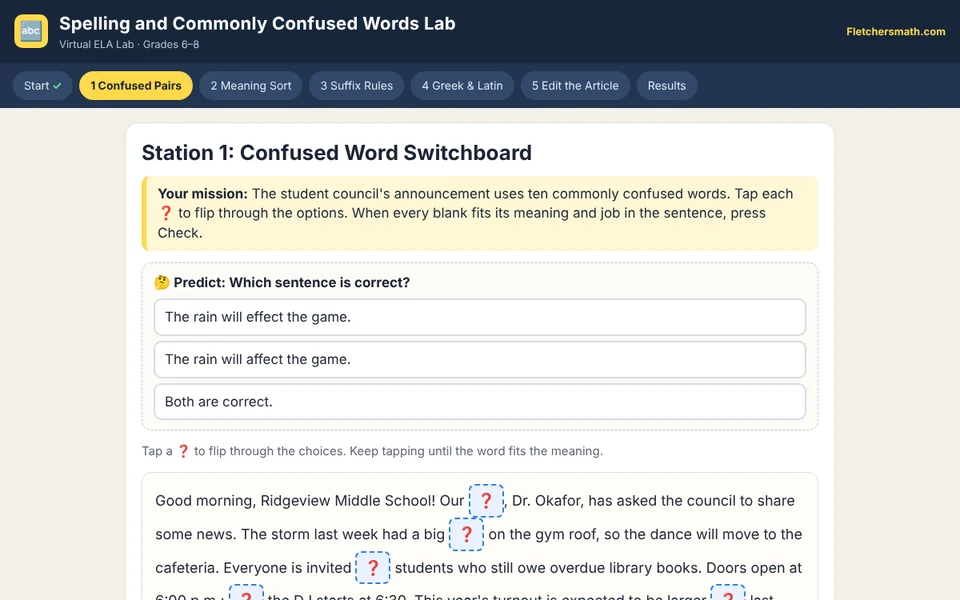
Students pick the right homophones, sort words by spelling rule, build words with suffixes and proofread passages.
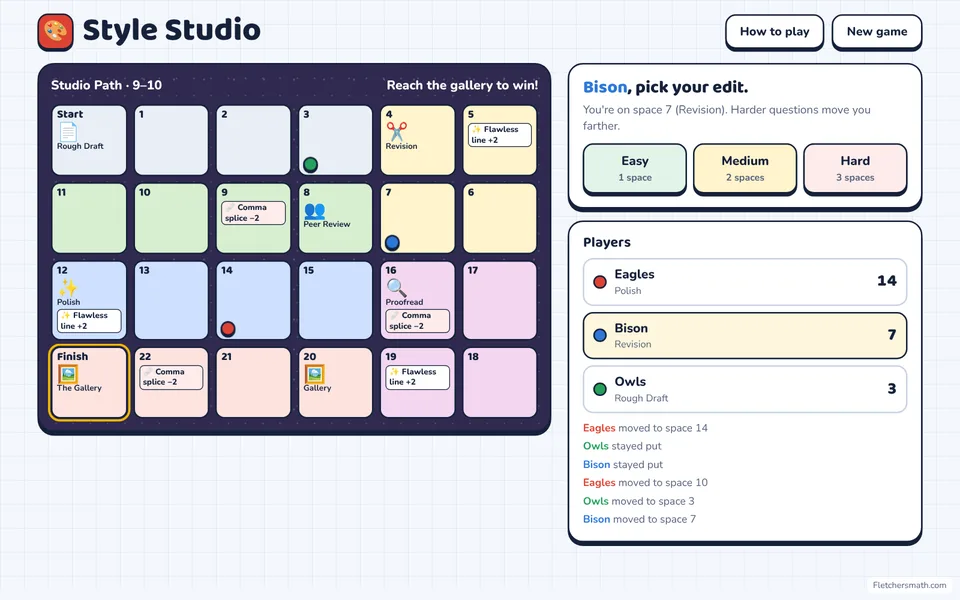
Parallel structure, phrases and clauses, semicolons, colons, dashes, modifiers and concise writing for high school.
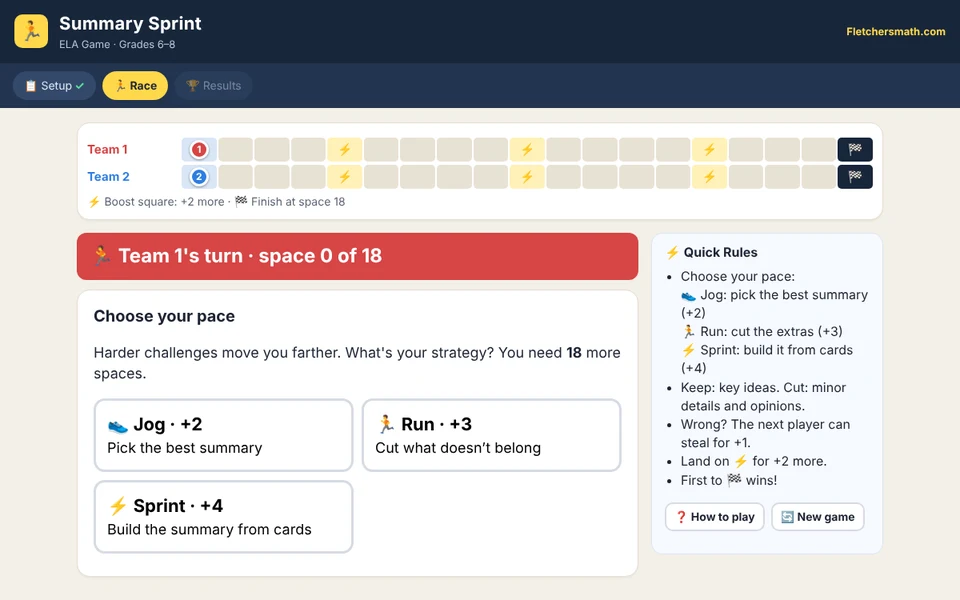
Players pick the best summary, cut extra sentences or build a summary from cards to race to the finish.
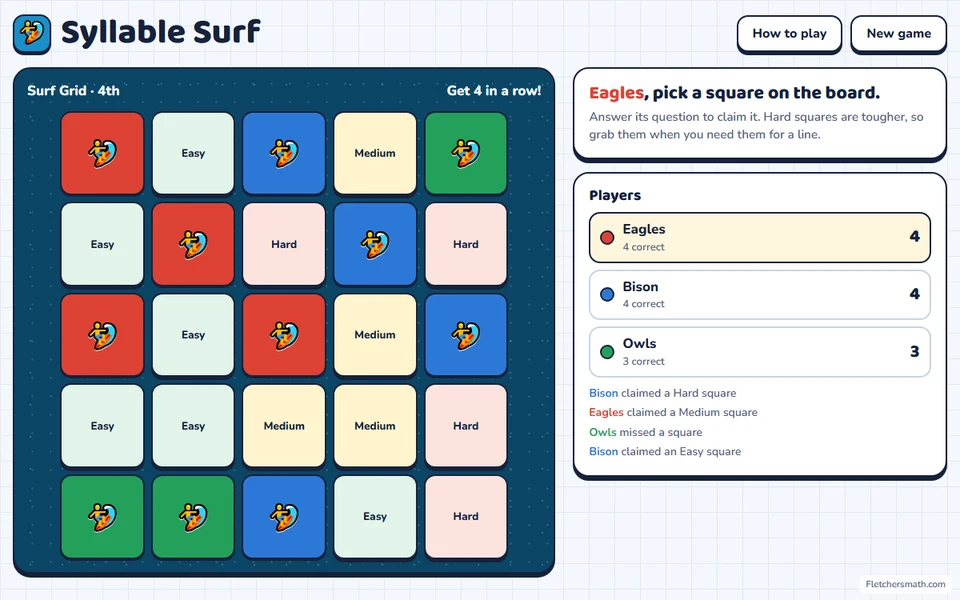
Claim squares by splitting words into syllables, spotting syllable types, building contractions and abbreviations, using spelling rules and reading with expression. Get 4 in a row to win.
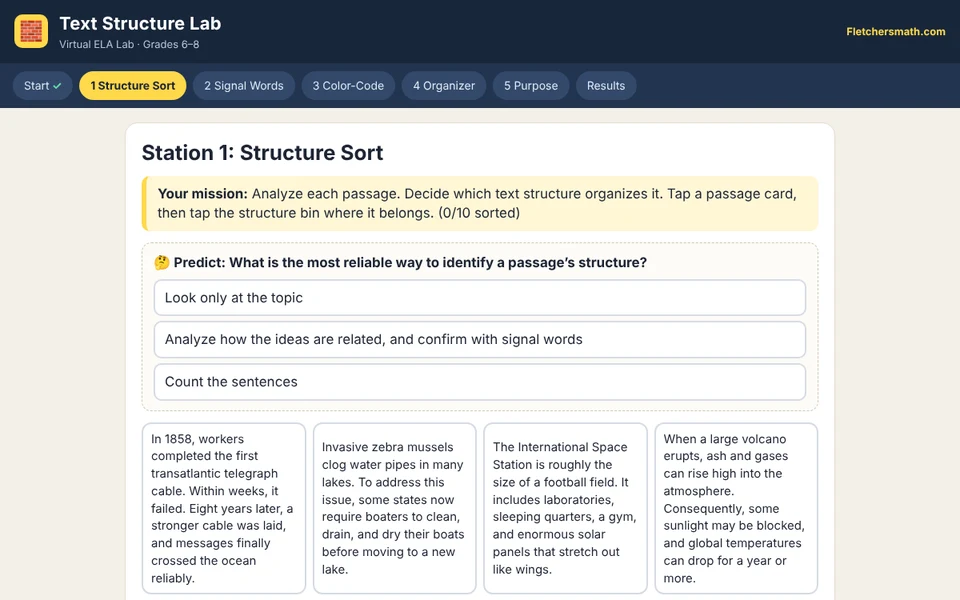
Students sort passages by structure, hunt signal words, color-code an article and fill in graphic organizers.
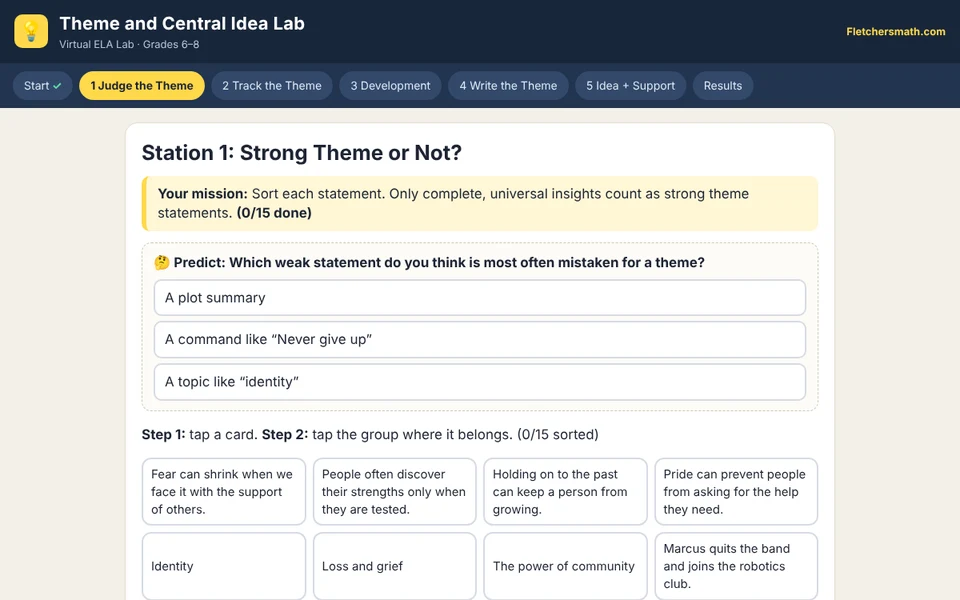
Students sort themes from topics, tap story evidence, trace how ideas develop and build theme statements from tiles.
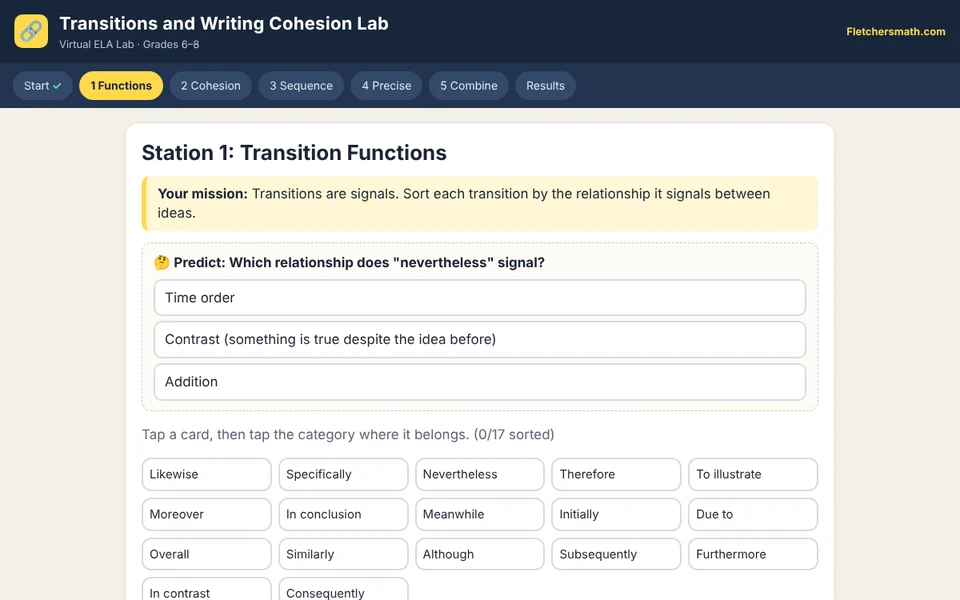
Students sort transitions by job, fill gaps in a passage, reorder scrambled paragraphs and replace vague words.
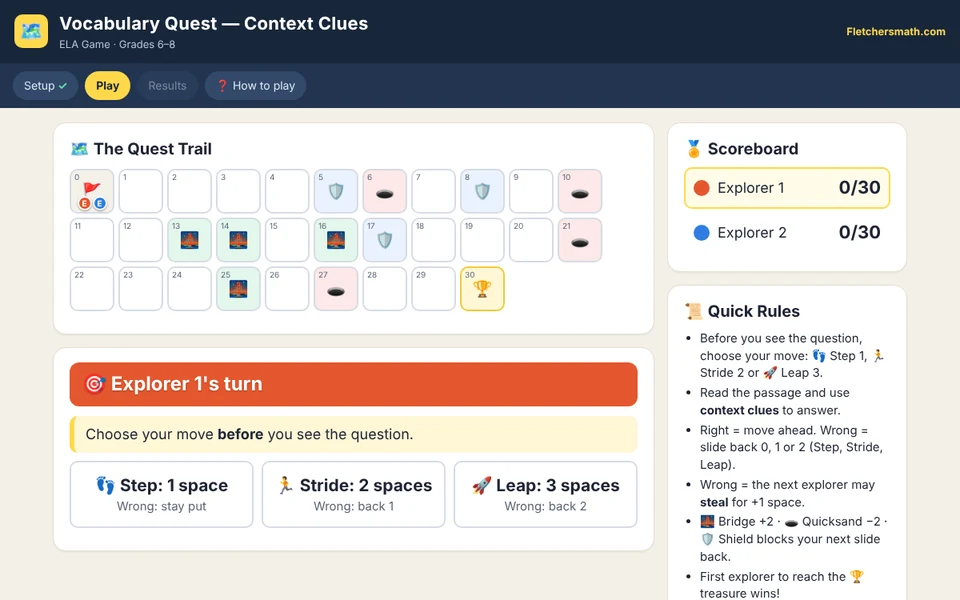
Explorers use context clues to figure out word meanings and race along a trail to the treasure.
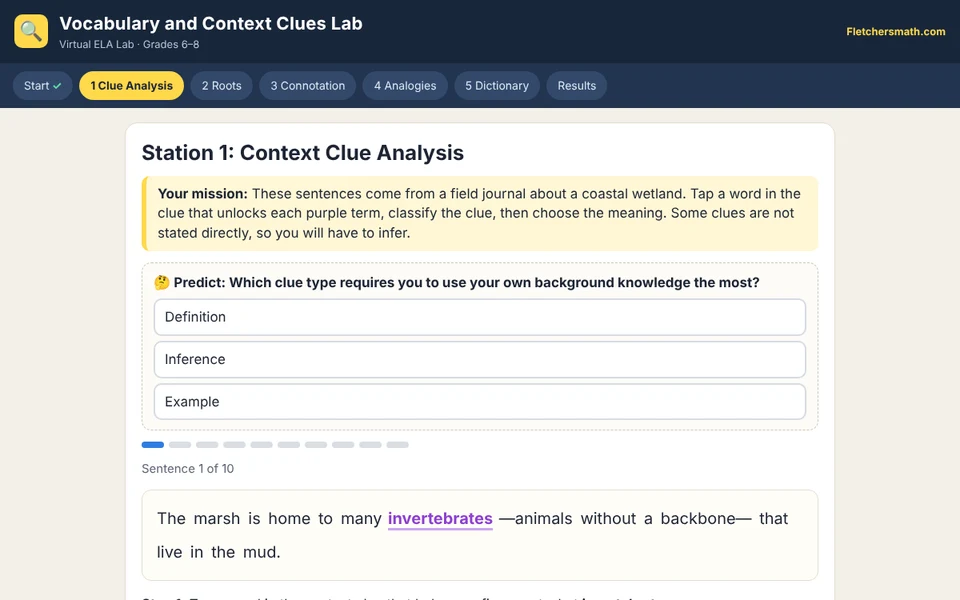
Students use context clues, build words from parts, rank words by strength, sort word pairs and use a dictionary.
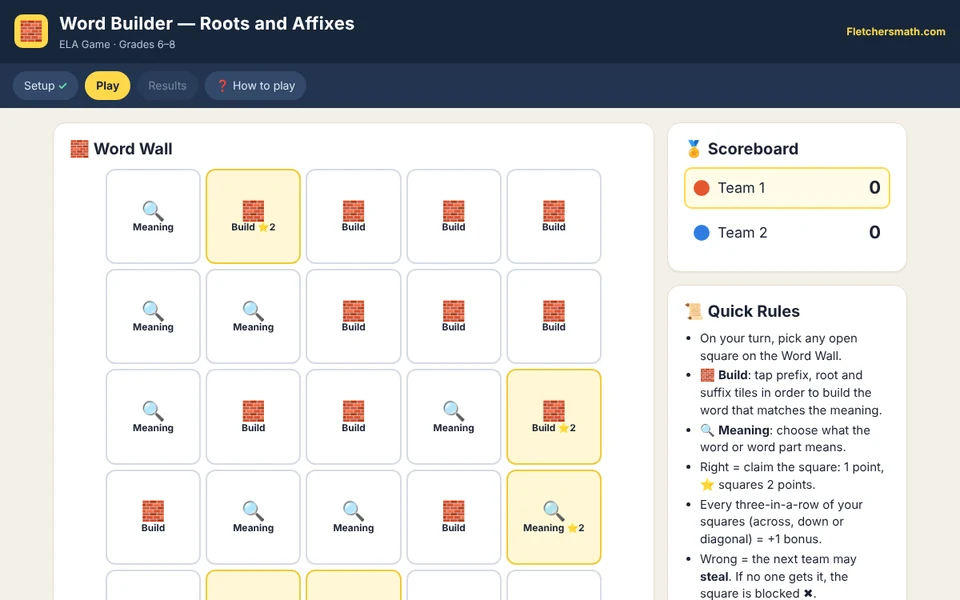
Teams build words from prefix, root and suffix tiles and decode word parts to claim squares on a Word Wall.
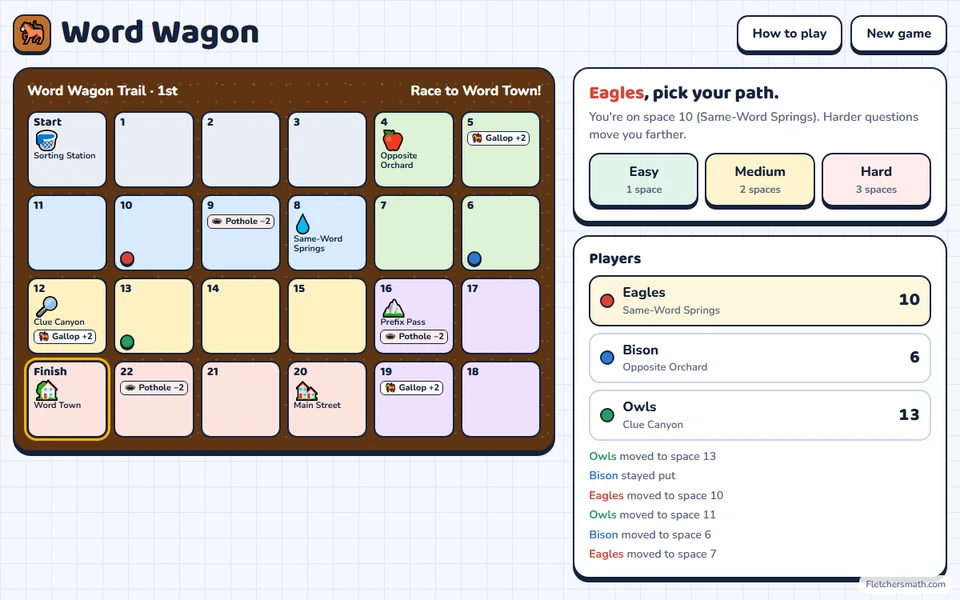
Ride the Word Wagon by sorting words into groups, finding opposites and words that mean the same, using context clues and figuring out word parts.
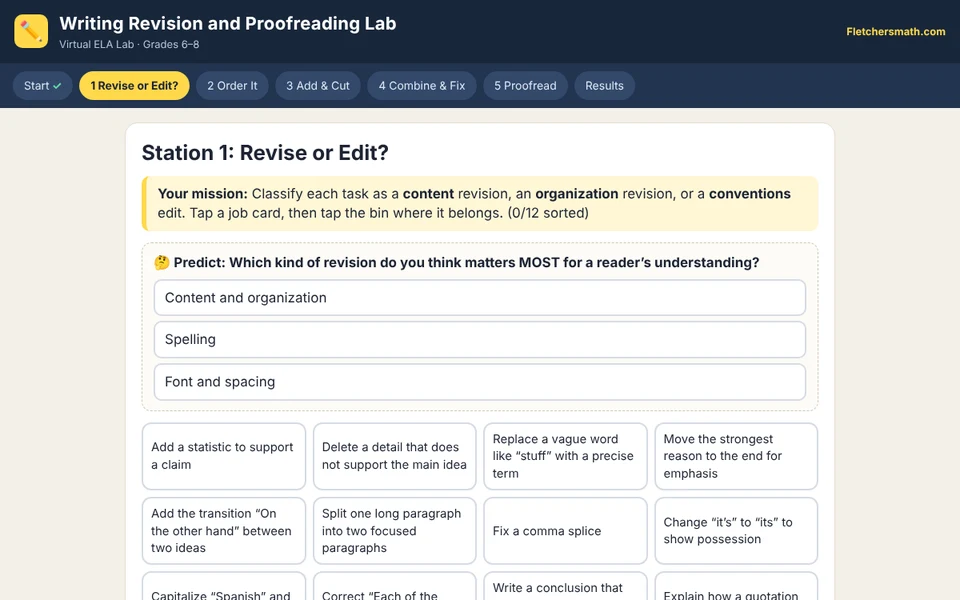
Students sort revising from editing, reorder a paragraph, cut off-topic sentences, fix sentences and proofread.
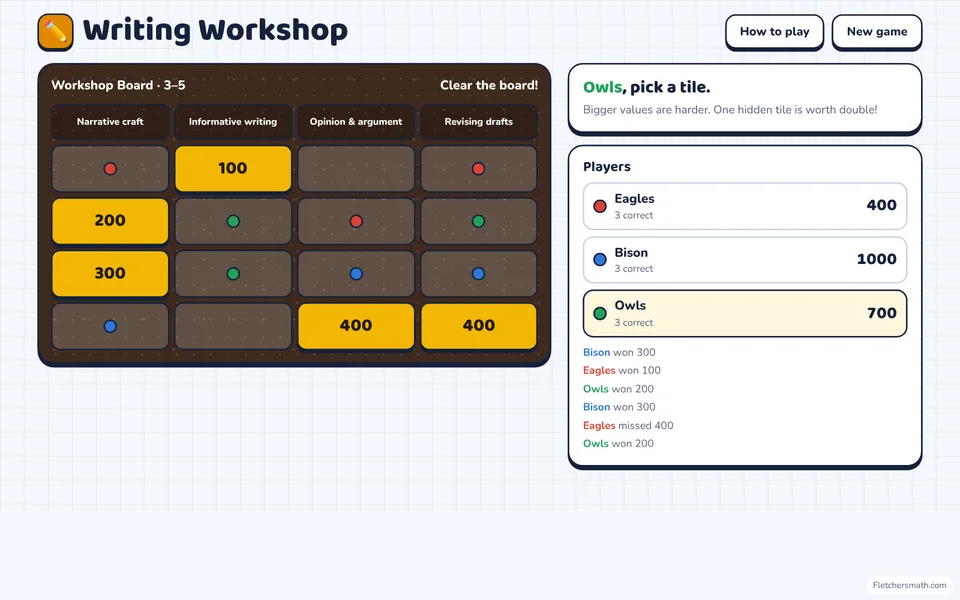
Hooks, transitions, details, organization and revising and editing real student drafts.
The All-Access Teacher License includes every game, every grade and all future games.