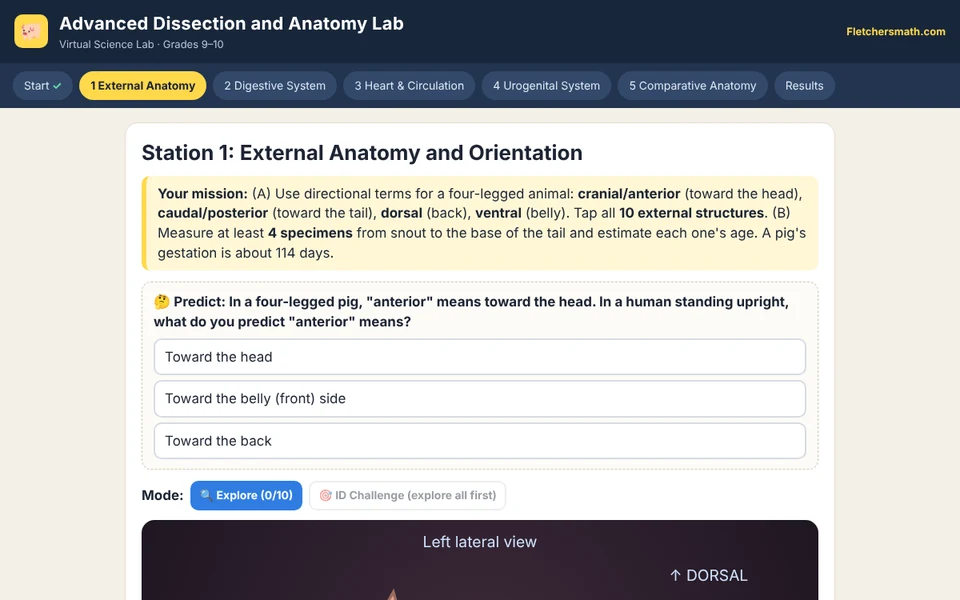
Grades 9–10 · Life Science
Advanced Dissection and Anatomy Lab
Students do a virtual, diagram-based fetal pig dissection and compare pig, human and frog anatomy.
11 multiplayer classroom games and 16 virtual labs that practice chemistry skills, for Kindergarten, 1st Grade, 2nd Grade, 3rd Grade, 4th Grade, 5th Grade and more. The games play on one shared screen and the labs run on each student's device. No student logins, works offline, and every one has a free demo you can try right now.
Students do a virtual, diagram-based fetal pig dissection and compare pig, human and frog anatomy.
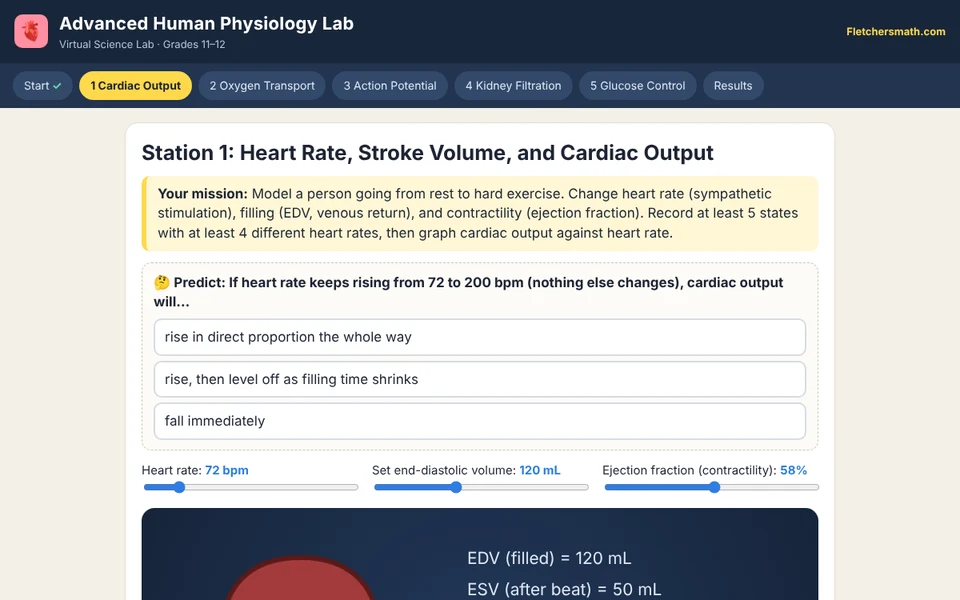
Students model cardiac output, oxygen binding, action potentials, kidney filtration and glucose tolerance tests.
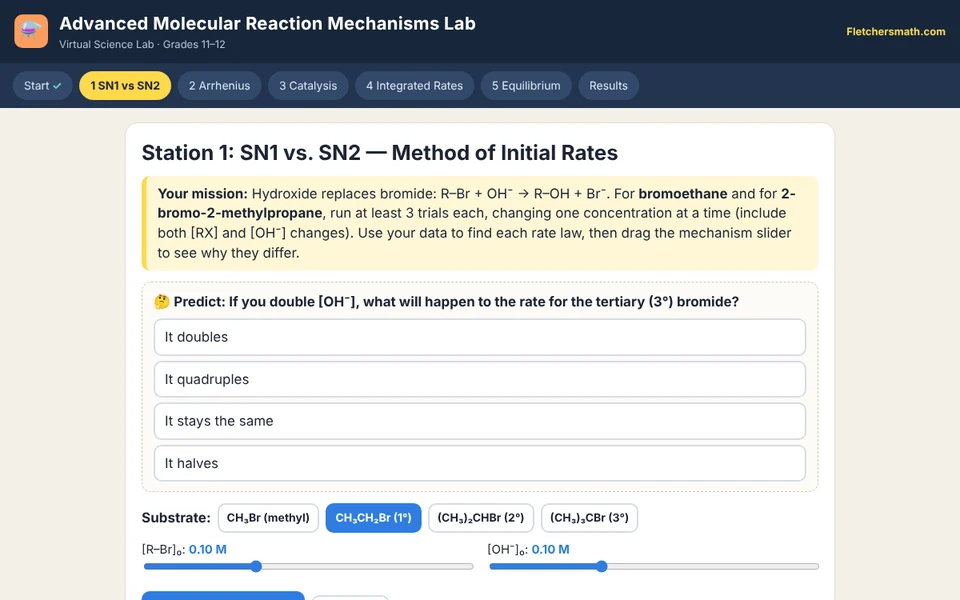
Students find rate laws, measure activation energy, test catalysts and reaction order, and shift an equilibrium.
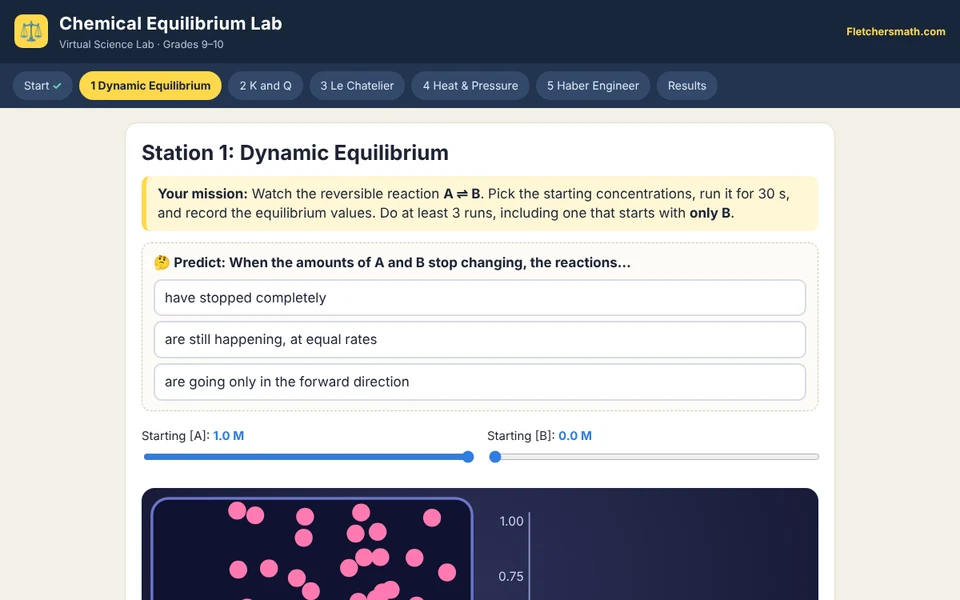
Students calculate K and Q, apply Le Chatelier stresses and choose conditions for an ammonia plant.
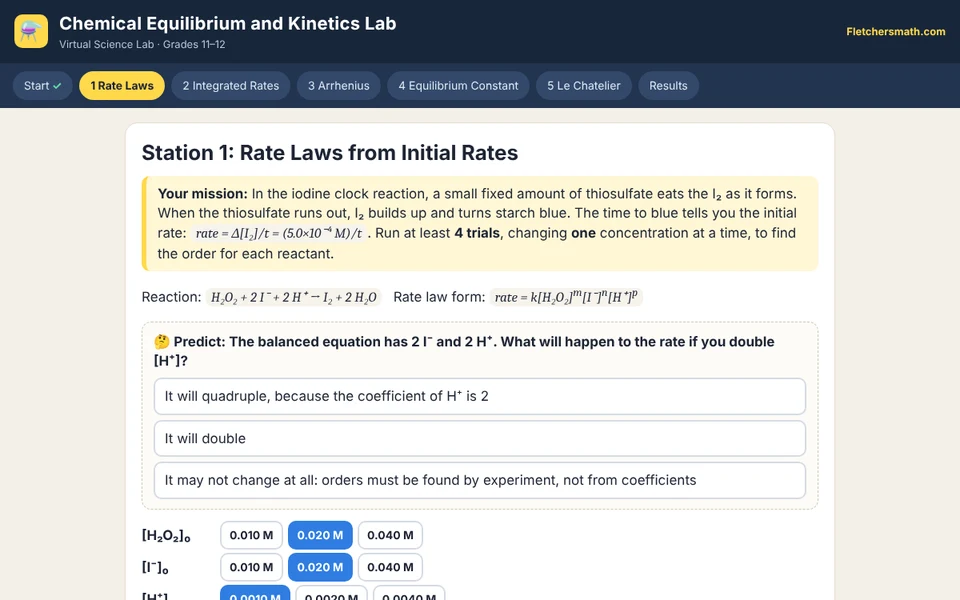
Students find rate laws from an iodine clock, measure activation energy, calculate Kc and shift an equilibrium.
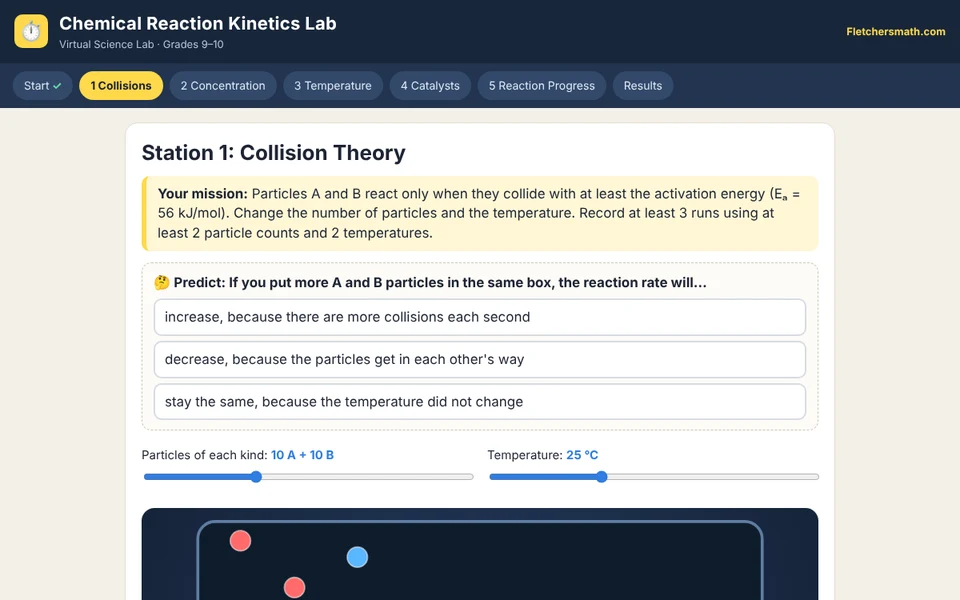
Students time a peroxide reaction to see how concentration, temperature and catalysts change rate.
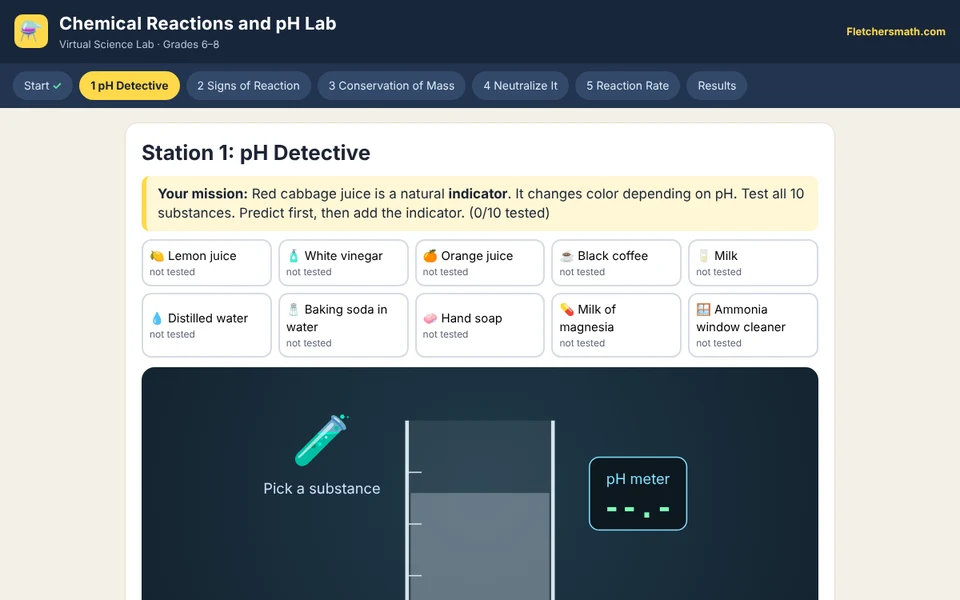
Students test pH with cabbage indicator, classify changes, weigh a reaction, neutralize an acid and time reaction rates.
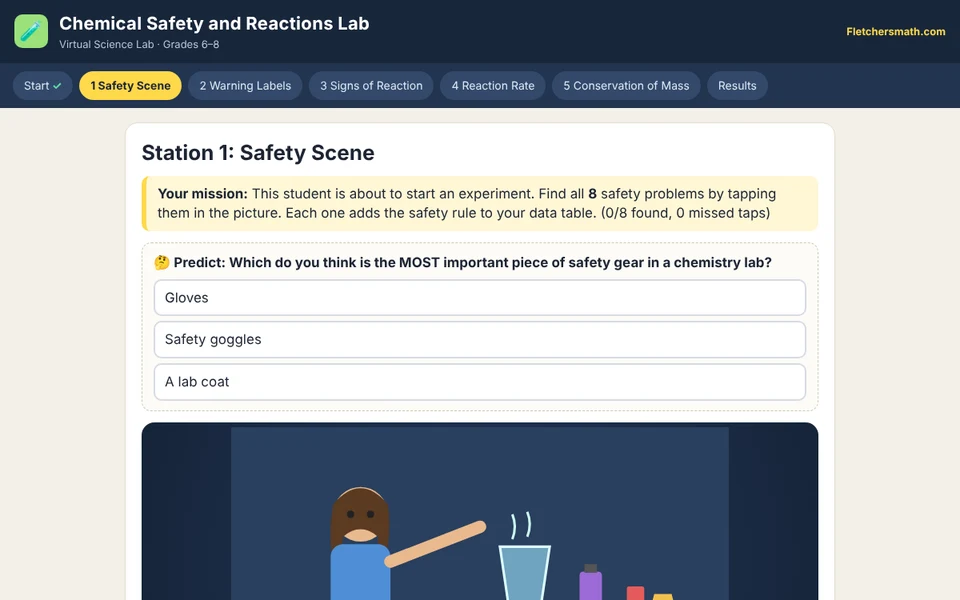
Students find lab hazards, build warning labels, spot signs of reactions, time reactions and test mass.
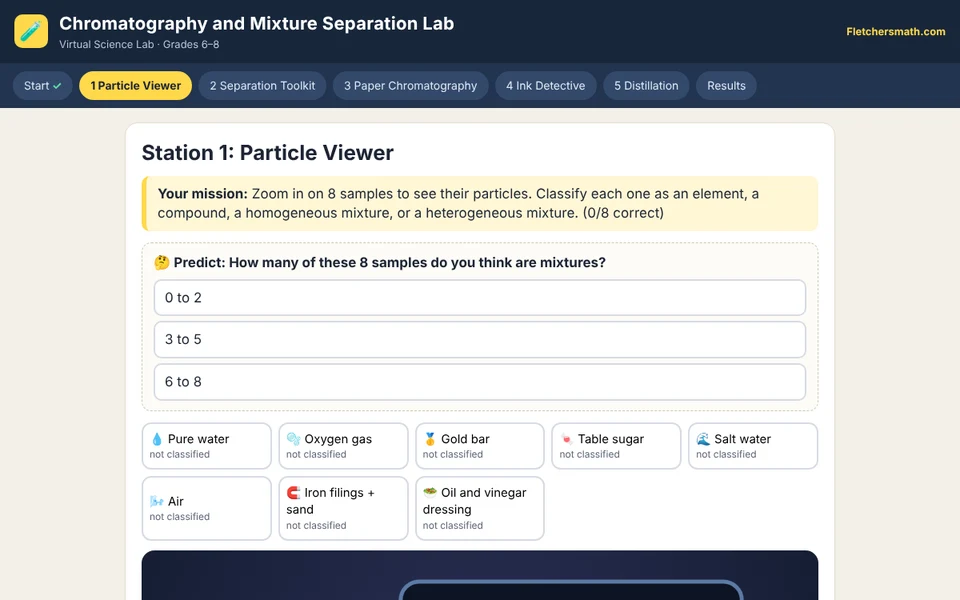
Students classify matter, separate mixtures, run ink chromatography, solve an ink mystery and distill alcohol.
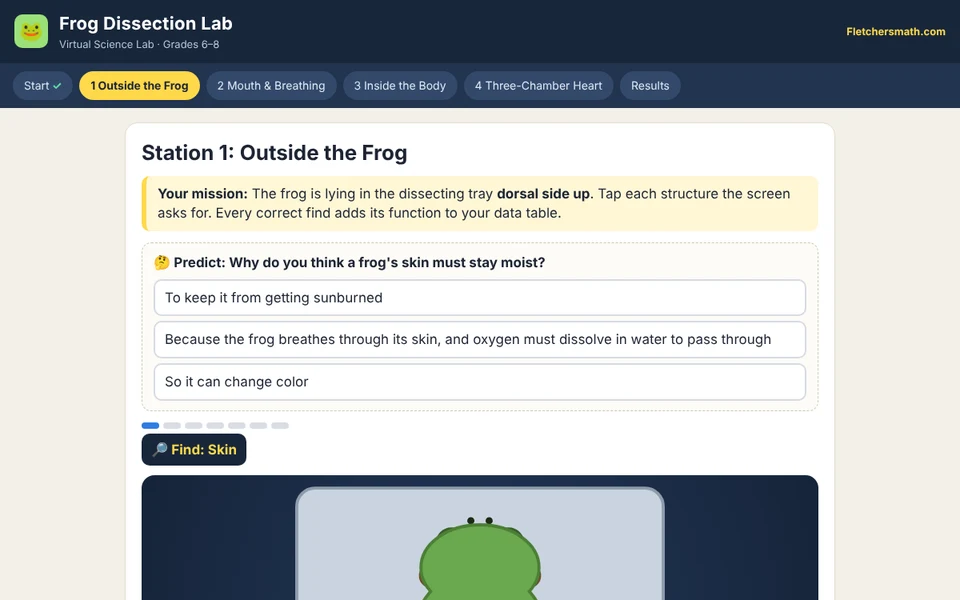
Students find frog structures in a virtual, diagram-based dissection, then model breathing and a 3-chamber heart.
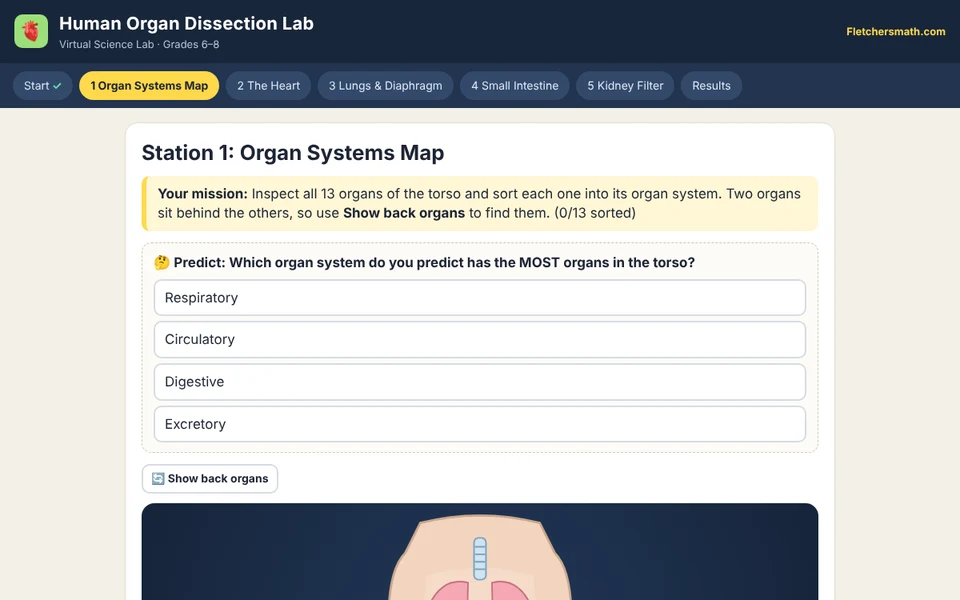
Students sort torso organs by system, trace blood through the heart and model breathing, digestion and kidneys.
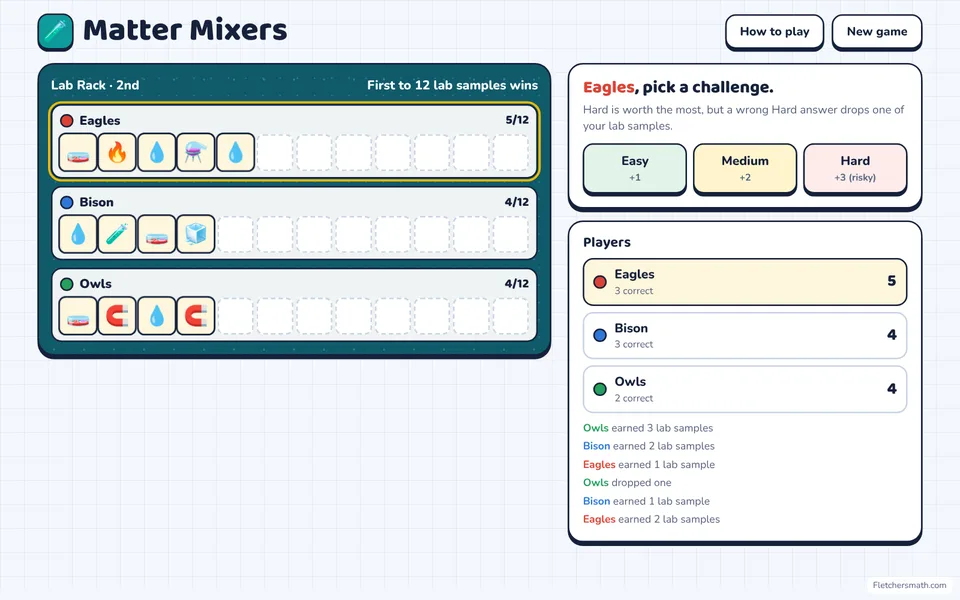
Properties of matter, physical and chemical changes, particles and conservation of mass.
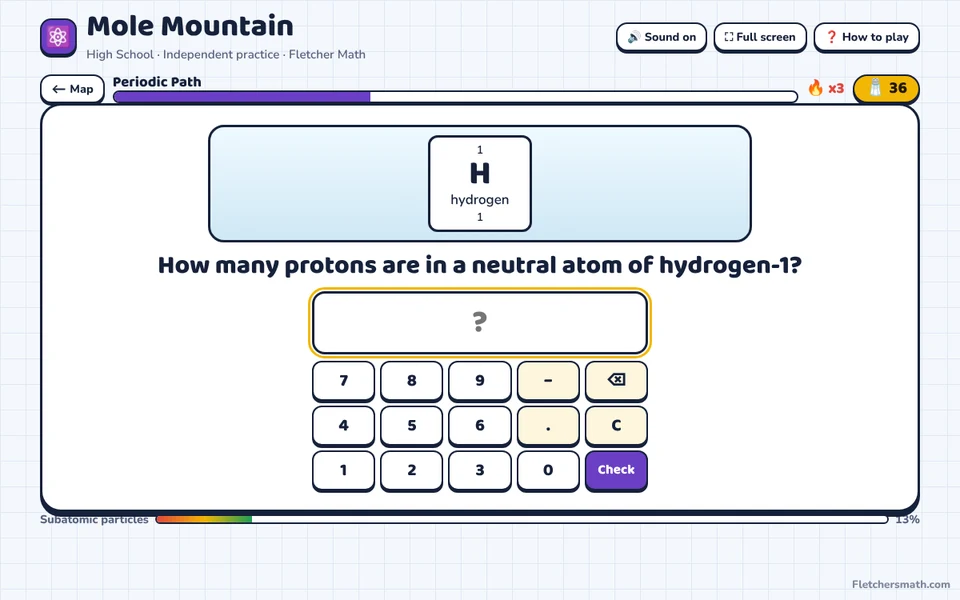
A single-player chemistry game for high school. Count protons, neutrons and electrons, use periodic trends, predict bonding, balance equations, convert grams and moles, explain rates and equilibrium, and model nuclear decay, then finish with a skills report for five NGSS chemistry standards.
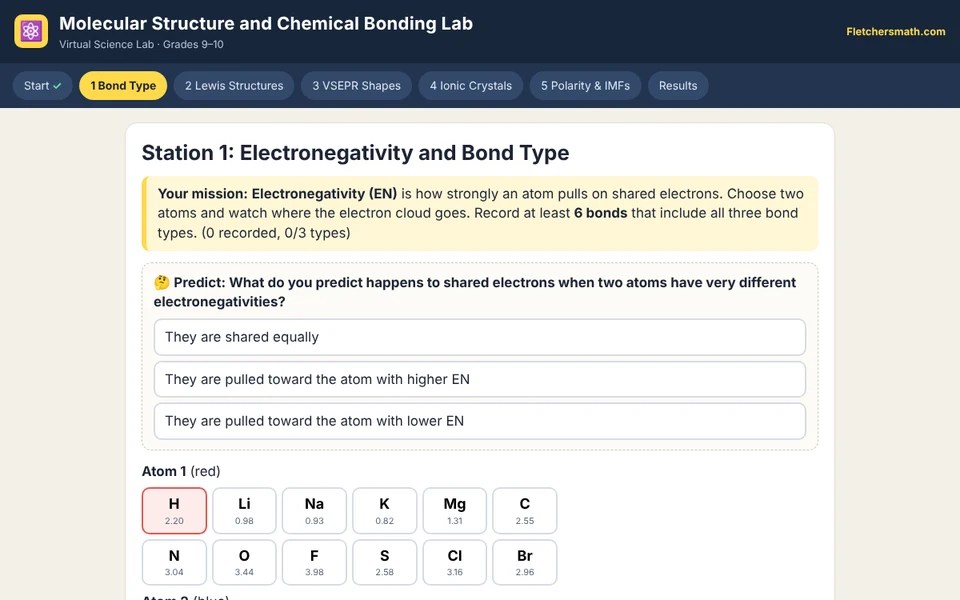
Students predict bond types, build Lewis structures and VSEPR shapes, and link polarity to boiling.
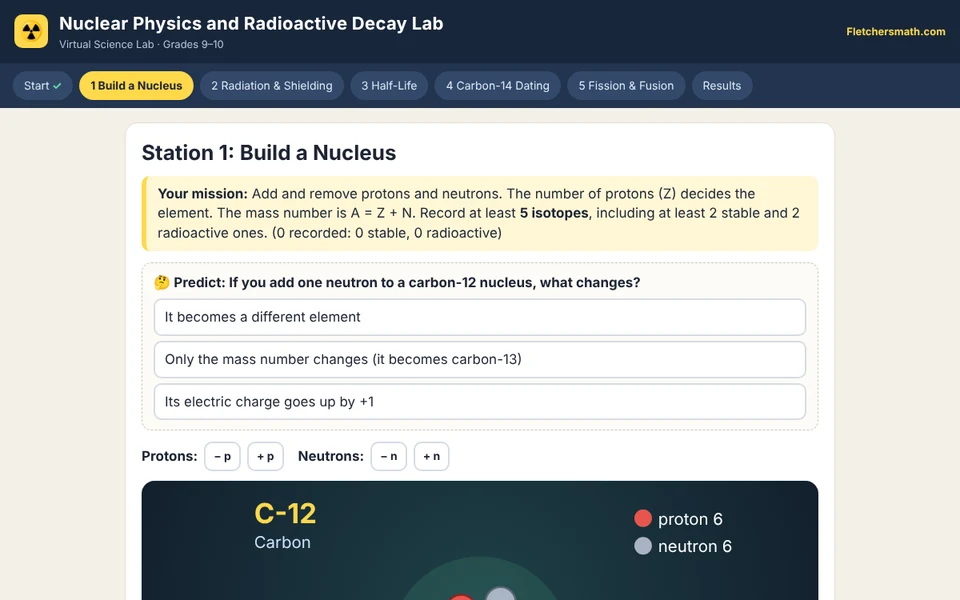
Students build nuclei, test shielding, measure half-life, carbon-date samples and find mass defect.
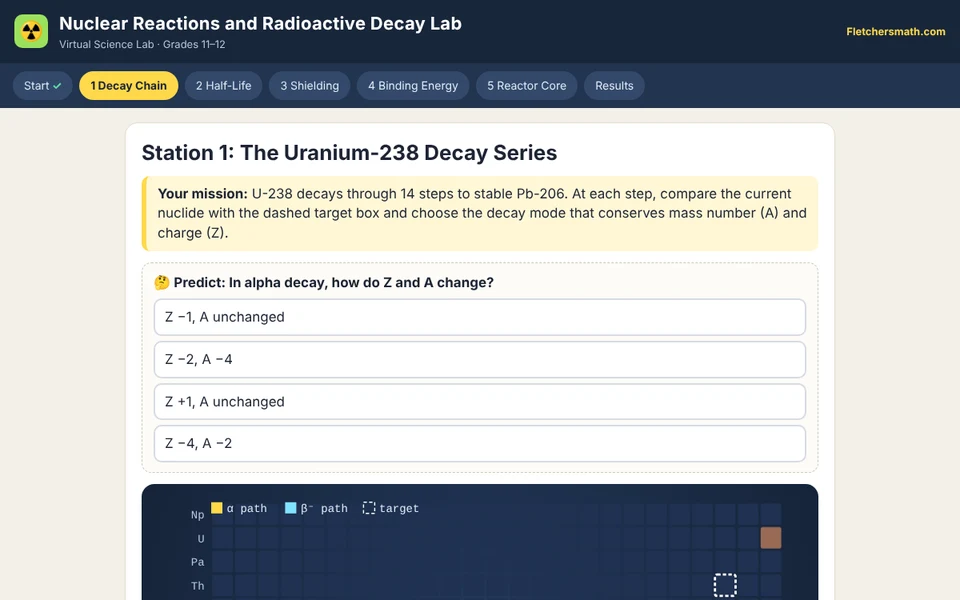
Students trace the U-238 decay series, measure half-life, test shielding, find binding energy and balance a reactor.
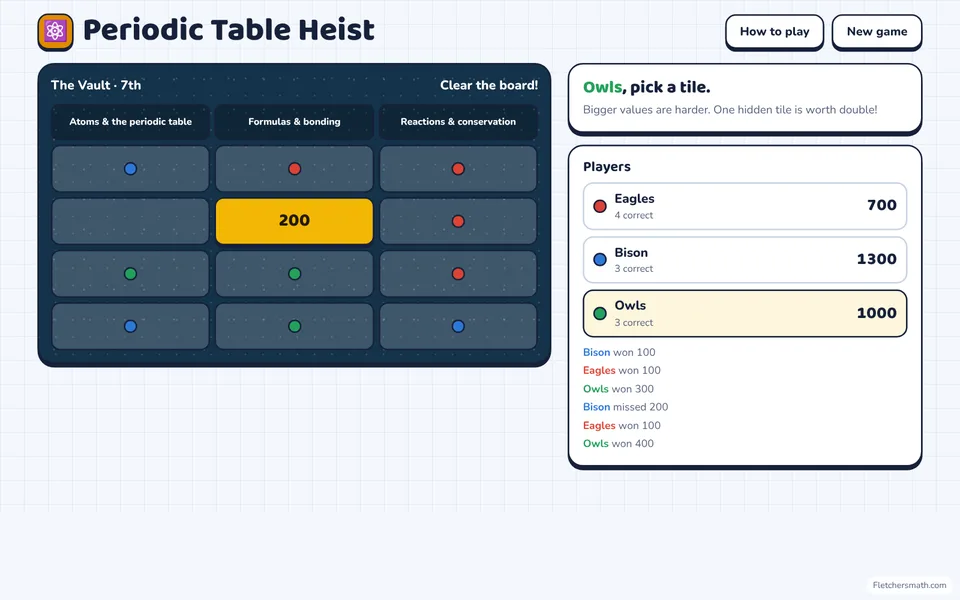
Atoms, the periodic table, bonding, balancing equations and reactions. Pull off the heist!
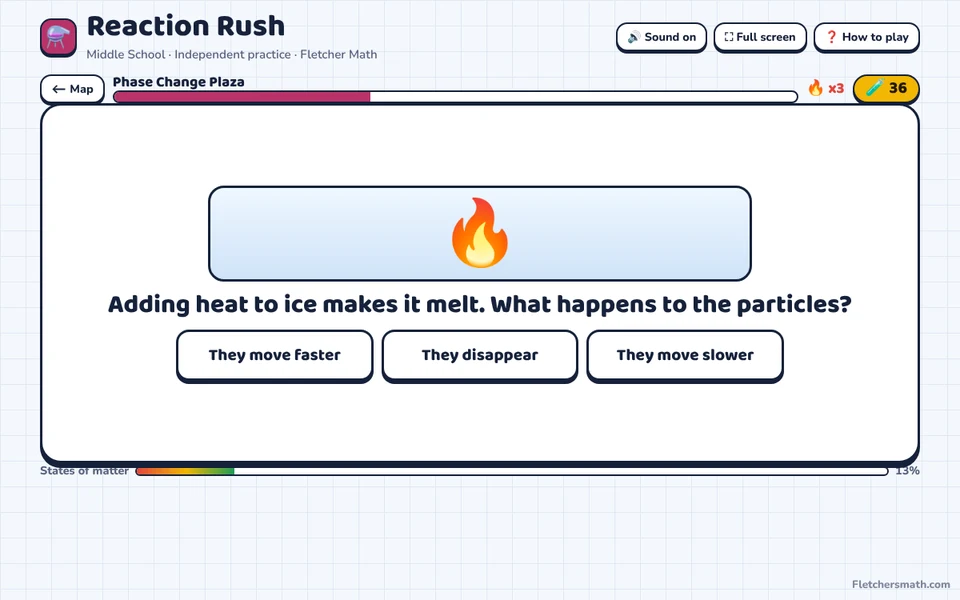
A single-player chemistry game for grades 6–8. Race through the lab with atoms and molecules, states of matter, density calculations, chemical reactions, conservation of mass, and exothermic and endothermic reactions, then finish with a skills report for five middle school NGSS matter standards.
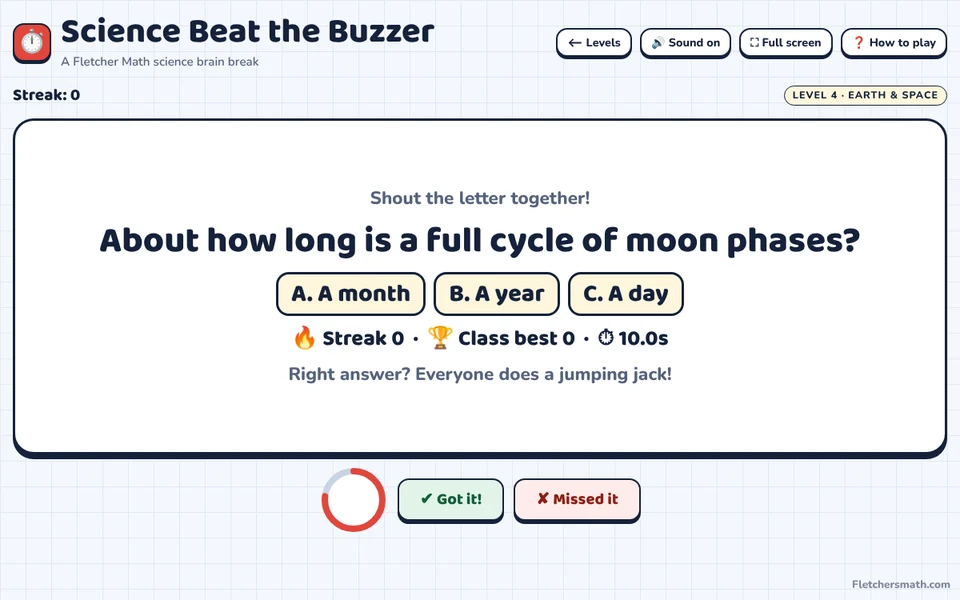
The class shouts the letter of the right answer to build a streak before the buzzer. Every right answer makes the clock a little faster.
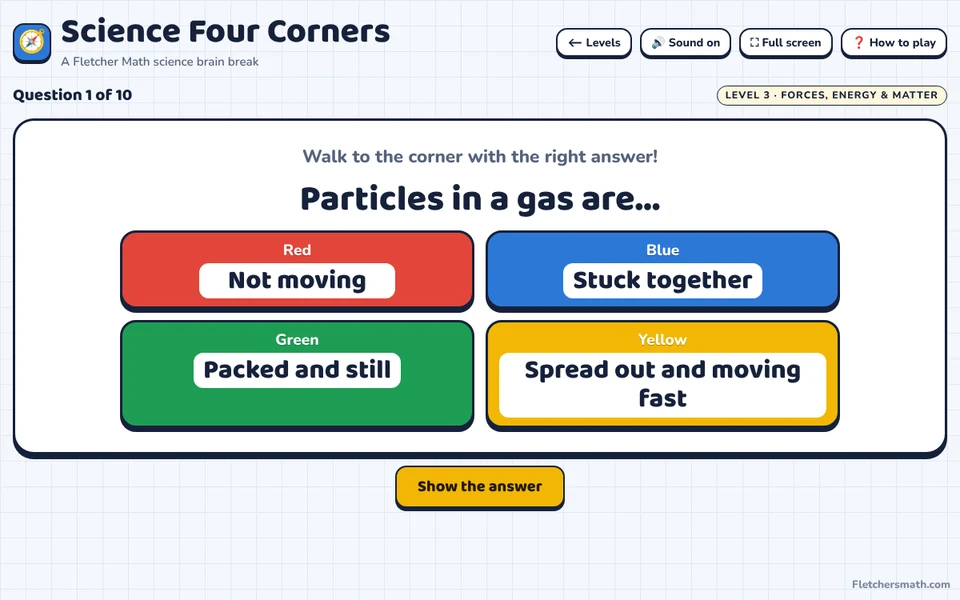
A science question appears with four answers, one for each corner of the room. Students walk to the corner they think is right, then the answer lights up.
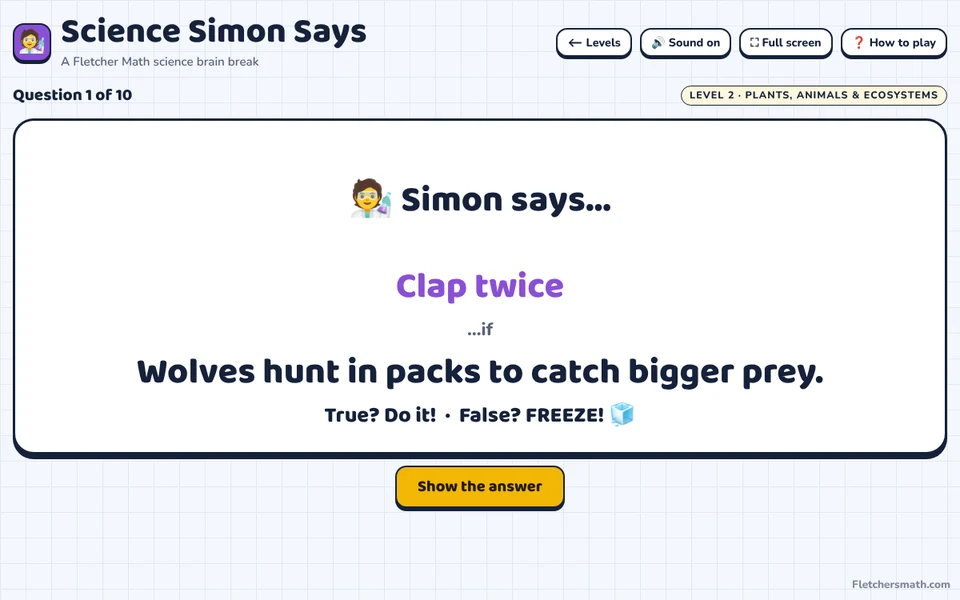
Simon says buzz like a bee if plants need sunlight to grow! Students do the move only when Simon says it and the science is true.
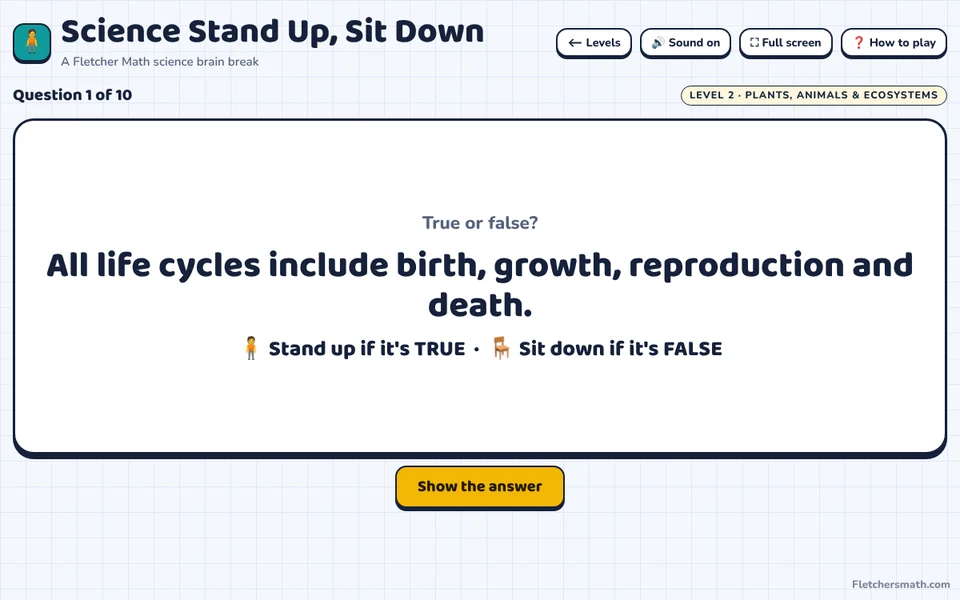
A science statement appears on the screen. Students stand up if it's true and sit down if it's false, then the answer and the real science pop up.
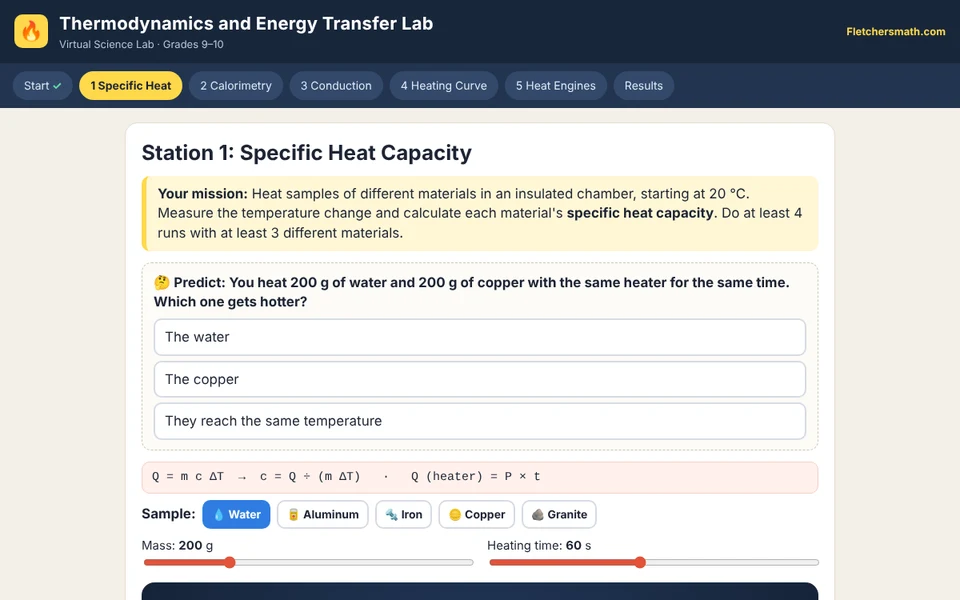
Students measure specific heat, run calorimetry, build a heating curve and test heat engines.
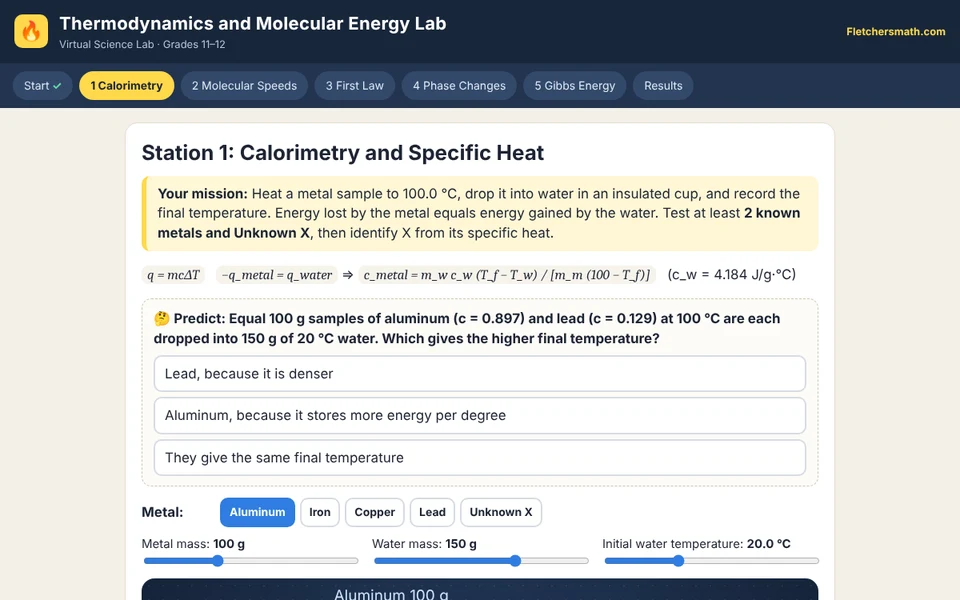
Students identify a metal by calorimetry, test molecular speeds, check the first law and predict spontaneity.
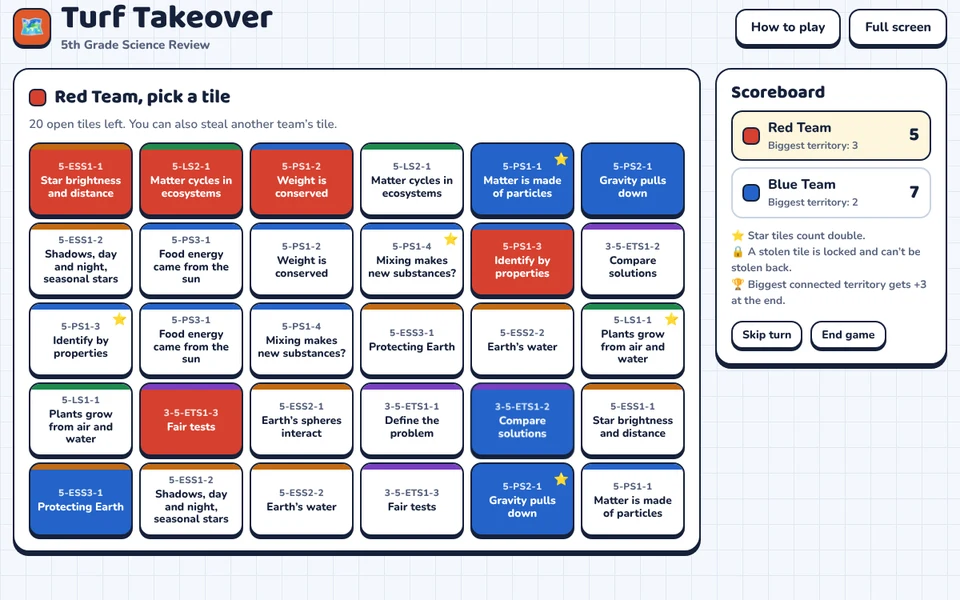
A team review game for every NGSS 5th grade science standard. Teams claim tiles on a map by answering questions, and can steal each other's tiles. Play a full review or pick the standards you want. The results show % correct for each standard.
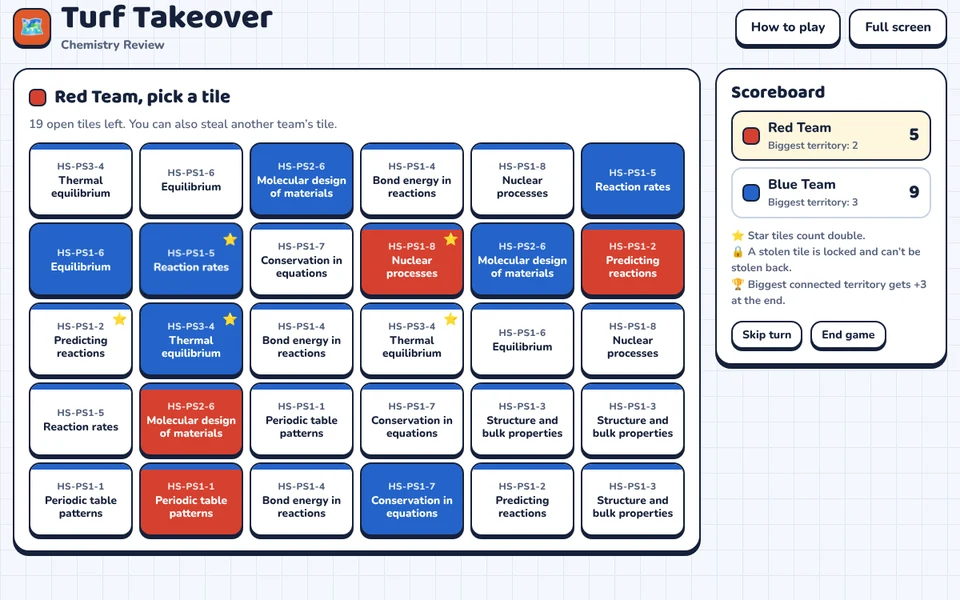
A team review game for every NGSS Chemistry standard. Teams claim tiles on a map by answering questions, and can steal each other's tiles. Play a full review or pick the standards you want. The results show % correct for each standard.
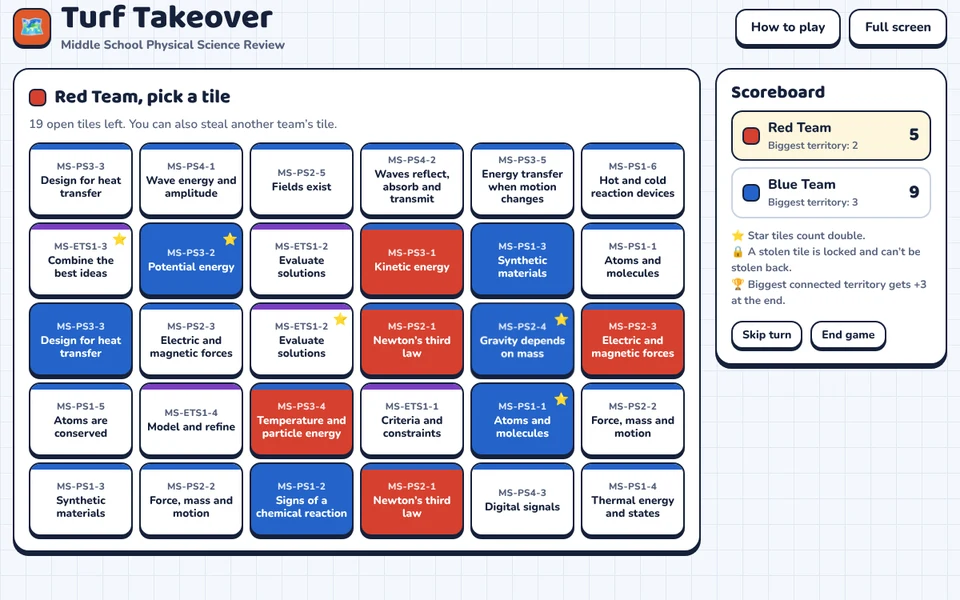
A team review game for every NGSS middle school physical science standard. Teams claim tiles on a map by answering questions, and can steal each other's tiles. Play a full review or pick the standards you want. The results show % correct for each standard.
The All-Access Teacher License includes every game, every grade and all future games.